Lab-Grown Diamond Necklaces in Dubai: Quality and Certification Guide
Lab-grown diamond necklaces have become an important part of Dubai’s modern fine jewellery market. They offer the beauty, brilliance and durability associated with diamonds while giving buyers greater flexibility in carat weight, design and budget. From delicate everyday pendants to luxurious tennis necklaces, buyers can now explore a wide range of styles without compromising on visual impact.
However, the quality of a lab-grown diamond necklace in Dubai should not be judged by carat weight alone. Diamond cut, colour, clarity, matching, setting quality, gold purity, necklace construction and independent certification all influence the appearance and long-term wearability of the finished piece.
In this guide, we explain how to compare lab-grown diamond necklaces, understand their quality specifications and verify the certification information before purchasing.
What Is a Lab-Grown Diamond Necklace?
A lab-grown diamond necklace is made using diamonds created in a controlled laboratory environment. These diamonds are produced through advanced processes that recreate the conditions required for diamond crystal growth.
The two main production methods are:
- CVD, which stands for Chemical Vapour Deposition
- HPHT, which stands for High Pressure High Temperature
Lab-grown diamonds have the same fundamental chemical composition, crystal structure and optical properties as natural diamonds. They are not the same as cubic zirconia, crystal, glass or moissanite.
Specialised gemological equipment is normally required to distinguish a lab-grown diamond from a natural diamond. This is why independent grading and clear origin disclosure are important when buying diamond jewellery.
Why Buyers in Dubai Choose Lab-Grown Diamond Necklaces
Dubai buyers have access to an extensive selection of jewellery, including delicate daily-wear designs, bridal necklaces and high-carat statement pieces. Lab-grown diamonds make it possible to consider larger or more elaborate necklace designs within a carefully planned budget.
The main advantages include:
- Greater flexibility in total carat weight
- Access to high colour and clarity grades
- A wide selection of contemporary designs
- Options for both everyday and occasion wear
- Certified diamond and jewellery choices
- Bespoke design possibilities
- White, yellow and rose gold options
- Impressive visual presence at a more accessible price point
A lab-grown diamond necklace can be selected for personal wear, an anniversary, wedding, birthday, graduation, Eid or another significant celebration.
Types of Lab-Grown Diamond Necklaces Available in Dubai
The right necklace depends on the wearer’s style, the occasion and how frequently the piece will be worn.
Lab-Grown Diamond Pendant Necklace
A pendant necklace normally features one central design suspended from a chain. It may include a solitaire diamond, halo, floral motif, heart, initial or geometric arrangement.
Pendant necklaces are suitable for buyers who want:
- A versatile everyday piece
- A meaningful jewellery gift
- A single focal diamond
- A lightweight and comfortable design
- A necklace that can be layered easily
A solitaire pendant provides a clean and timeless appearance, while a halo design creates more visible sparkle around the centre diamond.
Lab-Grown Diamond Station Necklace
A station necklace places diamonds at measured intervals along a chain. This creates a lighter and more contemporary appearance than a fully set diamond necklace.
Station necklaces work well for:
- Daily wear
- Professional styling
- Minimal jewellery collections
- Layering with other chains
- Elegant but understated gifting
The spacing between the diamonds should appear balanced, and the settings should prevent the stones from twisting excessively.
Lab-Grown Diamond Tennis Necklace
A tennis necklace features a continuous or nearly continuous line of diamonds around the neckline. It is one of the most recognisable forms of luxury diamond jewellery.
A well-made tennis necklace should display:
- Consistent diamond size
- Closely matched colour and clarity
- Smooth flexibility between the links
- Secure individual settings
- A strong clasp with an additional safety feature
- An even line of brilliance
- Comfortable movement around the neckline
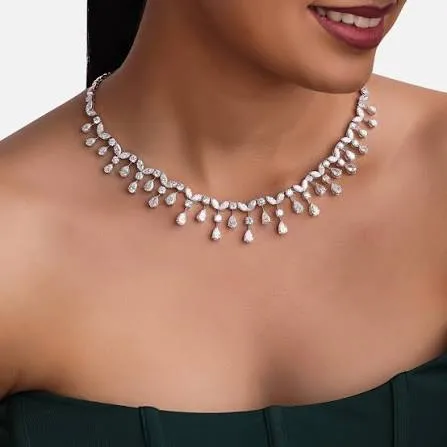
Buyers can explore lab-grown diamond necklaces in Dubai in delicate, classic and high-carat styles.
Graduated Diamond Necklace
A graduated necklace uses smaller diamonds near the back and progressively larger diamonds towards the centre. This creates a defined focal point along the front of the neckline.
The transition between diamond sizes should appear gradual and balanced. Sudden changes in size can interrupt the visual flow of the necklace.
Multi-Layer and Two-Line Diamond Necklaces
A multi-line necklace creates additional dimension by combining two or more diamond rows. These designs can range from delicate layered pieces to substantial evening jewellery.
The construction must allow each line to sit correctly without tangling, overlapping or turning during wear.
Bespoke Lab-Grown Diamond Necklace
A bespoke necklace can be customised according to diamond shape, carat weight, gold colour, chain length and overall design.
The bespoke process may include:
- Initial design consultation
- Diamond selection
- Metal selection
- CAD design preview
- Setting and proportion review
- Precision manufacturing
- Polishing and quality control
- Final fitting assessment
Bespoke jewellery is particularly suitable for weddings, milestone gifts and buyers who want a distinctive design.
How to Judge the Quality of a Lab-Grown Diamond Necklace
A high-quality necklace depends on more than the specifications of one diamond. We must evaluate the diamonds, metal, setting, clasp and complete construction together.
Understanding the Diamond 4Cs
The 4Cs are cut, colour, clarity and carat weight. They provide a standard framework for comparing diamond quality.
Cut Quality
Cut determines how effectively a diamond interacts with light. A well-cut diamond can produce strong brilliance, fire and scintillation.
For round brilliant diamonds, cut quality is particularly important because the facet arrangement is designed to maximise light performance.
When buying a multi-diamond necklace, consider the consistency of the cutting across all stones. If some diamonds are well cut while others are poorly proportioned, the necklace may show uneven sparkle.
A quality necklace should appear bright and balanced across its entire visible length.
Diamond Colour
Diamond colour is commonly graded from D to Z for diamonds within the colourless to light-colour range.
The general categories include:
- D to F: Colourless
- G to J: Near colourless
- K to M: Faint colour
- N to R: Very light colour
- S to Z: Light colour
For a diamond necklace, consistency can be as important as the individual colour grade. Diamonds placed next to each other should appear evenly matched.
A visible colour difference between adjacent stones can reduce the uniform appearance of a tennis or graduated necklace.
White gold tends to emphasise a bright, cool diamond appearance. Yellow and rose gold can complement diamonds with slightly warmer tones.
Diamond Clarity
Clarity measures the presence of internal inclusions and external blemishes.
Common clarity grades include:
- IF: Internally Flawless
- VVS1 and VVS2: Very Very Slightly Included
- VS1 and VS2: Very Slightly Included
- SI1 and SI2: Slightly Included
- I1, I2 and I3: Included
Not every diamond in a necklace needs the highest clarity grade. For smaller accent diamonds, inclusions may be difficult to see without magnification.
We recommend focusing on whether the diamonds appear clean, bright and transparent to the unaided eye. Cloudiness, dark inclusions or inconsistent transparency may affect the overall brilliance of the necklace.
Carat Weight
Carat measures diamond weight rather than visible size. In a necklace, the advertised carat weight often refers to the total combined weight of all diamonds.
For example, a 10-carat tennis necklace may contain many smaller diamonds whose combined weight reaches 10 carats. It does not mean the necklace contains one 10-carat centre diamond.
Before buying, confirm:
- Total carat weight
- Number of diamonds
- Approximate individual diamond size
- Centre diamond weight, if applicable
- Necklace length
- Whether the design is graduated or uniform
Two necklaces with the same total carat weight can look very different depending on their length, diamond distribution and setting style.
Why Diamond Matching Matters in a Necklace
Matching is particularly important in tennis, station and multi-stone necklaces. The diamonds should look like part of one complete design rather than a collection of unrelated stones.
A well-matched necklace should have consistent:
- Colour
- Clarity
- Cut quality
- Diameter
- Shape
- Brilliance
- Fluorescence
- Overall visual character
In a graduated necklace, the size changes intentionally, but the colour, clarity and cutting style should still appear consistent.
Examine the necklace under different lighting conditions. Uneven brightness or colour may become more visible when the piece is moved.
Choosing the Right Diamond Shape
Round brilliant diamonds are widely used in tennis necklaces because they provide strong sparkle and a classic appearance. However, other shapes can create distinctive styles.
Popular necklace diamond shapes include:
- Round brilliant: Classic and highly brilliant
- Oval: Elegant and visually elongated
- Emerald: Refined with clean step-cut reflections
- Pear: Graceful and decorative
- Radiant: Modern with strong brilliance
- Cushion: Soft and luxurious
- Princess: Geometric and contemporary
- Heart: Romantic and symbolic
Fancy-shaped diamond necklaces require particularly careful matching. Small differences in outline or proportion can become noticeable when several stones are positioned together.
Gold Purity and Metal Quality
The metal supports the diamonds and affects the necklace’s colour, strength, weight and comfort.
Common options include:
18K Gold
18K gold contains a high proportion of pure gold and is commonly used for premium fine jewellery. It provides a rich finish and is available in white, yellow and rose gold.
14K Gold
14K gold offers a balance between gold content, strength and everyday practicality. It can be suitable for frequently worn necklaces.
10K and 9K Gold
10K and 9K gold contain a lower proportion of pure gold but provide additional hardness. They can offer practical options for buyers prioritising strength and budget.
The product description should clearly state:
- Gold purity
- Gold colour
- Gold weight where available
- Hallmark information
- Plating details for white gold
- Any additional metal information
White gold jewellery may be rhodium plated to create a bright white surface. Rhodium plating can gradually wear with use and may need renewal over time.
Setting Quality and Necklace Construction
Even excellent diamonds require secure and precise settings. Poorly finished prongs, weak links or an unreliable clasp can create unnecessary risk.
Inspect the following areas carefully:
Diamond Settings
Each diamond should sit securely without visible movement. Prongs should be evenly formed and should not catch easily on clothing.
Link Flexibility
A tennis necklace should move smoothly and follow the shape of the neckline. Links that are too rigid may cause the necklace to turn, lift or sit unevenly.
Clasp Security
The clasp should close firmly and remain comfortable. A valuable necklace should ideally include an additional safety feature.
Back and Side Finishing
The back of the necklace should feel smooth against the skin. Rough edges, unfinished sections and sharp metal can make the jewellery uncomfortable.
Balance
The necklace should sit evenly without repeatedly rotating. The weight of the diamonds and settings must be distributed correctly.
What Does Certification Mean for a Lab-Grown Diamond Necklace?
The term “certificate” is commonly used in the jewellery industry, although the formal document is usually a grading report.
An independent laboratory report may identify:
- Laboratory-grown diamond origin
- Diamond shape and cutting style
- Measurements
- Carat weight
- Colour grade
- Clarity grade
- Cut grade where applicable
- Polish
- Symmetry
- Fluorescence
- Growth process
- Treatments
- Report number
- Laser inscription information
According to the International Gemological Institute, its laboratory-grown diamond reports identify the origin of the diamonds and document relevant quality characteristics.
For finished jewellery, an IGI jewellery report may also describe the mounted gemstones, precious metal and purity stamps where present.
Individual Diamond Reports vs Finished Jewellery Reports
Not every diamond in a multi-stone necklace will necessarily have a separate grading report. Smaller diamonds are often assessed as part of the complete jewellery piece or supplied with documented quality ranges.
Buyers should understand which type of documentation is included.
Individual Diamond Report
An individual report normally applies to one specific diamond, often a centre stone or larger feature diamond.
Finished Jewellery Report
A finished jewellery report describes the complete necklace and may include information about:
- Total diamond weight
- Diamond quantity
- Diamond quality range
- Laboratory-grown origin
- Metal type
- Gold purity
- Jewellery measurements
- A standardised image of the item
IGI explains that its jewellery reports can cover finished pieces containing natural or laboratory-grown diamonds and include gemstone and mounting details.
How to Verify an IGI Report Online
If an IGI report number is supplied, verify it through the official IGI website.
The process normally involves:
- Locate the report number on the certificate.
- Visit the official IGI report verification page.
- Enter the complete report number.
- Open the corresponding digital record.
- Compare it with the physical report.
- Check the diamond and jewellery specifications.
- Confirm that the report applies to the necklace being offered.
The online record should match the supplied information, including diamond origin, carat weight, colour, clarity and jewellery description where applicable.
Online verification confirms that the report number exists, but buyers should also ensure that the report corresponds to the physical jewellery.
CVD vs HPHT Lab-Grown Diamonds in Necklaces
Both CVD and HPHT methods can produce high-quality diamonds. The growth method alone does not determine whether one finished necklace is better than another.
Quality should be judged using:
- Cut
- Colour
- Clarity
- Carat weight
- Matching
- Treatment disclosure
- Certification
- Setting quality
- Overall craftsmanship
Some lab-grown diamonds may receive post-growth treatment to improve colour. When relevant, this information may appear in the comments section of the grading report.
A properly disclosed and independently graded diamond can still be a suitable jewellery choice. Transparency is the most important consideration.
How to Choose the Right Necklace Length
Necklace length affects how the jewellery sits and which clothing styles it complements.
Before purchasing, consider:
- Neck size
- Necklace width
- Pendant dimensions
- Preferred neckline
- Whether the necklace will be layered
- Daily or occasion use
- Adjustability
- Clothing worn with the piece
A wider or higher-carat tennis necklace may feel shorter than a delicate chain of the same measured length because it follows the neckline differently.
Always review the exact measurements rather than relying only on general labels such as choker, princess or matinee length.
What Affects the Price of Lab-Grown Diamond Necklaces in Dubai?
The price of a lab-grown diamond necklace is influenced by the complete piece rather than one specification.
Important price factors include:
- Total carat weight
- Diamond cut quality
- Colour and clarity
- Diamond shape
- Number of stones
- Quality of matching
- Gold purity
- Gold weight
- Necklace length
- Setting complexity
- Clasp construction
- Certification
- Bespoke design work
- Craftsmanship and finishing
A necklace with many closely matched diamonds may require more selection and setting work than a simple pendant, even when both pieces have a similar total carat weight.
Buying a Lab-Grown Diamond Necklace Online in Dubai
When buying online, review all available information before completing the order.
The product page should clearly provide:
- High-quality photographs
- Video or 360-degree views where available
- Total carat weight
- Diamond shape
- Colour and clarity information
- Gold purity and colour
- Gold weight where available
- Necklace dimensions
- Certificate information
- Availability
- Processing time
- Delivery terms
- Return and exchange conditions
Avoid judging the necklace through heavily edited images alone. Specifications and certification should support the visual presentation.
How to Care for a Lab-Grown Diamond Necklace
Lab-grown diamonds are durable, but the necklace setting and metal still require appropriate care.
We recommend:
- Storing the necklace separately
- Closing the clasp before storage
- Keeping the chain flat to prevent tangling
- Avoiding contact with chlorine and harsh chemicals
- Removing it before swimming or strenuous activity
- Cleaning it gently with suitable jewellery-cleaning methods
- Checking the clasp and settings regularly
- Scheduling professional inspection when necessary
Tennis necklaces should be inspected periodically because they contain many individual links, settings and moving components.
Final Checklist for Dubai Buyers
Before purchasing a lab-grown diamond necklace, confirm:
- The diamonds are clearly identified as laboratory-grown
- Total carat weight is stated correctly
- Colour and clarity information is provided
- The diamonds appear evenly matched
- Gold purity and colour are disclosed
- Necklace length is suitable
- The clasp is secure
- The settings are well finished
- Certification can be verified
- The report applies to the correct diamond or jewellery piece
- Treatments are disclosed where relevant
- Return, exchange and after-sales terms are clear
Choosing a Certified Lab-Grown Diamond Necklace in Dubai
A beautiful lab-grown diamond necklace should combine verified diamond quality with precise craftsmanship, secure construction and comfortable wearability. Certification helps buyers understand what they are purchasing, while careful inspection confirms whether the complete necklace meets expectations.
At Laxmi Jewellers Dubai, buyers can explore certified lab-grown diamond necklaces ranging from delicate everyday designs to high-carat tennis necklaces and bespoke creations. Each necklace should be evaluated according to its diamonds, metal, setting, fit and documentation rather than carat weight alone.
By comparing the 4Cs, checking diamond matching, reviewing the gold and construction, and verifying the grading report, buyers can select a lab-grown diamond necklace in Dubai with greater clarity and confidence.