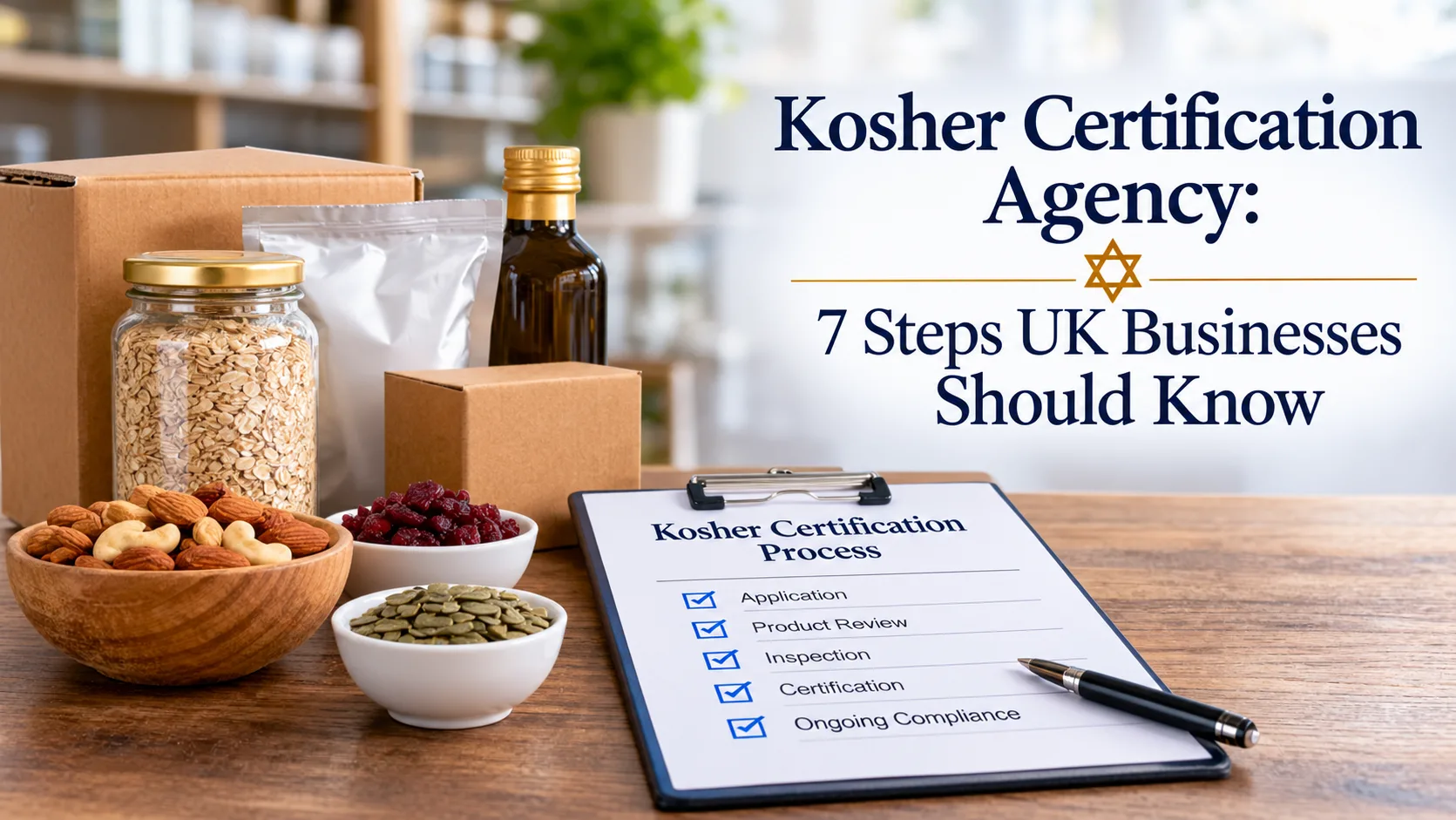
For UK food manufacturers, beverage brands, ingredient suppliers, importers, exporters, restaurants, and caterers, kosher certification can help demonstrate that products and processes meet relevant Jewish dietary requirements.
However, certification involves more than checking ingredient labels. Suppliers, processing aids, equipment, and production methods may also require assessment.
Working with a suitable kosher certification agency helps businesses understand these requirements and prepare for the certification process. KLBD, the Kashrut Division of the London Beth Din, provides kosher certification services for food businesses in the UK and internationally.
This guide explains seven important steps UK businesses should know before applying for kosher certification.
What Does a Kosher Certification Agency Do?
A kosher certification agency assesses whether products, ingredients, and relevant manufacturing or food preparation processes comply with applicable kosher requirements.
The assessment may cover raw materials, processing aids, suppliers, equipment, storage, and production procedures. A product's suitability cannot always be determined from its ingredient label alone because the source of an ingredient and the way it is processed may also matter.
A kosher agency can help businesses understand the documentation, assessments, and ongoing controls required for certification.
Kosher Certification Agency: 7 Steps UK Businesses Should Know
Step 1: Identify Products for Certification
Begin by identifying which products, ingredients, or operations require certification.
Manufacturers may need to list finished products and raw materials, while restaurants and caterers may need to consider ingredients, kitchens, and food preparation methods.
Prepare a list of product names, formulations, suppliers, and manufacturing locations. A clear scope helps the certification team determine which requirements apply to your business.
Step 2: Choose a Suitable Kosher Agency
When selecting a kosher agency, consider its industry experience, technical expertise, certification process, and ability to support your product category.
Check whether your intended customers accept the certification and whether additional requirements apply to your target markets. Certification acceptance can vary between buyers, so confirm this before making commercial commitments.
KLBD is the Kashrut Division of the London Beth Din and provides certification services for food ingredients, retail products, manufacturing facilities, and food service establishments.
Step 3: Submit Your Application
The application process typically involves providing information about your company, products, ingredients, suppliers, and production methods.
Depending on your business, you may need to prepare:
- Product lists and current formulations.
- Ingredient specifications and supplier details.
- Manufacturing process descriptions.
- Information about processing aids and additives.
- Equipment and cleaning procedures, where relevant.
Accurate documentation can reduce additional queries and help the assessment progress efficiently. Ask KLBD which documents are required for your specific application.
Step 4: Review Ingredients and Suppliers
Ingredient assessment is a key part of kosher certification. Certain oils, fats, emulsifiers, enzymes, flavourings, and other additives may require further investigation depending on their sources and manufacturing methods.
The certification team may review supplier documentation, existing certificates, and ingredient specifications. Processing aids may also need consideration, even when they do not remain in the finished product.
Businesses should maintain current supplier records and communicate relevant ingredient changes. A kosher certification agency can explain what evidence is required to establish whether particular ingredients meet the applicable standards.
Step 5: Assess Production Facilities
The certification process may include reviewing manufacturing facilities, equipment, cleaning procedures, storage, and shared production lines.
For food manufacturers, the assessment may focus on production equipment, ingredient handling, and controls used when different products share facilities.
Restaurants and caterers may need to consider kitchen equipment, food storage, preparation methods, and supervision requirements.
A facility assessment can help identify changes or controls needed to meet the applicable requirements. Involving quality assurance, purchasing, and production teams early can make implementation easier.
Step 6: Complete the Assessment and Confirm Certification
After reviewing the application, ingredients, and relevant facilities, the certification team may request additional information or changes before making a decision.
Before certification is finalised, businesses should understand which products and locations are covered, the conditions they must follow, applicable fees, inspection arrangements, and rules governing certification marks.
Submitting an application does not mean a product is already certified. Businesses should wait for formal approval before making certification claims or using the relevant logo.
Step 7: Maintain Certification
Certification requires ongoing attention. Businesses must follow the agreed procedures and communicate changes that could affect product status.
Important responsibilities may include maintaining supplier records, following approved production processes, cooperating with inspections where required, and notifying the certification team about relevant changes to ingredients, equipment, or facilities.
For example, replacing an ingredient supplier may require a review of the new material's source and specifications. Keeping documentation current and training relevant employees can help prevent compliance problems.
A reliable kosher agency should explain the requirements that apply after certification and how businesses should report changes.
Common Kosher Certification Mistakes to Avoid
UK businesses can reduce delays and compliance issues by avoiding these common mistakes:
- Incomplete ingredient lists: Include relevant additives and processing aids in the information provided.
- Unverified suppliers: Do not assume an ingredient is suitable based on its name alone.
- Overlooking equipment: Shared production lines and cleaning procedures may require assessment.
- Unreported changes: Check the agreed requirements before changing ingredients or suppliers.
- Premature certification claims: Use certification marks only after receiving the required authorisation.
- Poor recordkeeping: Keep product formulations, supplier details, and relevant procedures updated.
Choosing a suitable kosher certification agency and assigning clear responsibilities within your business can make ongoing compliance more manageable.
How KLBD Supports UK Businesses
KLBD works with businesses across food manufacturing, ingredients, retail products, and food service. Its certification information helps businesses understand the application process and the requirements relevant to their products and operations.
Before contacting KLBD, prepare your product list, ingredient information, supplier details, and a brief description of your manufacturing or food preparation process.
Explain your intended customers and target markets so the team can better understand your requirements.
Conclusion
Kosher certification involves reviewing products, ingredients, suppliers, and relevant production processes. By following these seven steps, UK businesses can prepare their documentation, understand their responsibilities, and approach the application process with greater confidence.
Working with a suitable kosher certification agency can help clarify requirements and establish procedures for ongoing compliance. KLBD is an option for businesses seeking kosher certification for food products, ingredients, and food service operations.