A food safety audit rarely tests whether a kitchen does the right things. It tests whether the kitchen can prove it. Two weeks out from an accreditation visit, a catering manager often pulls together temperature logs, cleaning checklists and dietary records. Folders, spreadsheets and paper files hold these across different corners of the kitchen. Some records are easy to find. Others take longer, and a few need a quick check with staff to confirm where they left them.
Many Australian aged care kitchen teams know this situation well. Audit preparation works best when it doesn't start with the audit notice. The right kitchen compliance software turns day-to-day record keeping into part of normal kitchen operations, so when the audit arrives, staff already have the information organised.
This article covers why food safety audit preparation matters in aged care. It looks at the common challenges with paper-based records, and how digital tools can help kitchen teams stay on top of compliance throughout the year.
Why Food Safety Audit Preparation Matters in Aged Care
Food safety in aged care carries a different weight than in a standard commercial kitchen. Residents are often older and more vulnerable to illness. Many live with health conditions that make foodborne illness far more serious than it would be for a younger, healthier person.
Many residents also have specific dietary needs that staff must follow exactly. This can include:
Food allergies and intolerances
Texture-modified diets for residents with swallowing difficulties
Diabetic or low-sodium requirements
Cultural or religious dietary preferences
Individual likes, dislikes and nutritional needs
Getting any of this wrong isn't a minor mistake. It can directly affect a resident's health and wellbeing. Safe food preparation, accurate kitchen records and clear staff accountability sit at the centre of daily kitchen operations, not just at audit time.
Auditors don't only check whether records exist. They also look at whether those records stay current and consistent, and whether they genuinely connect to what happens in the kitchen day to day. A folder full of paperwork doesn't tell the whole story unless staff can explain how it connects to actual practice.
Common Challenges with Paper-Based Kitchen Compliance Records
Most aged care kitchens didn't choose paper because it works well. It's often just what's always been there. Over time, a few recurring problems tend to show up.
Paper Records Going Missing
Staff often leave temperature sheets near the fridge. Cleaning checklists sit in a folder in the office. Someone might pin allergen lists to a wall in the kitchen. When everything lives in a different spot, kitchen teams risk losing something before audit time.
Incomplete Records
Kitchen shifts are busy. A staff member checking temperatures in the middle of service might genuinely intend to write it down later, then forget. This isn't a lack of care. It's simply how paper-based processes work under pressure.
Difficult Audit Preparation
Once a facility receives an audit notice, managers often spend hours going back through months of paperwork. They're trying to confirm that everything required is actually there.
Outdated Information
A resident's dietary needs change, but the printed sheet in the kitchen still reflects last month's information. If staff only communicated the update verbally, it can easily slip through the cracks.
Limited Visibility
With paper records, a manager often has no way of knowing whether staff completed a required check. They may only find out days or weeks later, while reviewing the paperwork.
Communication Gaps
Staff sometimes pass on important updates, such as a new allergy or a change to a resident's meal plan, by word of mouth or a handwritten note left on a bench. Busy shift changes make these details easy to miss.
How Kitchen Compliance Software Helps Aged Care Facilities Stay Audit Ready
Centralised Digital Records
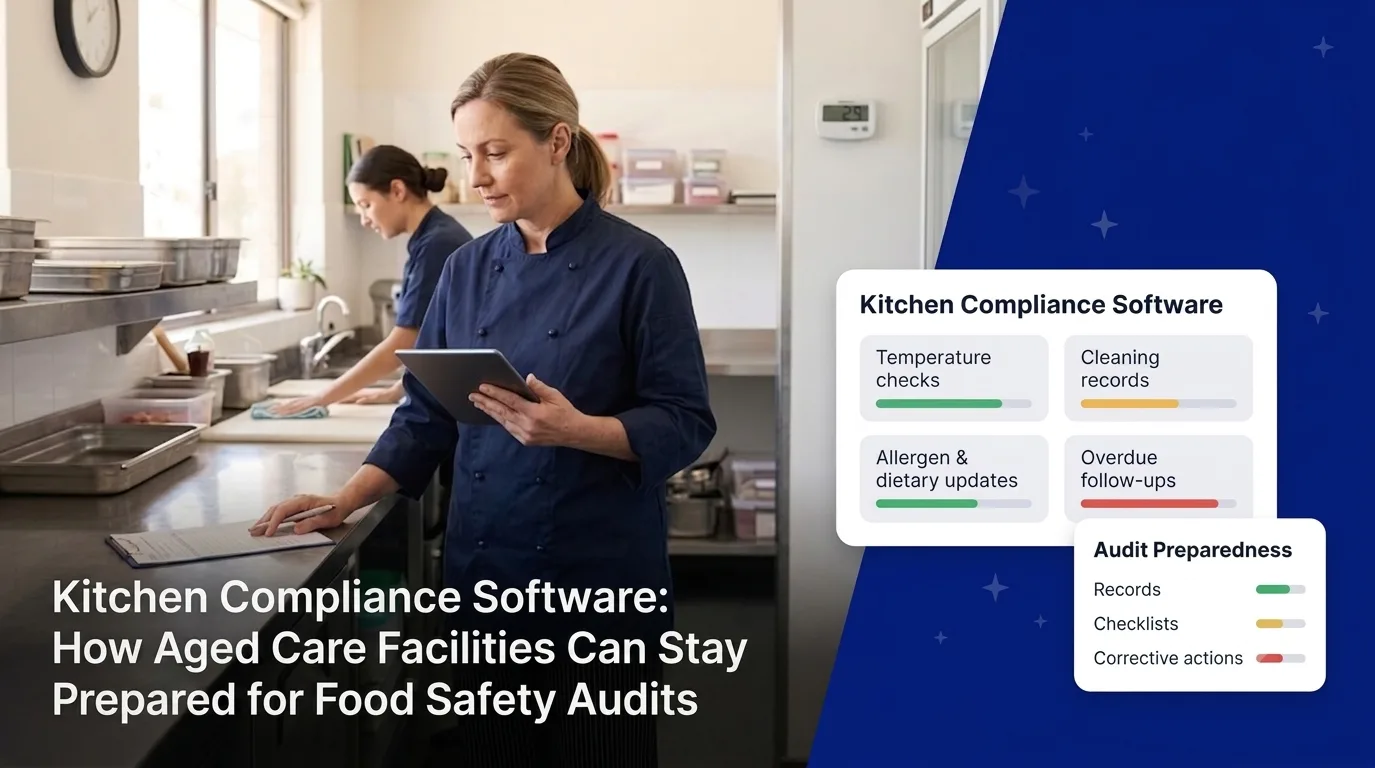
Kitchen compliance software brings food safety records, checklists and dietary information into one place. Managers and staff can look in one system to find what they need, instead of searching through several folders or asking around the kitchen.
Digital Checklists
Digital checklists can track recurring kitchen tasks instead of paper sheets. This might include:
Opening and closing checks
Cleaning procedures
Equipment maintenance checks
Food storage checks
Staff complete these on a device rather than a clipboard, which creates a clear digital trail showing when each staff member finished a task and who signed off on it.
Temperature Records
Recording fridge, freezer and food temperatures consistently is one of the most basic but important parts of kitchen compliance. Digital temperature records give managers clearer visibility into what staff have checked, when, and whether anything falls outside the expected range. Nobody needs to flick through a printed log to find out.
Allergen and Dietary Information
Keeping allergen, intolerance and dietary information accurate and accessible is genuinely one of the higher-risk areas in aged care catering. Digital systems can help kitchen teams see current information for:
Food allergies
Intolerances
Dietary preferences
Special or texture-modified diets
This matters most where catering and care teams need to stay in sync. When care staff record a change, it can reach the kitchen team without a verbal handover in between.
Better Record Visibility
Managers can look through organised digital records to find what they need for an audit, a review or a routine check-in. Nobody has to search through cabinets or ask colleagues where something is filed.
Supporting Follow-Up
Sometimes a check gets missed, or a temperature reading falls outside the expected range. Digital systems can help teams log the issue and record what action they took. This doesn't prevent problems from happening, but it does help teams respond and follow up in a documented, consistent way.
Real-World Aged Care Kitchen Examples
Sarah, a catering manager at a Melbourne aged care facility, used to spend the better part of a day before every audit tracking down temperature logs and cleaning records from different corners of the kitchen. Now, with everything organised in one digital system, she can review what's available in far less time. She can also spot gaps before they become a problem during the actual audit.
In another facility, a resident's dietary requirements changed after a hospital stay. Staff entered the update into a shared digital system, so the kitchen team had current information ready before the next meal service, rather than relying on a handwritten note during handover.
Read More About Kitchen Compliance Software: How Aged Care Facilities Can Stay Prepared for Food Safety Audits Here : https://centrimlife.com.au/blog/kitchen-compliance-software-how-aged-care-facilities-can-stay-prepared-for-food-safety-audits/
Kitchen Compliance Software for Food Safety Audits | Centrim Life
Kitchen Compliance Software helps Australian aged care kitchens organise food safety records