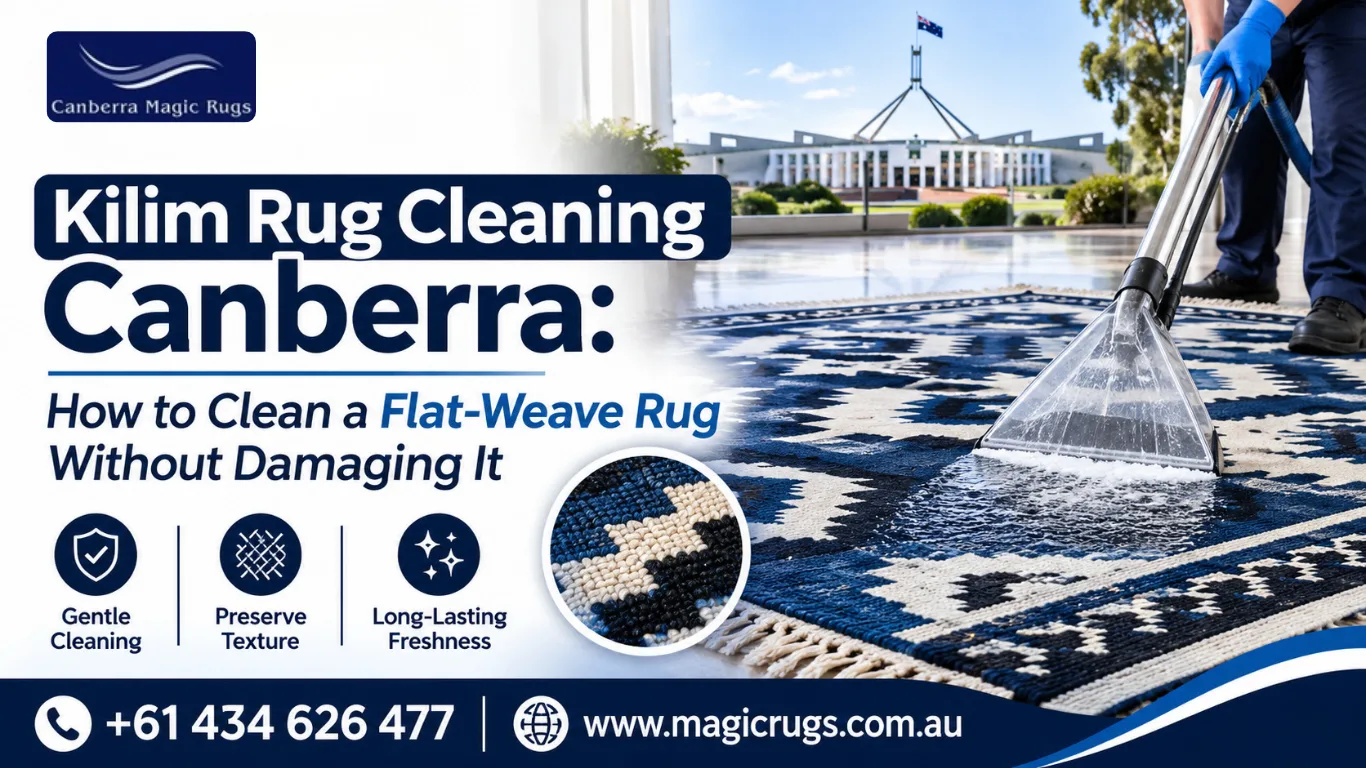
Kilim rugs are characterized by their light, flat weave, brightly colored rugs, and their detailed designs. They must be cared for properly to keep them looking beautiful and not damage the delicate fibres. The professionals provide canberra rug cleaning services which can help eliminate embedded dust, dirt and tough stains without harming the original texture and colors of the rug. Magic Rugs provides Canberra homeowners with specialized rug cleaning services, all designed to help them keep their rugs looking their very best. Check out their detailed article on the proper methods for cleaning flat-weave rugs and the tips for rug maintenance.
What Makes a Kilim Different From a Pile Rug
A kilim is flat-woven, not knotted. There's no raised pile sitting on top of a backing.
Instead, the coloured weft threads are interlocked directly with the warp. The pattern you see is the structure itself. There's nothing underneath hiding the weave or absorbing rough handling.
Kilims originate from Turkey, Iran, the Caucasus and the Balkans, and most older pieces use natural plant or mineral dyes. Those dyes are gorgeous, but they're far more sensitive to water, heat and alkaline cleaning products than modern synthetic dyes used in machine-made carpets.
That single fact — no pile, sensitive dye, tight hand-woven structure — changes almost every rule of normal rug care.
Wool vs Cotton Kilims
- Wool kilims hold up better to moisture but felt and shrink under heat.
- Cotton or silk-blend kilims are more prone to colour bleeding and need lower water volume.
- Vintage or antique kilims often have brittle fringe that tears under machine agitation.
Why DIY Cleaning Damages Flat-Weave Kilims
Most damage doesn't happen from dirt. It happens from well-meaning home cleaning.
Carpet shampoo, steam cleaners and rental machines are built for synthetic pile carpet. Push that onto a kilim and you're asking for trouble.
- Hot water: sets stains permanently and can felt wool fibres.
- Beater-bar vacuums: snag and pull the flat weave, leaving permanent lines.
- Washing machines: twist and distort the weave — kilims should never go in one.
- Harsh or alkaline detergent: strips natural dye and causes colour runs between adjoining colour blocks.
- Machine drying: shrinks wool and cotton kilims unevenly, warping the shape permanently.
To clean a kilim rug safely: vacuum both sides on low suction with no beater bar, spot-test any cleaning solution on a hidden corner, blot (never rub) stains with a pH-neutral solution, rinse lightly with cool water, then dry the rug fully flat out of direct sun before rolling or placing it back down.
If a stain has already set, or the rug smells of pet urine, trapped moisture will keep breaking down the fibres from the inside. That's usually the point where professional handmade rug cleaning in Canberra becomes worth it over another home attempt.
How Professional Kilim Cleaning Works, Step by Step
A proper kilim clean follows the same fibre-specific logic that industry cleaning standards for textile floor coverings set out for sensitive hand-woven pieces — just slowed right down for a weave with no pile to protect it.
- Inspection: fibre type, dye stability, existing damage and fringe condition are checked first.
- Dry soil removal: both sides are dusted and vacuumed on low suction to pull grit out of the weave.
- Colourfastness test: a hidden corner is tested with the cleaning solution before anything touches the main rug.
- Hand washing: a pH-neutral solution is worked in gently by hand, never a rotary machine.
- Full rinse: every trace of detergent is flushed out, since leftover residue attracts dirt again fast.
- Controlled drying: the kilim is laid completely flat, away from direct sun and heaters, until bone dry.
- Final grooming: fringe is combed straight and the rug is checked for any new wear before it goes home.
This is also the point where fringe and edge issues get caught early. If yours already has fraying, it's worth pairing a clean with professional rug restoration in Canberra rather than waiting for it to spread.
Not sure if your kilim needs a clean or a repair first? Get a free assessment from Magic Rugs Canberra.
Common Kilim Problems Canberra Homes Run Into
Canberra's dry climate and big seasonal temperature swings bring their own set of kilim issues.
Dye Bleeding
Older natural dyes run when they meet water that's too warm or too alkaline. Once one colour bleeds into a neighbouring one, it's very hard to reverse. Full details on this are in our guide on rug colour bleeding in Canberra.
Shrinkage and Shape Distortion
Wool and cotton kilims shrink unevenly if dried with heat or folded while still damp. A rug that used to lie flat can end up with permanent ripples.
Fringe Fraying
Fringe is the first thing to wear out on a flat weave, especially under a doorway or heavy foot traffic.
Pet Odours Trapped in the Weave
Because a kilim has no padding or backing to trap moisture away from the floor, pet accidents soak straight through and keep smelling until the fibres are properly flushed.
Keeping a Kilim Clean Between Professional Washes
Good maintenance stretches the time between full cleans and protects the dye long-term.
- Vacuum weekly on low suction, with the beater bar switched off.
- Rotate the rug every few months so wear and sun fading stay even.
- Blot spills immediately — never rub, since rubbing pushes the stain deeper into the weave.
- Keep kilims out of direct, harsh sunlight where possible to slow colour fading.
- Shake smaller kilims outdoors occasionally to release trapped grit.
- Book a professional clean roughly every 12 to 18 months for rugs in regular foot traffic.
Choosing a Kilim Rug Cleaner in Canberra
Not every carpet cleaning company understands flat weaves. Ask these questions before booking:
A specialist who works with handmade kilim and flat-weave collections day to day will usually spot fibre and dye issues a general carpet cleaner would miss entirely.
Protect your kilim's weave and colour with cleaners who actually specialise in flat-weave rugs.
Book Kilim Rug Cleaning in Canberra Today →
People Also Ask
What is a kilim rug made of?
Most kilims are made of wool, sometimes combined with cotton or silk for detail work. The flat weave has no pile, so the weft threads themselves form the pattern.
How do I clean a kilim rug at home?
Vacuum both sides on low suction, test any cleaner on a hidden corner first, blot stains gently, rinse lightly, then dry the rug completely flat. Avoid hot water, machines and direct sun while drying.
Kilim vs Persian rug — what's the difference?
A kilim is flat-woven with no pile, while a Persian rug is hand-knotted with a raised pile sitting on a woven foundation. Persian rugs tolerate more moisture; kilims need lighter, gentler cleaning.
Best way to remove a stain from a kilim?
Blot immediately with a dry white cloth, never rub. For set-in stains, a professional cleaner can treat the area without spreading it or triggering dye bleed.
How often should a kilim be professionally cleaned?
Every 12 to 18 months for rugs in regular foot traffic, and every 2 to 3 years for low-traffic or decorative kilims.
Can a kilim rug be washed in a washing machine?
No. A washing machine twists and distorts the flat weave and can cause permanent shrinkage or shape loss. Kilims should always be cleaned by hand.
Where can I get kilim rug cleaning in Canberra?
Look for a Canberra cleaner who specifically handles handmade and flat-weave rugs rather than general carpet and upholstery work, since the cleaning method is quite different.
Contact Magic Rugs – Canberra’s most trusted rug experts
· Call Us: +61 434 626 477
· Email: skohistani50@gmail.com
· Website: magicrugs.com.au
· GMB Profile: https://share.google/Ta43LVhDWki5BFkPy
· Support: Fast help with rug selection, orders & delivery