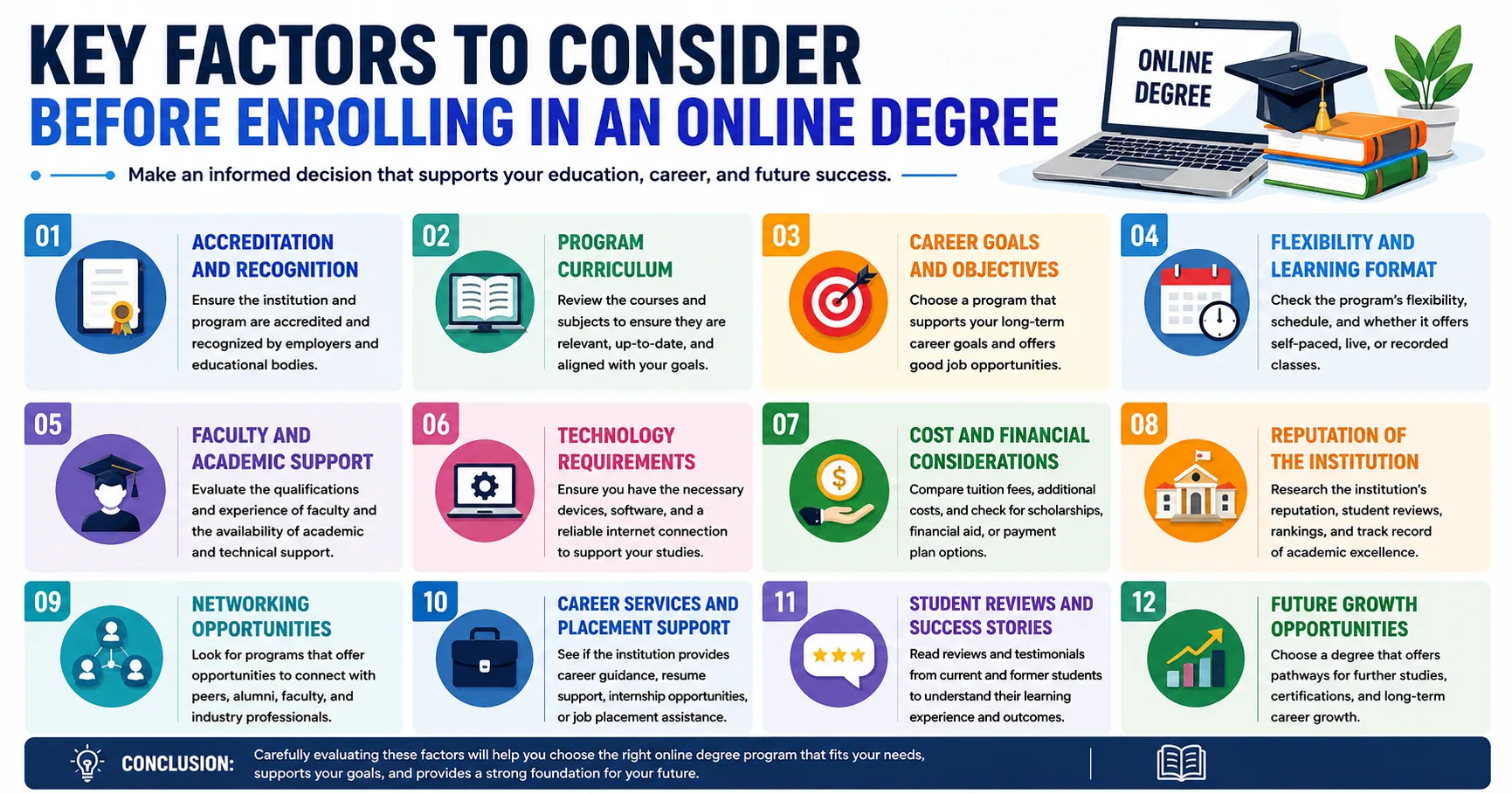
Online education has become an increasingly popular choice for students and working professionals seeking flexibility, accessibility, and career advancement. With a wide range of online degree programs available, learners can pursue higher education from virtually anywhere in the world. However, choosing the right online degree requires careful evaluation to ensure it aligns with your academic, professional, and personal goals.
Before enrolling in an online degree program, it is important to consider several factors that can impact your learning experience, career opportunities, and overall return on investment.
Accreditation and Recognition
One of the most important factors to consider is whether the institution and program are accredited. Accreditation ensures that the educational institution meets established academic standards and delivers quality education.
Before enrolling, verify:
- Institutional accreditation
- Program-specific accreditation
- Recognition by employers
- International acceptance (if applicable)
An accredited degree is more likely to be valued by employers and accepted for further studies.
Program Curriculum
Carefully review the curriculum to ensure it covers relevant subjects and aligns with your career goals. A strong curriculum should provide both theoretical knowledge and practical skills needed in today's job market.
Look for courses that include:
- Industry-relevant content
- Practical applications
- Case studies and projects
- Skill development opportunities
A well-designed curriculum helps prepare students for real-world challenges and professional success.
Career Goals and Objectives
Before selecting a program, consider how the degree supports your long-term career aspirations.
Ask yourself:
- What career do I want to pursue?
- Will this degree help me achieve my goals?
- Does the program offer relevant specializations?
- What job opportunities are available after graduation?
Choosing a degree that aligns with your ambitions increases the likelihood of career satisfaction and growth.
Flexibility and Learning Format
Different online programs offer varying levels of flexibility. Some programs are fully self-paced, while others require attendance at live virtual classes.
Evaluate factors such as:
- Study schedule flexibility
- Live versus recorded lectures
- Assignment deadlines
- Examination requirements
Selecting a format that suits your lifestyle can improve your learning experience and academic performance.
Faculty and Academic Support
The quality of instructors plays a significant role in educational success. Research the qualifications and experience of faculty members.
Additionally, check whether the institution provides:
- Academic advising
- Career counseling
- Technical support
- Student mentoring services
Strong support systems can help students overcome challenges and stay motivated throughout their studies.
Technology Requirements
Online learning depends heavily on technology. Before enrolling, ensure you have access to the necessary tools and resources.
Consider:
- Reliable internet connection
- Compatible devices
- Learning management systems
- Required software applications
Understanding technical requirements beforehand can help avoid disruptions during your studies.
Cost and Financial Considerations
Higher education is an investment, so it is important to evaluate the overall cost of the program.
Review:
- Tuition fees
- Examination fees
- Learning materials
- Additional administrative charges
Also consider available scholarships, financial aid, or employer-sponsored education programs that may help reduce costs.
Reputation of the Institution
Research the reputation and track record of the institution offering the online degree.
Look for:
- Student reviews and testimonials
- Graduation rates
- Employer recognition
- Industry partnerships
A reputable institution can enhance the value of your qualification and improve career prospects.
Networking Opportunities
Networking remains an important aspect of education and career development. Some online programs offer opportunities to connect with peers, faculty, alumni, and industry professionals.
Networking opportunities may include:
- Virtual events
- Discussion forums
- Group projects
- Alumni communities
Strong professional networks can support future career growth and job opportunities.
Career Services and Placement Support
Many institutions provide career development resources to help students transition into the workforce.
Check if the program offers:
- Resume-building assistance
- Interview preparation
- Internship opportunities
- Job placement support
Career services can add significant value to your educational investment.
Student Reviews and Success Stories
Reading reviews from current and former students can provide valuable insights into the program's strengths and weaknesses.
Pay attention to feedback regarding:
- Course quality
- Faculty support
- Learning experience
- Career outcomes
Student experiences often provide a realistic picture of what to expect.
Future Growth Opportunities
Consider whether the degree will support your long-term educational and professional development.
Look for programs that provide pathways to:
- Master's degrees
- MBA programs
- Professional certifications
- Leadership roles
A degree that supports continuous learning can contribute to lifelong career success.
Conclusion
Enrolling in an online degree program is a significant decision that can influence your future career and personal growth. By carefully evaluating factors such as accreditation, curriculum, flexibility, cost, faculty quality, and career support, you can make an informed choice that aligns with your goals.
A well-chosen online degree can provide valuable knowledge, industry-relevant skills, and enhanced career opportunities while offering the flexibility needed to balance education with other responsibilities. Taking the time to research and compare options will help ensure a rewarding and successful educational journey.
Short Summary
Before enrolling in an online degree, students should evaluate accreditation, curriculum quality, flexibility, costs, faculty support, and career opportunities. Choosing the right program ensures a valuable learning experience and supports long-term academic and professional success.