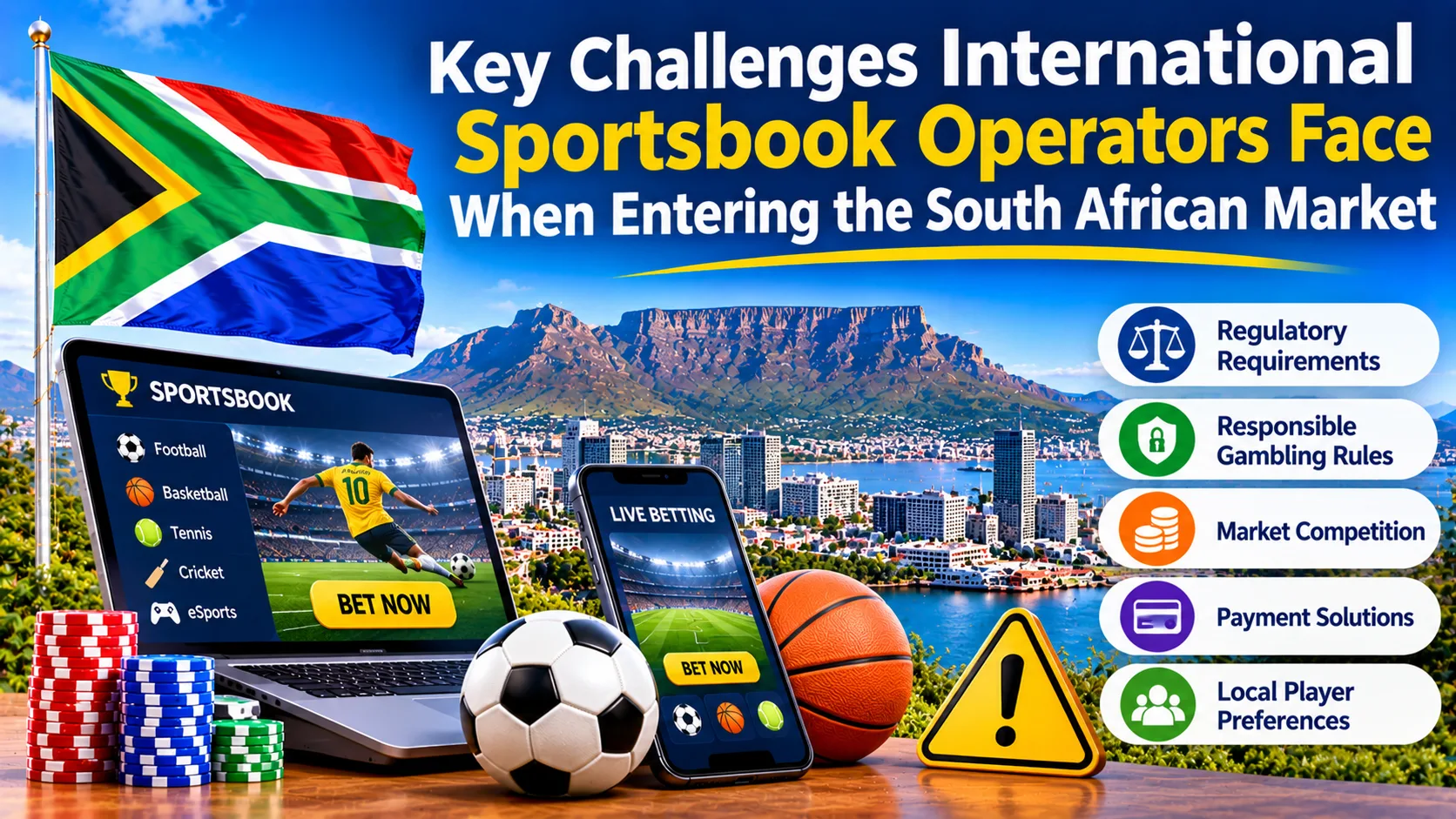
South Africa has become an important market for international betting businesses looking to expand across Africa. However, entering this market requires careful planning, local knowledge, and reliable technology. Companies such as Playage Gaming provide B2B sportsbook and casino platform solutions that can support operators planning to enter different regional markets.
Although South Africa offers growth opportunities, international sportsbook operators must understand its regulatory environment, payment preferences, competition, and customer expectations before launching their platforms.
Understanding South Africa's Betting Regulations
Regulatory compliance is one of the first challenges for international sportsbook operators. South Africa has a provincial licensing system for sports betting, meaning operators generally need to obtain the appropriate license from the relevant provincial gambling authority.
The licensing process involves meeting specific legal and operational requirements. Businesses must also understand local rules concerning advertising, responsible gambling, player verification, and financial reporting.
Operators entering the market should work with local legal professionals who understand the country's gambling legislation. A clear compliance strategy can help prevent delays and reduce the risk of regulatory problems after launch.
Building a Reliable Local Payment System
Payment options play an important role in the success of online betting platforms. South African customers may prefer familiar local payment methods rather than relying only on international cards or payment services.
International operators need to research which payment options are available to their target audience. They should also consider deposit and withdrawal processing times, transaction security, payment limits, and verification requirements.
A smooth payment experience can improve customer confidence and reduce the chances of users leaving a platform during registration or transactions. Payment integrations should therefore be considered during the early stages of platform development.
Competing in an Established Sports Betting Market
South Africa already has a competitive sports betting industry with established local and international brands. New operators may find it difficult to attract customers who are familiar with existing platforms.
To compete effectively, businesses need to offer more than basic betting services. Competitive odds, a wide range of sporting events, convenient mobile access, reliable customer support, and attractive user experiences can help a new platform stand out.
Understanding local sports interests is equally important. Football, rugby, cricket, and horse racing all have established audiences in South Africa. Operators that understand these preferences can build more relevant betting products and promotional campaigns.
Choosing the Right Sportsbook Technology
Technology is another major consideration when entering a new market. A sportsbook platform needs to handle user registrations, betting markets, odds management, account balances, payments, and reporting without creating unnecessary complications.
Operators can explore different technology models depending on their business plans. Some prefer to develop a platform independently, while others choose turnkey sportsbook solutions to reduce development time and access established technology.
Businesses evaluating platform providers can review the available solutions on Playage Gaming's turnkey sportsbook platform. Features such as sportsbook management tools, game integrations, payment connections, and backend functionality can help operators manage their operations more efficiently.
Understanding Local Customer Behavior
International operators cannot assume that betting customers in South Africa behave exactly like customers in other markets. Local sports preferences, mobile usage, payment habits, and expectations around customer service can influence platform performance.
Market research can help businesses identify their target audience and understand which features matter most. For example, some users may prioritize live betting, while others may be more interested in pre-match markets, multiple sports, or simple account management.
Providing localized content and responsive customer support can also improve the overall user experience. Operators should consider local terminology, relevant sporting events, and accessible support channels when designing their platforms.
Mobile Experience and Platform Performance
Mobile devices are an important part of South Africa's digital environment. Many betting customers access online services through smartphones, making mobile performance a key factor for sportsbook operators.
A platform should load quickly, work across different screen sizes, and provide straightforward navigation. Slow pages, complicated registration processes, or payment issues can negatively affect user engagement.
Operators should also test platform performance under different network conditions. A responsive mobile website or well-designed application can make it easier for customers to access betting markets and manage their accounts.
Marketing and Customer Acquisition Challenges
Building brand awareness in a competitive market can be difficult for international sportsbook businesses. Established operators may already have strong customer recognition, marketing partnerships, and local visibility.
New entrants need to develop marketing strategies that comply with South African advertising and gambling regulations. They should avoid relying only on promotional offers and instead focus on brand credibility, useful content, customer support, and a consistent user experience.
Market-specific research can also help operators identify suitable regions and business opportunities. Exploring different international markets through resources such as Playage Gaming's market overview can provide a broader perspective on regional iGaming developments.
Learning from Other Emerging Betting Markets
South Africa is not the only market attracting international betting businesses. Countries such as Brazil are also experiencing changes in their online betting industries, creating new opportunities and challenges for operators.
However, every market has its own regulatory structure, customer preferences, and competitive conditions. Strategies that work in one country may not deliver the same results elsewhere.
An overview of emerging opportunities in Brazil's online casino and sports betting market offers another perspective on how operators can evaluate developing markets and adapt their business strategies to local conditions.
Final Thoughts
South Africa offers opportunities for international sportsbook operators, but entering the market requires more than launching a betting website. Businesses need to understand provincial licensing requirements, local payment preferences, customer behavior, competition, and technology expectations.
A well-planned market entry strategy, supported by reliable sportsbook technology and a strong understanding of local requirements, can help operators build a sustainable presence. Careful research and ongoing compliance should remain priorities as the business develops.