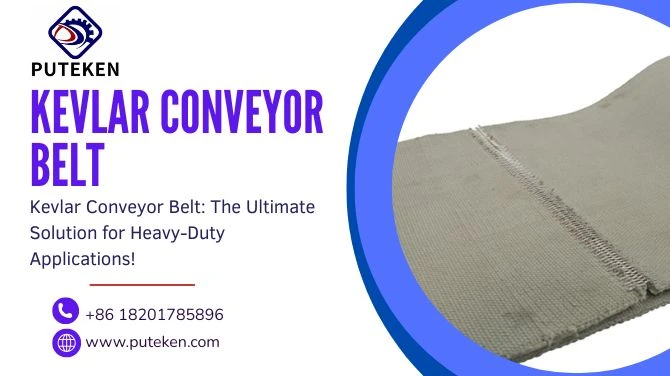
In the demanding world of industrial material handling, the choice of conveyor belts plays a pivotal role in ensuring operational efficiency, safety, and longevity. Among the various types of conveyor belts available today, the Kevlar conveyor belt stands out as a superior solution, especially for heavy-duty applications. At Shanghai Puteken Transmission System Co., Ltd., we understand the critical importance of durability, strength, and reliability in conveyor systems. Therefore, we proudly offer Kevlar conveyor belts designed to meet and exceed the rigorous demands of industries such as mining, construction, steel manufacturing, and more.
Why Choose Kevlar Conveyor Belts?
Firstly, Kevlar is a synthetic fiber renowned for its exceptional tensile strength-to-weight ratio, which is five times stronger than steel on an equal weight basis. This unique property makes Kevlar conveyor belts incredibly resistant to stretching, tearing, and impact damage. Consequently, these belts maintain their structural integrity under extreme stress, which is a common challenge in heavy-duty material handling environments.
Moreover, Kevlar conveyor belts offer excellent resistance to heat, abrasion, and chemical exposure. This means they can operate efficiently in harsh conditions where traditional belts might fail prematurely. For industries that handle abrasive materials or operate in high-temperature environments, Kevlar belts provide a reliable and cost-effective solution by reducing downtime and maintenance costs.
Enhanced Performance and Longevity
In addition to their strength and durability, Kevlar conveyor belts contribute to enhanced operational performance. Their lightweight nature reduces the load on conveyor pulleys and motors, leading to energy savings and less wear on mechanical components. Furthermore, the stability provided by Kevlar reinforcement ensures consistent belt tracking and reduces the risk of belt misalignment, which can cause costly production interruptions.
At Shanghai Puteken Transmission System Co., Ltd., we leverage advanced manufacturing techniques to produce Kevlar conveyor belts that meet international quality standards. Our belts undergo rigorous testing to ensure they deliver optimal performance in the most challenging industrial settings.
Applications of Kevlar Conveyor Belts
Transitioning to practical applications, Kevlar conveyor belts are widely used in sectors where heavy loads and harsh conditions are prevalent. For example:
- Mining Industry: Transporting heavy ores and minerals requires belts that can withstand sharp edges and heavy impacts. Kevlar belts provide the necessary toughness and durability.
- Construction: Handling aggregates, cement, and other construction materials demands belts that resist abrasion and tearing.
- Steel Industry: High temperatures and heavy loads in steel plants necessitate belts that maintain strength and stability under extreme conditions.
- Recycling and Waste Management: Kevlar belts can endure the abrasive and often unpredictable nature of recycled materials.
- Sustainability and Cost Efficiency
Furthermore, investing in Kevlar conveyor belts aligns with sustainability goals. Their extended service life reduces the frequency of belt replacements, minimizing waste and lowering the environmental footprint of industrial operations. Additionally, the reduced maintenance requirements translate into lower operational costs, making Kevlar belts a financially sound choice over the long term.
The Science Behind Kevlar: Why It’s Ideal for Conveyor Belts
To fully appreciate the advantages of Kevlar conveyor belts, it’s important to understand the material itself. Kevlar is an aramid fiber developed by DuPont in the 1960s, originally designed for use in bulletproof vests and aerospace applications. Its molecular structure consists of long chains of aromatic polyamides, which provide exceptional strength and thermal stability.
Unlike traditional polyester or nylon fibers used in conveyor belts, Kevlar fibers have a tensile strength of approximately 3,620 MPa (megapascals), which is significantly higher than steel on a weight-to-weight basis. This means Kevlar belts can handle much higher loads without stretching or breaking, which is critical in heavy-duty industrial environments.
Additionally, Kevlar’s resistance to heat degradation allows conveyor belts to operate in temperatures up to 400°C (752°F) without losing structural integrity. This is a major advantage in industries such as steel manufacturing or glass production, where belts are exposed to extreme heat.
Key Features of Kevlar Conveyor Belts
1. High Tensile Strength:
Kevlar reinforcement provides superior tensile strength, allowing the belt to carry heavier loads over longer distances without elongation or failure.
2. Abrasion Resistance:
The tough Kevlar fibers resist wear and tear caused by abrasive materials such as ores, coal, and gravel, extending the belt’s service life.
3. Heat Resistance:
Kevlar belts maintain their performance in high-temperature environments, making them suitable for applications involving hot materials or exposure to heat sources.
4. Chemical Resistance:
Kevlar fibers are resistant to many chemicals, oils, and solvents, which helps prevent belt degradation in harsh industrial settings.
5. Lightweight:
Despite their strength, Kevlar fibers are lightweight, reducing the overall weight of the conveyor belt. This leads to lower energy consumption and less strain on conveyor components.
6. Dimensional Stability:
Kevlar belts exhibit minimal elongation under load, ensuring consistent belt tracking and reducing the risk of misalignment and spillage.
Manufacturing Process of Kevlar Conveyor Belts at Shanghai Puteken Transmission System Co., Ltd.
At Shanghai Puteken Transmission System Co., Ltd., we employ state-of-the-art manufacturing techniques to produce Kevlar conveyor belts that meet the highest quality standards. Our process includes:
- Material Selection: We source premium Kevlar fibers and high-quality rubber compounds to ensure optimal performance and durability.
- Layering and Reinforcement: Kevlar fibers are carefully integrated into the belt carcass, providing reinforcement without compromising flexibility.
- Vulcanization: The belts undergo a controlled vulcanization process to bond the rubber and Kevlar layers, enhancing strength and elasticity.
- Quality Control: Each belt is subjected to rigorous testing, including tensile strength tests, abrasion resistance assessments, and heat tolerance evaluations.
- Customization: We offer tailored solutions to meet specific client requirements, including belt width, length, thickness, and surface texture.
Advantages of Using Kevlar Conveyor Belts in Heavy-Duty Applications
- Reduced Downtime:
- Because Kevlar belts are more resistant to damage, they require less frequent replacement and maintenance. This translates into less downtime and higher productivity.
- Lower Total Cost of Ownership:
- Although Kevlar conveyor belts may have a higher upfront cost compared to conventional belts, their longevity and reduced maintenance needs result in significant cost savings over time.
- Improved Safety:
- Kevlar belts are less prone to sudden failures, which can cause accidents and injuries. Their stability and durability contribute to a safer working environment.
- Energy Efficiency:
- The lightweight nature of Kevlar belts reduces the power needed to drive the conveyor system, leading to energy savings and lower operational costs.
Real-World Applications and Case Studies
- Mining Industry:
- In mining operations, conveyor belts must transport heavy, abrasive materials such as coal, iron ore, and bauxite. Kevlar conveyor belts have proven to withstand the harsh conditions of mining sites, including sharp rocks and heavy impacts, without frequent damage or stretching.
- Construction and Aggregate Handling:
- Construction sites require belts that can handle rough materials like sand, gravel, and concrete. Kevlar belts resist abrasion and tearing, ensuring continuous operation even in dusty and abrasive environments.
- Steel and Metal Processing:
- Steel plants expose conveyor belts to extreme heat and heavy loads. Kevlar belts maintain their strength and flexibility under these conditions, preventing costly production interruptions.
- Recycling Facilities:
- Recycling operations involve handling mixed materials, including metals, plastics, and glass shards. Kevlar belts’ chemical and abrasion resistance make them ideal for these unpredictable environments.
Maintenance Tips for Kevlar Conveyor Belts
To maximize the lifespan and performance of Kevlar conveyor belts, proper maintenance is essential. Here are some best practices:
- Regular Inspections: Check for signs of wear, damage, or misalignment regularly.
- Proper Tensioning: Ensure the belt is correctly tensioned to avoid excessive strain or slippage.
- Cleanliness: Keep the belt and conveyor system clean to prevent material buildup that can cause abrasion.
- Avoid Sharp Edges: Use skirt boards and impact beds to protect the belt from sharp or heavy objects.
- Lubrication: Maintain conveyor components such as pulleys and bearings to reduce friction and wear.
Environmental Impact and Sustainability
Sustainability is a growing concern in industrial operations. Kevlar conveyor belts contribute positively by:
- Reducing Waste: Their long service life means fewer belts are discarded, reducing landfill waste.
- Energy Savings: Lightweight belts reduce energy consumption, lowering carbon emissions.
- Recyclability: Some components of Kevlar belts can be recycled or repurposed, supporting circular economy initiatives.
Why Partner with Shanghai Puteken Transmission System Co., Ltd.?
Choosing the right supplier is as important as choosing the right conveyor belt. Shanghai Puteken Transmission System Co., Ltd. offers:
- Expertise: Decades of experience in manufacturing and supplying conveyor belts for heavy-duty applications.
- Customization: Ability to tailor products to meet specific operational needs.
- Quality Assurance: Commitment to international standards and continuous product improvement.
- Technical Support: Comprehensive after-sales service, including installation guidance and maintenance support.
- Competitive Pricing: Offering high-quality Kevlar conveyor belts at competitive prices to maximize your ROI.
The Kevlar conveyor belt is undeniably the ultimate solution for heavy-duty applications. Its unparalleled strength, durability, and resistance to harsh conditions make it an indispensable component in modern industrial conveyor systems. At Shanghai Puteken Transmission System Co., Ltd., we are committed to providing high-quality Kevlar conveyor belts that empower businesses to achieve greater efficiency, safety, and sustainability.
Frequently Asked Questions (FAQ)
Q1: What is a Kevlar conveyor belt?
A Kevlar conveyor belt is a type of conveyor belt reinforced with Kevlar fibers, known for their exceptional strength and durability. These belts are designed to handle heavy loads and resist abrasion, heat, and chemical damage.
Q2: How does Kevlar improve conveyor belt performance?
Kevlar fibers provide high tensile strength, reducing belt stretch and increasing resistance to tearing and impact. This results in longer belt life, better tracking, and reduced maintenance.
Q3: In which industries are Kevlar conveyor belts commonly used?
They are widely used in mining, construction, steel manufacturing, recycling, and other heavy-duty industries where belts face extreme conditions.
Q4: Are Kevlar conveyor belts cost-effective?
Yes, despite a higher initial cost, Kevlar belts offer cost savings over time due to their durability, reduced downtime, and lower maintenance needs.
Q5: Can Kevlar conveyor belts operate in high-temperature environments?
Yes, Kevlar fibers have excellent heat resistance, making these belts suitable for high-temperature industrial applications.
Q6: How does Shanghai Puteken Transmission System Co., Ltd. ensure the quality of Kevlar conveyor belts?
We use advanced manufacturing processes and conduct rigorous quality control tests to ensure our Kevlar conveyor belts meet international standards and perform reliably in demanding environments.
Q7: How does Kevlar compare to steel cords in conveyor belts?
Kevlar offers similar tensile strength to steel cords but is much lighter and more flexible. This reduces the overall weight of the belt and the load on conveyor components, improving energy efficiency and reducing wear.
Q8: Can Kevlar conveyor belts be used in wet or corrosive environments?
Yes, Kevlar fibers are resistant to many chemicals and moisture, making these belts suitable for wet or mildly corrosive environments. However, the rubber cover and other belt components should be selected based on specific environmental conditions.
Q9: What is the typical lifespan of a Kevlar conveyor belt?
The lifespan varies depending on application and maintenance but generally ranges from 3 to 7 years, which is significantly longer than conventional belts under similar conditions.
Q10: Are Kevlar conveyor belts flame retardant?
Kevlar fibers have inherent flame-resistant properties, but the overall flame resistance of the belt depends on the rubber compound used. Flame-retardant covers can be added for applications requiring fire safety compliance.
Q11: How do I know if a Kevlar conveyor belt is right for my application?
If your operation involves heavy loads, abrasive materials, high temperatures, or harsh chemicals, a Kevlar conveyor belt is likely a suitable choice. Our technical team at Shanghai Puteken Transmission System Co., Ltd. can help assess your needs and recommend the best solution.
Q12: What sizes and specifications are available for Kevlar conveyor belts?
We offer a wide range of sizes, thicknesses, and cover types. Custom specifications can be accommodated to fit your conveyor system perfectly.