
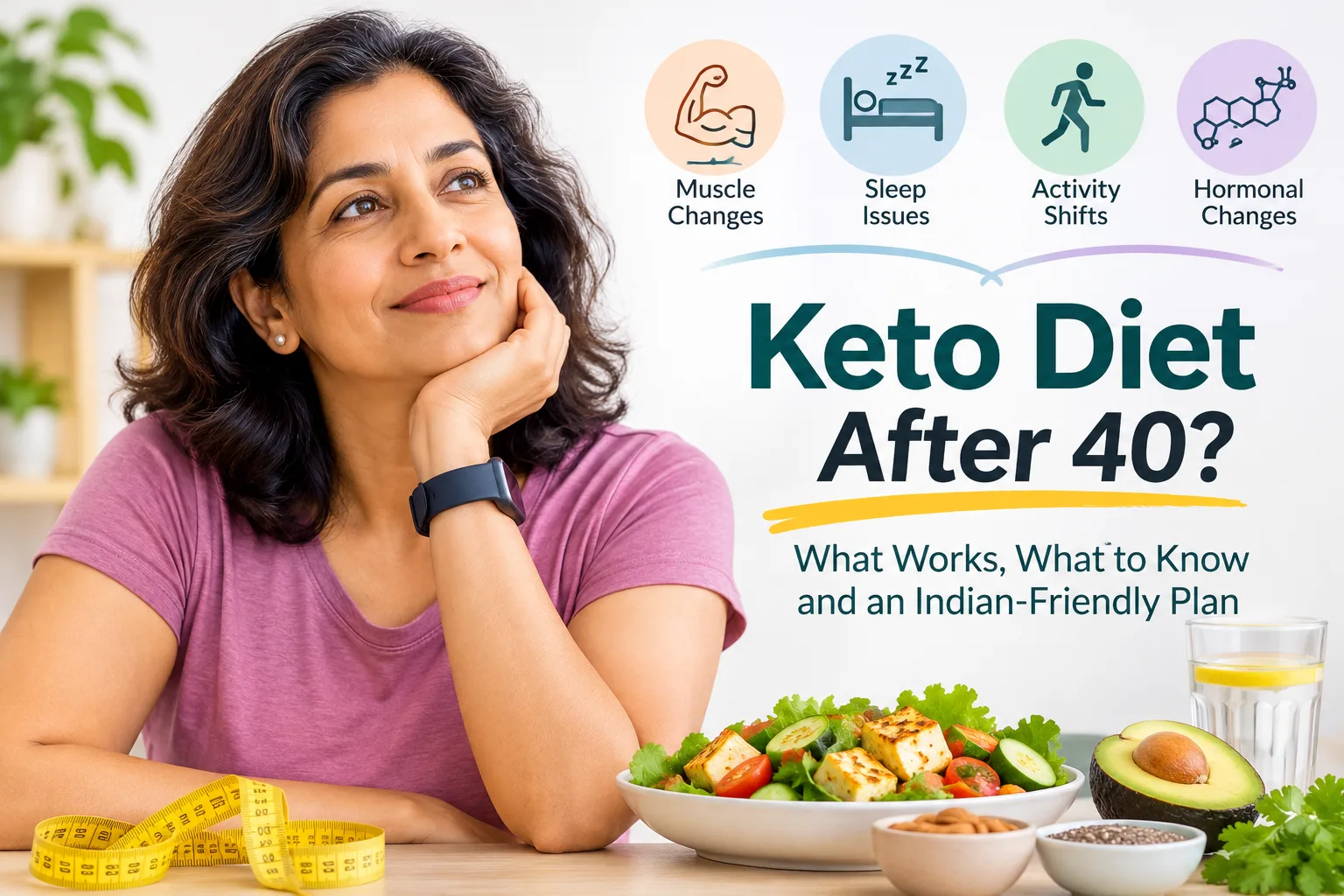
If losing weight feels different after 40, you are not imagining it. Midlife brings changes in muscle mass, sleep, activity, and—in many women—the hormonal shifts of perimenopause. Together, these can make weight management more challenging. The answer is not necessarily to eat less and exercise harder, but to find an approach that supports your changing needs.
A keto diet can help some women lose weight, but it is not automatically the best method for everyone over 40. Research comparing low-carbohydrate and balanced-carbohydrate weight-loss diets finds little to no difference in average weight loss over one to two years. What matters is whether your eating plan is nutritious, medically appropriate, and realistic to maintain.
Here is how keto works, where it may help, and what an Indian-food-friendly approach can look like.
Why Can Weight Management Become Harder After 40?
Weight changes in midlife are not simply a matter of willpower. Age-related muscle loss can reduce energy needs, while menopause-related hormonal changes can shift fat storage towards the abdomen. Poor sleep, stress, and reduced physical activity can add to the challenge. Not every woman over 40 is in perimenopause, and individual experiences vary.
This is why a successful plan should do more than move the number on the scale. Preserving muscle, maintaining strength, and supporting overall health are important parts of midlife weight management.
What Is a Keto Diet?
A ketogenic diet is a very-low-carbohydrate eating pattern with a high proportion of fat and adequate protein. Many versions restrict carbohydrates to approximately 20–50 grams per day, although the amount needed to achieve ketosis varies between individuals.
When carbohydrate availability becomes very low, the liver produces ketones from fat. These provide an alternative fuel source for the body—a metabolic state called ketosis. However, using more fat for fuel does not mean unlimited body-fat loss: total food intake and adherence still matter.
Keto is also different from simply cutting back on sugar. A strict ketogenic plan usually limits several nutritious carbohydrate-containing foods, including many fruits, grains, and legumes. That makes careful meal planning important.
How Keto May Support Weight Loss
It may make hunger easier to manage
Some people experience less hunger on a ketogenic diet. Greater fullness and appetite changes associated with ketosis may make it easier to reduce overall calorie intake without feeling constantly hungry. This response is not universal, however.
It can provide a clear eating structure
A defined eating pattern can make food decisions feel simpler. For someone who prefers meals built around vegetables, protein foods, nuts, seeds, and selected fats, keto may be a workable way to organise eating. Its value depends on whether those restrictions remain manageable over time.
Early scale changes can be encouraging—but need context
Some initial weight loss comes from water released as the body uses stored carbohydrate. That early drop is not entirely body fat, and it should not be treated as a pace that will continue every week.
Is Keto the Best Diet for Women Over 40?
There is no strong basis for calling keto the best weight-loss diet for all women over 40. A Cochrane review found that low-carbohydrate weight-loss diets generally produced similar weight loss to balanced-carbohydrate diets over periods of up to two years. Importantly, that evidence covers broader adult populations, not proof of a unique benefit for women over 40.
Keto should also not be presented as a proven way to “balance” oestrogen or reverse menopause. Midlife weight management is better approached through an individualised combination of nutrition, physical activity, and behavioural support.
The practical question is therefore not “Which diet is best?” but “Which approach can meet my health needs and fit my life?”
Building an Indian-Food-Friendly Keto Plan
Indian meals offer plenty of possibilities for adapting a lower-carbohydrate eating pattern. The following are meal-planning ideas rather than a fixed prescription; portions, ingredients, and total daily carbohydrates determine whether a meal fits a ketogenic plan.
| Meal | Vegetarian idea | Non-vegetarian idea |
|---|---|---|
| Breakfast | Tofu or paneer bhurji with vegetables | Egg bhurji with spinach |
| Lunch | Palak tofu with cauliflower rice | Grilled fish with sautéed vegetables |
| Dinner | Paneer tikka with cabbage or cauliflower sabzi | Chicken curry without added sugar or flour, served with vegetables |
| Optional snack | A measured portion of nuts or seeds | A boiled egg |
A sustainable plan should account for more than carbohydrate counts. Protein adequacy, vegetable variety, fibre, fat quality, and overall energy intake all deserve attention. Strict keto can make some of these harder to achieve if meals become repetitive or overly restrictive.
Priorities That Matter More Than Adding Extra Fat
Protect your muscle
Protein and resistance exercise are especially important during midlife weight loss. The Menopause Society highlights adequate protein and strength-building activity as key components of maintaining muscle and managing weight. A high-fat diet should not crowd protein off your plate.
Choose fats thoughtfully
Keto does not need to mean adding butter, cream, or ghee to every meal. Include unsaturated-fat sources such as nuts, seeds, and olive oil rather than relying predominantly on saturated fats. Ketogenic diets can raise LDL cholesterol in some people, so food quality and appropriate monitoring matter.
Make room for fibre
Very-low-carbohydrate diets can limit fibre intake, particularly when grains, legumes, and many fruits are removed without suitable replacements. Include a variety of suitable vegetables, nuts, and seeds, and pay attention to digestive changes.
Support the plan with movement and sleep
Diet is only one part of the picture. Regular physical activity, strength training, and attention to sleep support a more comprehensive approach to midlife weight management. Increasing dietary restriction is not a substitute for addressing those foundations.
What Are the Drawbacks ?
Keto can be difficult to maintain, especially when shared family meals, travel, or social occasions revolve around carbohydrate-rich foods. Potential problems include constipation, nutritional shortfalls, and increases in LDL cholesterol. Long-term benefits and risks remain less certain than short-term weight changes.
If strict keto leaves you struggling to eat varied meals or maintain the plan, a less restrictive approach is a reasonable alternative. Balanced-carbohydrate weight-loss diets can produce comparable long-term results.
Who Should Seek Medical Advice First ?
Speak with your healthcare professional before starting a ketogenic diet, particularly if you have diabetes, kidney or liver disease, or take regular medication. Some diabetes treatments require special caution: SGLT2 inhibitors, in particular, may be incompatible with a ketogenic diet because of ketoacidosis risk. Do not change medication doses yourself.
A clinician or qualified dietitian can help assess whether keto suits your health history and whether monitoring is needed.
Finding an Approach That Fits Your Life
Keto can be one option for weight loss after 40, but success does not depend on achieving ketosis. It depends on finding a sustainable eating pattern that supports nutrition, muscle, and long-term health. Broader evidence does not show that carbohydrate restriction is essential for lasting weight loss.
For an Indian-food-focused approach, start with familiar meals and build a plan around your preferences, health needs, and daily routine. The best plan should help you eat with confidence—not make everyday eating feel like a test.
This article provides general information and is not a substitute for personalised medical or dietary advice.