An effective Environmental Management System (EMS) should provide more than environmental policies and objectives. It should also demonstrate how environmental processes are implemented, controlled, monitored, and improved. This is where ISO 14001:2026 documents become important. Well-organized documented information can help an organization create a clear connection between its environmental processes and the evidence needed during an EMS audit.
Why ISO 14001:2026 Documentation Matters During an EMS Audit
During an audit, documented information helps demonstrate how an organization manages its environmental responsibilities. Auditors may review procedures, records, monitoring results, plans, and other evidence to determine whether the EMS is effectively implemented.
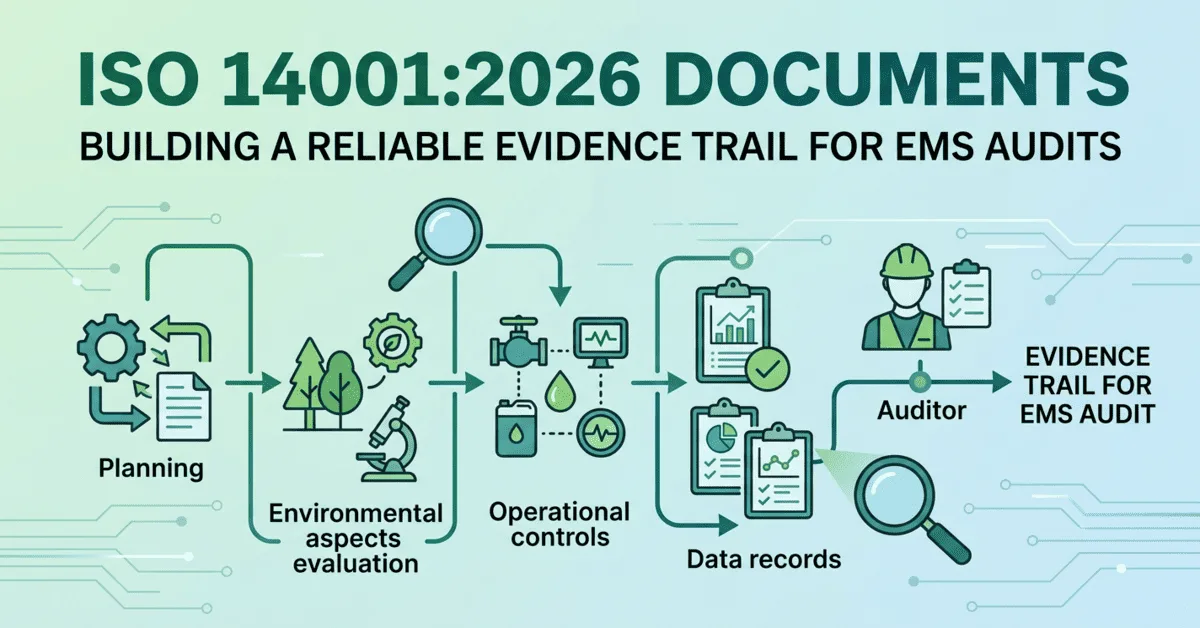
A clear documentation structure makes this evidence easier to identify and maintain. Instead of keeping information in disconnected files, organizations can establish a logical relationship between environmental requirements, planned activities, operational controls, and resulting records.
This approach can also help employees understand what needs to be done and what information needs to be maintained.
Connecting Procedures with Actual Activities
Environmental procedures should reflect the way an organization actually operates. A procedure can define how a particular environmental process is managed, while supporting SOPs, forms, and records can provide practical guidance and evidence of implementation.
For example, an organization may document how environmental aspects are evaluated, establish controls for significant aspects, and maintain records showing that those controls are being applied. This creates a traceable path from planning to implementation.
For additional guidance on organizing EMS information, see ISO 14001:2026 documents and records for practical documentation considerations.
The objective should not be to create documentation simply for an audit. Instead, documented information should support consistent environmental practices and make important information easier to control and review.
Linking Environmental Aspects with Controls
Environmental aspects and impacts are an important part of an EMS. Organizations need to identify environmental aspects associated with their activities, products, and services and determine which aspects require greater attention.
Documented aspects-and-impacts information can help establish a consistent evaluation process. Where significant environmental aspects are identified, related operational controls and environmental management actions can be documented and monitored.
Maintaining this connection helps demonstrate how environmental considerations influence operational decisions and control measures.
Supporting Operational Control and Records
Operational controls help ensure that activities associated with environmental aspects are carried out under defined conditions. Appropriate documentation can explain responsibilities, operating methods, control measures, and monitoring requirements.
Records then provide evidence that planned activities have been completed. Depending on the organization's processes, this may include environmental monitoring records, inspection records, training records, evaluation results, or corrective action information.
Keeping these records organized can make it easier to demonstrate implementation and identify areas where environmental performance or controls may need improvement.
Preparing for Internal and Certification Audits
An organized documentation system can simplify audit preparation. Before an audit, organizations can review their procedures and records to identify missing information, outdated documents, inconsistent practices, or areas where controls are not adequately demonstrated.
Internal audits can provide an opportunity to check whether documented processes are being followed and whether sufficient objective evidence is available. Findings can then be used to update documentation, strengthen controls, and improve EMS performance.
Building a Reliable EMS Evidence Trail
Effective documentation should make the EMS easier to understand, operate, and improve. The goal is not to maintain excessive paperwork but to retain relevant information that demonstrates how environmental processes are managed.
Well-structured ISO 14001:2026 documents can support this approach by providing a foundation for organizing the EMS manual, procedures, SOPs, forms, environmental plans, aspects-and-impacts information, operational controls, and audit-related documentation.
Organizations preparing for ISO 14001:2026 implementation or updating an existing EMS can explore ISO 14001:2026 documents to review documentation resources that can be adapted to their environmental processes and audit requirements.