RERA registration is one of the first things a buyer should check when considering an under-development property. It provides an official framework through which important project information may be verified.
However, RERA registration should be the beginning of due diligence—not the end.
Sonagarh Fort Resort is presented as a RERA-registered resort ownership project near Kukas, Jaipur. Buyers considering the project should independently verify its registration information, but they should also examine title, unit ownership, approved land use, construction status, management terms, financial benefits and resale rights.
For someone comparing a RERA-Registered Resort Project in Jaipur, the correct question is not simply, “Does the project have a RERA number?” It is, “Does every material statement made to me match the registered and contractual documents?”
Quick Answer: Does RERA Registration Guarantee a Safe Investment?
No. RERA registration provides regulatory transparency, but it does not guarantee appreciation, rental income, resort occupancy, construction quality or hospitality performance.
Buyers should use the official record to verify:
- Registered project name
- Project registration number
- Registered promoter
- Exact project location
- Registration validity
- Declared completion schedule
- Approved plans and inventory
- Filed project updates
- Disclosures available on the portal
A legally registered project can still carry commercial, operational and financial risks. Every major purchase decision should therefore include independent legal and financial review.
Why Does the Correct RERA Number Matter?
A project registration and a real-estate agent registration represent different entities and should never be treated as the same number.
The Sonagarh material previously referenced RAJ/A/2022/3380, which follows an agent-registration format, while project promotions identify RAJ/P/2026/5257 as the project registration number.
A buyer should verify both records independently and understand what each one represents.
The website, brochure, application form and agreements should clearly distinguish:
- Project RERA registration
- Registered promoter
- Real-estate agent registration
- Sales or marketing entity
- Hospitality operator
Confusing these roles can make it difficult to understand which party is legally responsible for construction, sales, management and post-completion operations.
What Should Buyers Verify About the Land and Title?
Before booking a unit, an independent property lawyer should review the title and supporting documents.
Important questions include:
- Who legally owns the project land?
- Does the promoter have the authority to develop and sell the proposed units?
- Is the title clear and marketable?
- Are there any mortgages, disputes or encumbrances?
- Is land use appropriate for the proposed project?
- Do the approved plans match the marketed concept?
- Is the selected unit part of the registered inventory?
- Can the unit be individually registered?
- Which common-area rights will the owner receive?
- Are access and parking rights clearly defined?
A marketing brochure cannot replace a legal title examination.
What Exactly Is the Buyer Purchasing?
Sonagarh’s proposed categories include palace rooms, suites and villas of different sizes. These product names help buyers understand the intended accommodation style, but they do not define the legal ownership.
The agreement should establish:
- Legal unit category
- Unit number
- Location within the project
- Registered area
- Carpet or built-up measurement
- Undivided land rights, if applicable
- Common-area entitlement
- Furnishing specifications
- Parking rights
- Permitted use
- Possession conditions
- Transfer rights
Buyers should compare every measurement in the sales presentation with the registered and contractual documents.
Why Is Land Use Important for a Resort Unit?
A resort villa is not automatically equivalent to a residential villa. Land-use permission and sanctioned plans may affect how the property can be occupied, operated, financed or transferred.
A buyer should understand whether the unit is approved for residential, commercial, hospitality or another permitted use.
This classification may influence:
- Personal occupation rights
- Hospitality operations
- Utility charges
- Tax treatment
- Financing availability
- Municipal requirements
- Rental permissions
- Resale demand
The buyer should not assume that a unit carrying the word “villa” has the same legal status as an independent residential house.
What Should Be Checked in the Allotment and Sale Documents?
The application form, allotment letter, agreement for sale and final conveyance documents must be read together.
Important clauses include:
- Total price and payment schedule
- Taxes and registration charges
- Unit specifications
- Construction milestones
- Possession date
- Grace period
- Delay provisions
- Cancellation terms
- Refund conditions
- Maintenance obligations
- Common facilities
- Transfer restrictions
- Dispute-resolution process
- Force-majeure clauses
Any promised benefit that influences the purchase decision should appear in a legally enforceable document.
Are Resort Management Terms Covered by RERA?
RERA registration primarily relates to the real-estate project and its registered development obligations. The future performance of a hospitality operator may depend on a separate management or lease arrangement.
A buyer considering a Villa Investment Project in Jaipur should therefore review both:
- The property purchase documents
- The resort-management and financial-benefit agreements
A project may be registered correctly while the operating model remains unclear. The buyer must understand who will manage the resort, what standards apply and what happens if that operator changes.
How Should the Stated Annual Benefit Be Verified?
Sonagarh’s published material refers to a stated 7% annual return for eligible buyers. The percentage should not be evaluated without its conditions.
The buyer should obtain written clarification regarding:
- Amount on which 7% is calculated
- Start date of the benefit
- Duration of payments
- Payment frequency
- Tax deduction
- Conditions linked with construction or operations
- Whether payment depends on occupancy
- Security or guarantee supporting the obligation
- Consequences of delayed payment
- Treatment after sale or transfer
The phrase “assured return” should never replace a complete examination of the contract and paying entity’s financial ability.
What Should Buyers Check About Construction?
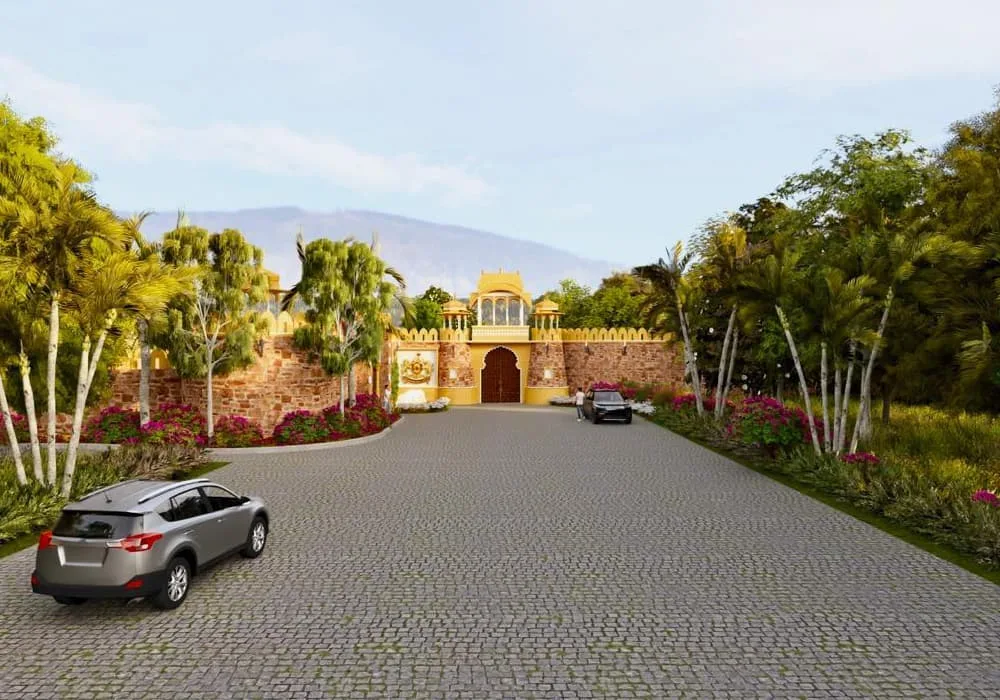
Renderings represent the intended vision, not completed facilities. An under-development property should be assessed according to physical progress and registered timelines.
Buyers should:
- Visit the site
- Compare progress with project updates
- Ask which approvals have been obtained
- Identify which facilities are proposed
- Request a realistic construction schedule
- Verify whether the selected unit exists in approved plans
- Retain copies of official documents
- Avoid relying only on sales presentations
Proposed gardens, pools, wedding facilities, restaurants and wellness spaces should not be described as operational until they have actually been completed and opened.
Does RERA Verify Financial Returns?
Buyers should not assume that RERA registration validates or guarantees an investment return.
RERA registration provides a project-level regulatory record. Financial returns may arise from a separate contractual arrangement involving the promoter, management company or another entity.
The buyer should determine:
- Who is legally responsible for payment
- Whether that entity is financially capable
- Whether any security supports the obligation
- What happens if resort opening is delayed
- Whether payment survives a management change
- Which legal remedy applies in case of default
Independent advice from a lawyer and financial professional is especially important when property ownership is combined with income promises.
What Other Costs Can Affect the Investment?
A buyer should calculate the total acquisition and holding cost, including:
- GST or other applicable tax
- Stamp duty
- Registration expenses
- Maintenance deposits
- Annual maintenance
- Management charges
- Furnishing costs
- Repair or replacement costs
- Utility expenses
- Transfer fees
- Loan interest
- Tax on financial benefits
A project may appear attractive when only the base price is discussed. The real investment picture becomes clear only after every expected cost has been added.
How Can Buyers Evaluate Exit Flexibility?
Investors frequently examine purchase benefits but ignore the eventual sale process.
The agreement should explain:
- Whether the unit can be resold
- Whether promoter or operator approval is needed
- Applicable transfer charges
- Lock-in period
- Right of first refusal
- Treatment of management agreements after transfer
- Whether owner benefits pass to the new buyer
- How outstanding charges affect the transfer
A property with complicated transfer restrictions may take longer to sell, even when the project itself is attractive.
Who Should Conduct the Verification?
The buyer should use independent professionals rather than relying only on people connected with the sale.
The review may involve:
- A property lawyer
- Chartered accountant
- Tax adviser
- Architect or technical consultant
- Bank or financing professional
- RERA portal verification
The buyer should keep a complete record of brochures, receipts, emails and executed agreements.
This structured process creates stronger Resort Property Due Diligence in Jaipur before a major financial commitment is made.
Final Thoughts
RERA registration is important because it allows buyers to begin verification through an official framework. However, it does not replace legal, financial, technical and commercial due diligence.
For Sonagarh Fort Resort, buyers should verify the project registration, title, unit status, approved use, construction schedule, complete price, management model, owner privileges, annual-benefit conditions and transfer provisions.
The safest investment is not the one with the most impressive registration statement. It is the one in which every major claim can be matched with an original document and understood before payment.