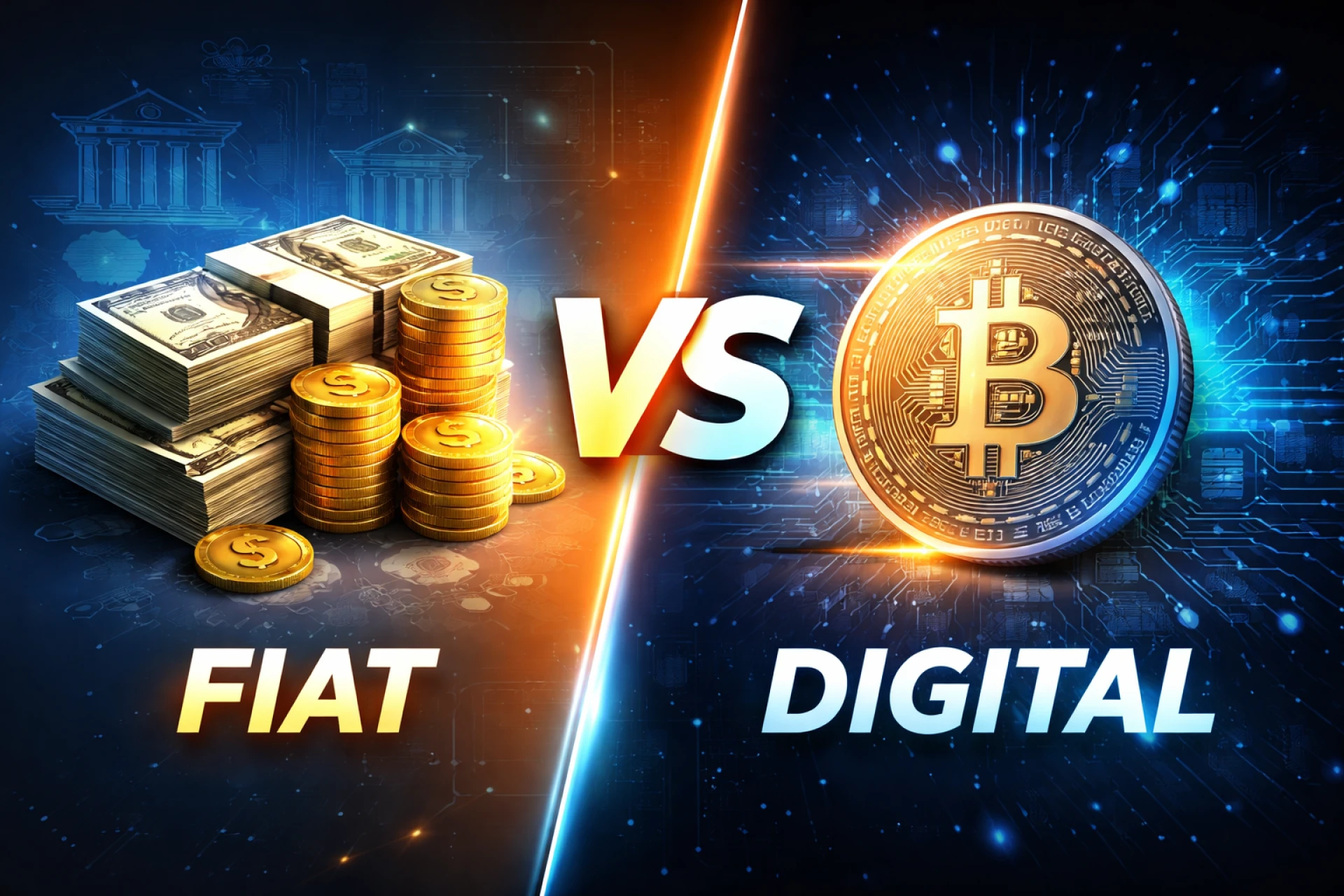
The global financial system is evolving rapidly. With the rise of digital currencies, online payments, and decentralized finance, a major question is being asked more often: is digital money truly better than fiat?
Fiat currency—government-issued money like the US dollar or euro—has been the backbone of global economies for decades. However, newer financial technologies are challenging its dominance by offering alternative ways to store and transfer value.
This article provides a comprehensive, balanced, and SEO-optimized exploration of whether modern digital currencies can be considered better than fiat, while maintaining a clear, informative, and professional tone.
Understanding Fiat Currency and Digital Alternatives
Before comparing the two systems, it’s important to understand what they represent.
What Is Fiat Currency?
Fiat currency is government-issued money that is not backed by a physical commodity like gold or silver. Its value is derived from trust in the issuing authority.
Examples include:
- US Dollar (USD)
- Euro (EUR)
- British Pound (GBP)
- Pakistani Rupee (PKR)
Fiat is widely accepted, regulated, and supported by central banks.
What Are Digital Currencies?
Digital currencies include:
- Cryptocurrencies (e.g., Bitcoin, Ethereum)
- Stablecoins (digital assets pegged to fiat value)
- Central Bank Digital Currencies (CBDCs)
- Digital payment platforms and wallets
They exist electronically and rely on technology such as blockchain or secure payment networks.
Better Than Fiat: Key Advantages of Digital Money
Many analysts and financial experts believe that certain aspects of digital currencies can outperform traditional systems. Below are the most notable advantages.
Faster and Borderless Transactions
One of the biggest limitations of fiat systems is the delay in cross-border transactions.
Benefits of Digital Transfers:
- Near-instant global transactions
- Lower processing times compared to banks
- Reduced reliance on intermediaries
Digital currencies enable users to send funds across borders without waiting days for clearance.
Lower Transaction Costs
Traditional banking systems often involve multiple intermediaries, each charging fees.
Digital systems can reduce costs by:
- Eliminating middlemen
- Using automated smart contracts
- Offering peer-to-peer transfers
For individuals and businesses, this can mean significant savings over time.
Increased Financial Accessibility
Millions of people worldwide remain unbanked or underbanked.
Digital finance solutions can help by:
- Allowing access through smartphones
- Removing the need for traditional bank accounts
- Enabling participation in global commerce
This inclusivity is one reason some consider digital systems better than fiat in certain contexts.
Transparency and Security
Blockchain-based systems offer transparency through public ledgers.
Key Security Benefits:
- Transactions are traceable and verifiable
- Reduced risk of fraud due to encryption
- Decentralized systems reduce single points of failure
While no system is entirely risk-free, digital currencies introduce new levels of accountability.
Innovation and Programmability
Digital money enables programmable transactions using smart contracts.
Examples include:
- Automated payments
- Conditional transfers
- Subscription-based financial services
These features open the door to innovation that traditional fiat systems cannot easily replicate.
Limitations and Risks of Digital Currencies
Despite the advantages, digital currencies also face significant challenges.
Price Volatility
Unlike fiat currencies, many digital assets experience rapid price fluctuations.
This volatility can:
- Reduce reliability as a store of value
- Make everyday pricing difficult
- Increase financial risk for users
Regulatory Uncertainty
Governments worldwide are still developing policies for digital currencies.
Challenges include:
- Lack of standardized regulations
- Legal uncertainties in some regions
- Compliance requirements for businesses
Regulation plays a key role in determining long-term viability.
Technology Barriers
Digital systems depend heavily on infrastructure and user knowledge.
Potential issues include:
- Internet dependency
- Technical complexity for beginners
- Security risks if users mishandle private keys
These factors can limit widespread adoption.
Limited Acceptance
While adoption is growing, digital currencies are not universally accepted.
In contrast, fiat currency is:
- Widely recognized globally
- Mandatory for tax payments
- Supported by governments
This makes fiat more practical in many daily scenarios.
Comparing Fiat and Digital Money
A side-by-side comparison helps clarify the differences.
Key Comparison Factors
1. Stability
- Fiat: Generally stable
- Digital: Can be volatile
2. Accessibility
- Fiat: Requires banking access
- Digital: Accessible via internet
3. Speed
- Fiat: Slower, especially internationally
- Digital: Fast and efficient
4. Regulation
- Fiat: Fully regulated
- Digital: Still evolving
5. Innovation
- Fiat: Limited
- Digital: Highly adaptable
Use Cases Where Digital May Be Better
There are specific scenarios where digital currencies may outperform traditional systems.
Cross-Border Payments
Sending money internationally is often faster and cheaper with digital systems.
Online Commerce
Digital currencies integrate easily with e-commerce platforms.
Microtransactions
Low-cost transactions make small payments more feasible.
Financial Inclusion
People without bank accounts can access digital financial tools.
In these areas, digital solutions may be considered better than fiat due to efficiency and accessibility.
Situations Where Fiat Remains Strong
Despite innovation, fiat currency still dominates many areas.
Everyday Transactions
Cash and traditional banking are still preferred for daily use.
Government Payments
Taxes, salaries, and public services rely on fiat systems.
Economic Stability
Central banks manage inflation and monetary policy to stabilize fiat economies.
The Future of Money: Hybrid Financial Systems
Rather than replacing fiat entirely, the future may involve a combination of systems.
Emerging Trends
- Integration of digital wallets with banks
- Development of Central Bank Digital Currencies (CBDCs)
- Increased regulation of digital assets
- Growth of fintech solutions
This hybrid approach combines the reliability of fiat with the innovation of digital technologies.
Key Takeaways for Individuals and Businesses
When evaluating whether digital money is better than fiat, consider the following:
For Individuals:
- Convenience vs. stability
- Risk tolerance
- Access to technology
For Businesses:
- Cost efficiency
- Customer preferences
- Regulatory compliance
A balanced approach often delivers the best results.
Conclusion
The question of whether digital currencies are better than fiat does not have a simple answer. Each system has its strengths and limitations.
Digital money offers speed, innovation, and accessibility, making it highly attractive for modern financial needs. On the other hand, fiat currency provides stability, regulation, and universal acceptance.
Rather than viewing one as superior to the other, it is more accurate to see them as complementary. As financial systems continue to evolve, both will likely play important roles in shaping the future of global commerce.