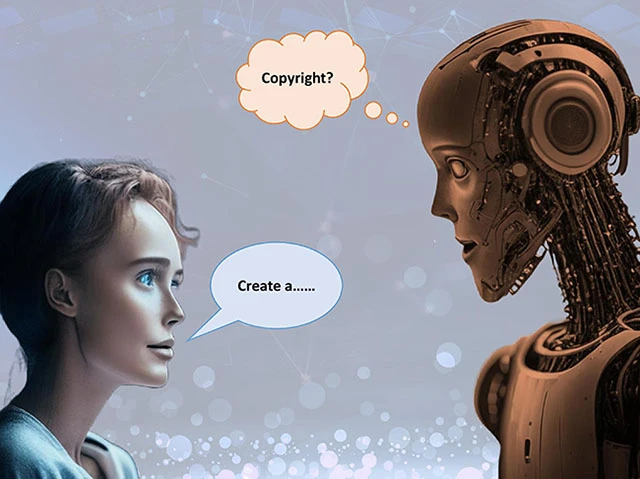
Artificial Intelligence (AI) is rapidly changing how content is created — from articles and music to images and code. But with this innovation comes a complex legal question: Can AI-Generated Content Copyright be protected under Canadian copyright law? Or more directly, is AI generated content copyright protected at all in the eyes of Canadian law?
If you’re using AI tools to generate blogs, artwork, or even marketing material in Canada, understanding how copyright applies to this type of content is essential. Let’s explore what Canadian law says, the current legal gaps, and what it means for creators and businesses.
What Does Canadian Copyright Law Say?
Under the Canadian Copyright Act, copyright protection is granted to “original literary, dramatic, musical, and artistic works” that are created by a human author. This is a key point: the law currently assumes human authorship as a requirement for copyright protection.
AI, being non-human, cannot be the owner or author of a work — at least not under the current legal framework. This makes things tricky when content is generated by platforms like ChatGPT, DALL·E, or other AI tools.
So, Who Owns AI-Generated Content in Canada?
If an AI tool creates content, and AI can’t hold copyright, then who does?
Here are a few interpretations that experts and lawyers consider:
- The User as the Author: If a human uses an AI tool and contributes significant input or creative direction, they may be considered the author of the final output. The more involved the human is in guiding the output, the stronger the case for copyright ownership.
- The AI Developer or Platform Owner: Some argue that the developers of the AI tool could claim ownership. However, most AI providers (like OpenAI or Adobe Firefly) include terms of service that grant users the right to use and own the outputs.
- No Copyright at All: In cases where the AI acts autonomously and the user provides minimal input, the resulting work may not meet the threshold for copyright protection. Such content could fall into the public domain by default.
How Does This Compare to Other Countries?
- United States: The U.S. Copyright Office has taken a firm stance that works created entirely by AI without human involvement are not copyrightable.
- United Kingdom: Interestingly, the UK allows for AI-generated works to be copyrighted, but assigns authorship to the person who made the arrangements for the creation of the work.
- Canada: Canada has yet to provide official, concrete guidelines — which means we are in a legal grey area.
What Does This Mean for Canadian Creators and Businesses?
- Exercise Control and Creativity: If you’re using AI tools to generate content, try to add a layer of human creativity — edit, curate, or combine outputs with original work. This helps strengthen your claim to copyright.
- Keep Records: Document how you prompted the AI and what you did with the output. This can be useful if you ever need to prove authorship.
- Review Platform Terms: Check the AI platform’s terms of use. Most major providers grant users broad rights to reuse AI outputs, but it’s wise to confirm.
Final Thoughts
As of now, AI-generated content is not clearly protected by Canadian copyright law unless significant human input is involved. Until the law catches up with technology, creators should be proactive in asserting ownership, documenting their creative process, and understanding the tools they use.
Copyright law is evolving — and with AI pushing the boundaries of creativity, Canada may soon need to re-evaluate what it means to be an "author" in the digital age.