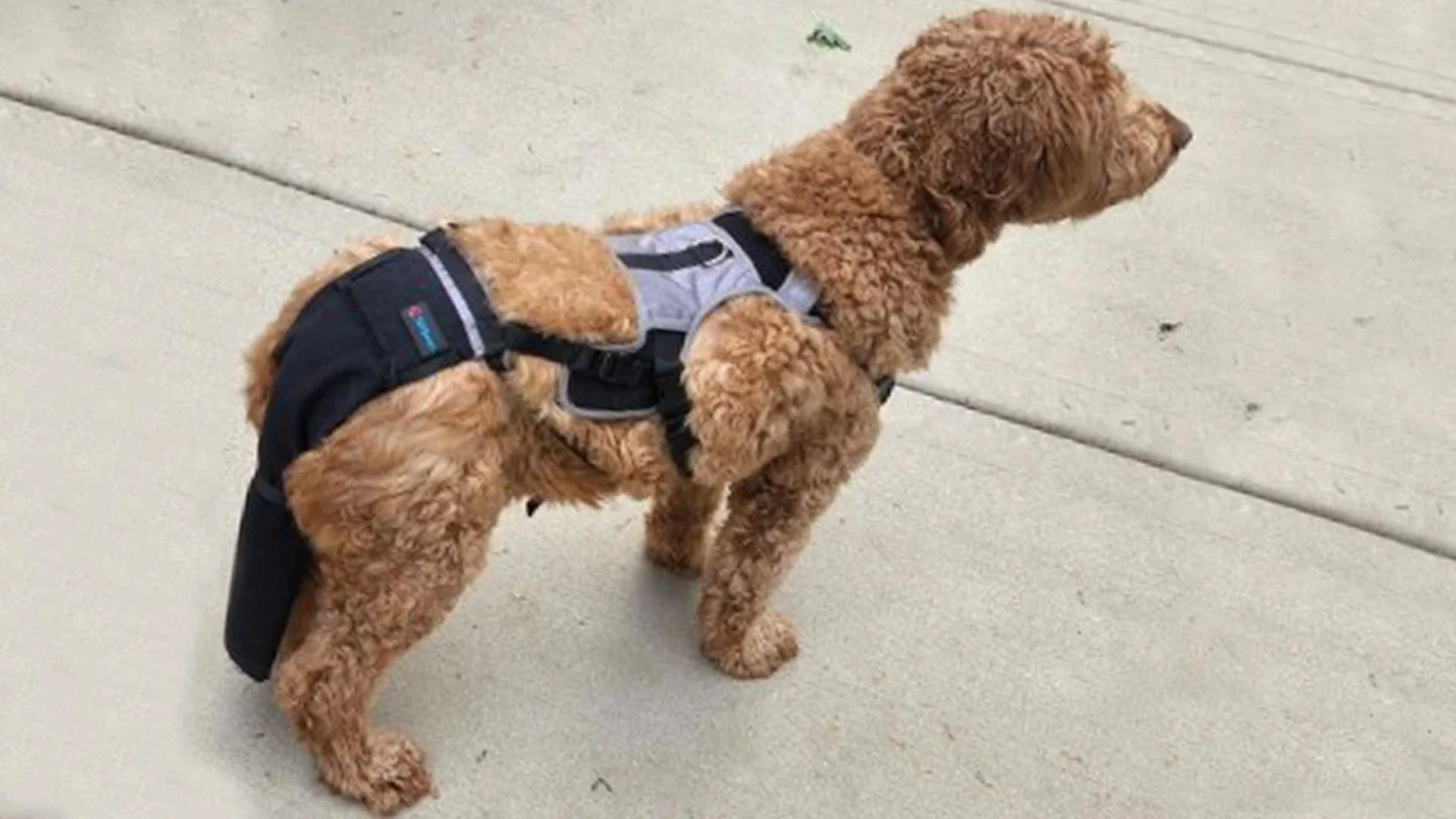
When a dog keeps reopening a tail wound, it can feel like nothing works. Bandages slip off. Cones cause stress. Even careful monitoring does not stop a powerful wag from causing fresh bleeding. Many owners face this exact problem, especially when dealing with recurring tail injuries linked to Happy Tail Syndrome. In these situations, finding a practical way to protect the wound while allowing the dog to move comfortably becomes essential.
A Lick Sleeve for Dogs is often one of the first tools pet owners consider. It can help in certain cases, but it does not always address the root challenge of tail injuries caused by repeated impact. Understanding its role, and its limitations, can help you choose the safest approach for your dog’s recovery.
How Does a Lick Sleeve for Dogs Work?
A lick sleeve is designed to prevent a dog from chewing or licking a wound. It usually fits snugly around a limb or body area, acting as a barrier while allowing air circulation. For surface injuries or post-surgical care, this type of protective covering can be effective.
However, tail injuries present a different challenge. Dogs do not just lick tail wounds; they repeatedly strike the tail against walls, furniture, and floors while wagging. This constant motion creates pressure that ordinary coverings are not designed to absorb.
Why Tail Injuries Are Difficult to Heal
Tail wounds often heal slowly because of two key factors: motion and impact. Even a small cut can reopen repeatedly if the tail is not fully protected.
Common reasons tail injuries persist include:
- Continuous wagging that prevents scab formation
- Thin skin and limited tissue on the tail tip
- Difficulty securing traditional bandages
- High risk of reinjury during everyday movement
Without proper protection, some cases progress to severe damage, sometimes leading veterinarians to recommend amputation.
What Type of Protection Do Dogs with Happy Tail Syndrome Need?
Dogs with recurring tail injuries need more than a simple barrier. They require a solution that stabilizes the tail while cushioning it against impact. This is where specialized protective devices become important.
At K9 TailSaver, the focus is on addressing both causes of tail injury: licking and repeated trauma. Instead of relying only on a cover, the design provides structured support that stays securely in place during activity.
Key protective features include:
- A padded sleeve that absorbs shock from wagging
- A secure harness system to prevent slipping
- Adjustable straps for a customized fit
- Durable materials built for active dogs
This approach allows wounds to heal while still letting dogs move naturally.
When Should Pet Owners Consider Specialized Tail Protection?
If a wound keeps reopening despite using standard protective methods, it may be time to look at a more comprehensive solution. Warning signs that additional protection is needed include frequent bleeding, persistent swelling, and visible trauma at the tail tip.
Dogs most at risk include:
- Large or highly energetic breeds
- Dogs with thin or whip-like tails
- Pets that wag intensely when excited
- Animals with a history of recurring tail injuries
Addressing the problem early can prevent complications and reduce the risk of surgical intervention.
Conclusion
Protecting a dog’s tail injury requires more than simply stopping licking. While a basic covering can help with minor wounds, it often does not provide enough support for injuries caused by repeated impact. For dogs experiencing ongoing tail trauma, especially those with Happy Tail Syndrome, proper stabilization and cushioning are critical for safe healing.
K9 TailSaver was developed specifically to meet this need. By combining secure fit, impact protection, and durable design, it helps dogs recover comfortably while reducing the risk of further injury. Choosing the right type of protection can make a significant difference in healing outcomes and long-term tail health.