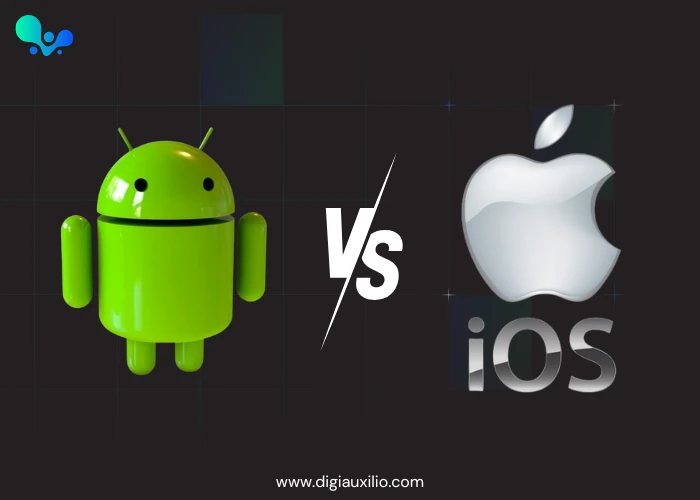
Mobile apps are becoming essential for startups, companies, and service providers. Selecting the appropriate platform for mobile app development is crucial, regardless of whether you're a startup hoping to upend the market or a brand trying to engage people. The long-running argument over iOS vs. Android development is about more than simply Apple vs. Google; it's also about user experience, time-to-market, money, performance, and reach.
How do you decide between the two, then? Let's examine the main distinctions, benefits, and things to think about when choosing between Android and iOS development.
1. Programming Language & Development Tools
- iOS development relies on Swift (and previously Objective-C) and uses Apple’s Xcode IDE. Swift is fast, safe, and easy to learn for beginners. Xcode provides a seamless experience for developing, testing, and debugging on Apple devices.
- Android development uses Kotlin (and Java). Google’s Android Studio is the official IDE, providing extensive tools, emulators, and compatibility features. Kotlin is expressive, modern, and fully interoperable with Java.
Both Swift and Kotlin are excellent, modern programming languages with top-tier IDEs.
2. Devices & Fragmentation
- iOS is exclusive to Apple’s tightly controlled ecosystem—iPhones, iPads, and a few others. Developers only need to support a limited range of screen sizes and hardware specs.
- Android, however, powers thousands of devices from dozens of manufacturers—Samsung, Xiaomi, OnePlus, Motorola, and more. That means a broader user base, but also more testing challenges.
iOS, for easier testing and consistency. But Android wins in reach.
3. Market Share & Audience
- Android dominates globally with over 70% market share. It’s huge in Asia, Africa, and South America—ideal for businesses targeting global audiences.
- iOS, while smaller in market share, dominates in high-income countries like the US, UK, Canada, and Australia. iPhone users are known to spend more on apps and in-app purchases.
Android for reach, iOS for premium user base and higher engagement.
4. Monetization Strategy
Your platform choice can impact your revenue model:
- iOS apps tend to generate more revenue per user, thanks to in-app purchases, subscriptions, and paid apps. Apple users are more likely to pay for apps and services.
- Android apps often rely on ad-based revenue models. The users may be more cost-conscious, but the sheer number of Android users makes ad-based models highly profitable.
iOS for higher revenue per user. Android for volume-based monetization.
5. App Store Review & Time-to-Market
- Apple’s App Store has a strict review process. Your app will be thoroughly vetted for bugs, content, and compliance. This can delay launch but ensures quality.
- The Google Play Store reviews apps faster—often in a few hours—and is more developer-friendly. Updates and rollbacks are also simpler on Android.
Android for faster publishing. iOS for better quality control.
6. UI/UX Consistency
- Apple's Human Interface Guidelines encourage minimalism, clarity, and smooth navigation. With fewer devices, the design experience is uniform and predictable.
- Google's Material Design allows creative freedom and consistency across Android apps, but device variety can impact layout behavior and resolution.
iOS for polished design consistency. Android for creative freedom.
7. Security & Maintenance
- Apple’s closed ecosystem and strict review policies result in higher app security and fewer instances of malware.
- Android’s open-source nature makes it more vulnerable to security risks, especially from third-party app stores. However, Android has improved significantly over the years.
iOS, especially for apps dealing with sensitive data like fintech or healthcare.
8. Cost of Development
- Android apps typically take more time to develop due to device fragmentation, additional testing, and backward compatibility.
- iOS apps are often quicker and cheaper to build and maintain, especially when targeting newer Apple devices.
iOS for faster, cheaper development. Android may require a bigger budget upfront.
Frequently Asked Questions
A: It depends on your audience. If you're targeting high-income markets (US, UK, etc.), go with iOS first. If you're aiming for mass adoption globally, Android is your best bet.
Q2: Can I launch on both platforms simultaneously?A: Yes, but it increases costs and complexity. Many businesses choose one platform to start with and expand later. Cross-platform frameworks like Flutter can help with shared codebases.
Q3: Is iOS development more secure than Android?A: Generally, yes. Apple’s ecosystem is more controlled, which reduces the risk of malware and security issues.
Q4: Which platform is faster to develop for?A: iOS is usually quicker to develop due to fewer devices and OS versions to support. Android requires more testing and optimization.
Q5: What’s more profitable—iOS or Android apps?A: iOS users spend more per app, making it ideal for premium or subscription-based apps. Android's wider audience makes it great for ad revenue and user acquisition at scale.
Conclusion
It takes more than just code to decide between iOS and Android; strategy, audience, and business objectives are also important considerations. The best course of action for the majority of businesses is to begin with the platform that best suits your target audience, financial constraints, and monetization strategy, then grow as your app does.
Knowing the advantages and disadvantages of each platform will help you succeed, whether you're creating your first MVP or organizing a cross-platform business.