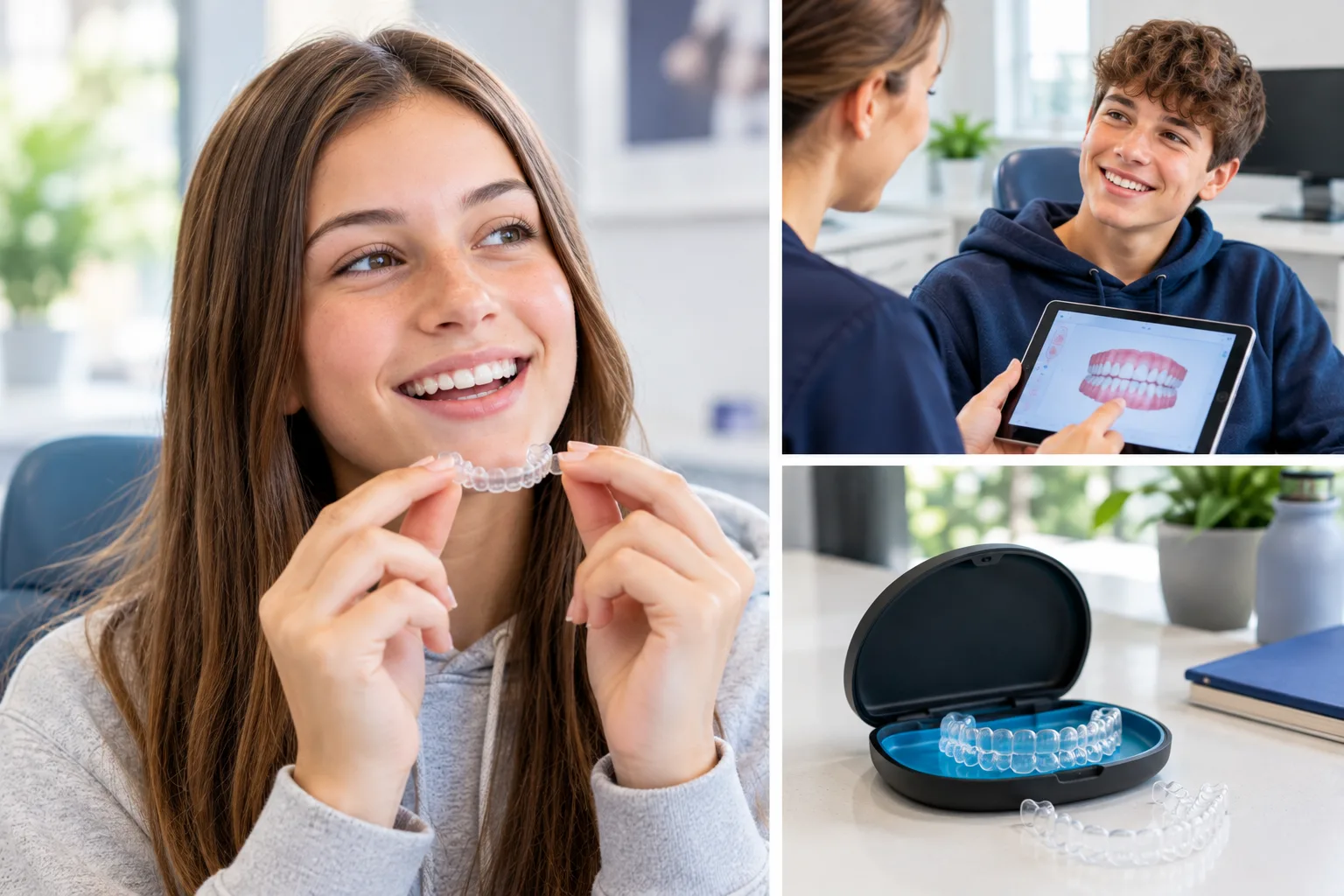
The teenage years are full of change, and for many young people, wearing traditional metal braces can feel like one more thing to worry about. That is why Invisalign for teenagers has become such a popular alternative across the UK. These clear, removable aligners straighten teeth gradually and discreetly, without the wires and brackets of fixed braces. If your teen needs orthodontic treatment, this guide explains how it works, who it suits, what it costs and how to help your teenager get the best results.
What Is Invisalign for Teenagers?
Invisalign is a clear aligner system made up of a series of custom-made, transparent trays. Each set is worn for a short period before being swapped for the next, gently moving the teeth towards their planned position. Invisalign Teen is designed with growing teenagers in mind, taking into account the fact that their mouths are still developing and that their daily routines are very different from those of adults.
The aligners are made from smooth, comfortable material and are almost impossible to spot from a normal conversational distance. You can learn more about how the system works on our Invisalign information page.
Why Do Teenagers Choose Invisalign?
There are plenty of reasons why teens and parents opt for clear aligners over fixed braces.
- A discreet look: the aligners are clear, which helps teens feel more confident at school, in photos and on social media.
- Removable for meals: your teen can take the aligners out to eat, so there are no food restrictions beyond normal sensible choices.
- Easier cleaning: because the aligners come out, brushing and flossing are much simpler than working around brackets and wires.
- Comfort: smooth plastic trays tend to cause fewer mouth sores than metal brackets.
- Fewer emergency visits: there are no brackets to snap or wires to poke, although lost or damaged aligners should still be reported to the clinic promptly.
- Flexibility for hobbies: sport, music and school activities are easier to manage with removable aligners.
Which Orthodontic Problems Can Invisalign Treat in Teens?
Clear aligners can correct a wide range of common concerns in teenagers, including:
- Crowded or overlapping teeth
- Gaps and spacing between teeth
- Overbites and underbites
- Crossbites
- Open bites
Some complex cases may still be better suited to fixed appliances or a combination approach, so a proper assessment is essential. Reading about the different types of braces can help you understand the options before your appointment, and our guide to orthodontics for teens gives a wider overview of treatment during the teenage years.
What Is the Treatment Process?
1. The Initial Consultation
Your teenager will have a thorough examination, and the orthodontist will talk through the findings with both of you. You can book a free smile exam to find out whether Invisalign is the right choice. If it is easier to start from home, a virtual consultation is also available.
2. Scans and Treatment Planning
Instead of traditional putty moulds, modern clinics use digital impressions to create an accurate 3D model of your teen's teeth. This lets you see a preview of how the teeth are expected to move.
3. Wearing the Aligners
Teenagers are usually asked to wear their aligners for 20 to 22 hours a day, removing them only to eat, drink anything other than water, and clean their teeth. Every one to two weeks, they move on to the next set.
4. Regular Check-Ups
Review appointments allow the orthodontist to check progress and hand over new sets of aligners. Treatment commonly lasts between six and eighteen months, depending on the case.
5. Retainers After Treatment
Once the teeth are straight, retainers help keep them in place. Wearing them as advised is just as important as the active treatment itself.
How Much Does Invisalign for Teenagers Cost in the UK?
Private Invisalign treatment in the UK typically falls between £1,500 and £5,500, depending on how complex the case is, how long treatment lasts and where the clinic is based. Retainers are included in some quotes and charged separately in others, so always check what is covered.
NHS orthodontic treatment is available for eligible under-18s who have a clear clinical need, but it usually involves fixed braces rather than Invisalign. Families who prefer clear aligners generally choose private treatment. To understand pricing in more detail, see our guide to the cost of Invisalign, and take a look at the easy financing options that can spread the cost into manageable monthly payments.
Tips for Helping Your Teen Succeed with Invisalign
Invisalign only works if the aligners are worn consistently, so a little support at home makes a big difference.
- Build a routine: link wearing and cleaning the aligners to daily habits such as breakfast and bedtime.
- Use a case: aligners wrapped in a napkin are one of the most common ways they get lost or thrown away. A hard case solves this.
- Clean them daily: rinse the aligners and brush them gently, and keep up regular tooth brushing and flossing.
- Stick to water: only water should be drunk while the aligners are in, as sugary drinks can cause decay and staining.
- Protect them during sport: ask your orthodontist about the best mouthguard for contact sports.
- Keep appointments: regular reviews keep treatment on track and help avoid delays.
- Take the next set in order: never skip ahead to save time, as teeth need time to move safely.
Is Invisalign Right for Every Teenager?
Invisalign works best for teens who are motivated and responsible enough to wear their aligners as instructed. If your teenager finds it hard to stay consistent, fixed braces may be a better fit because they work around the clock without relying on the patient. An experienced orthodontist will give you honest advice based on your teen's teeth, age and lifestyle. If you are unsure when to start, our page on early treatment explains how timing can affect results.
Final Thoughts
Invisalign for teenagers offers a modern, comfortable and discreet way to achieve a healthy, straight smile during an important stage of life. With the right support from parents and a clear treatment plan from a qualified orthodontist, teens can enjoy the process and the confidence that comes with the results. When you are ready to take the next step, request an appointment and find out whether Invisalign is the right choice for your teenager.
Frequently Asked Questions (FAQs)
1. What age can a teenager start Invisalign?
Invisalign is commonly started once most of the adult teeth have come through, which is often between the ages of 11 and 16. Your orthodontist will confirm whether your child is ready after an examination.
2. Is Invisalign as effective as braces for teenagers?
For many common problems, such as crowding, gaps and mild to moderate bite issues, Invisalign can deliver excellent results. More complex cases may need fixed braces, which your orthodontist will explain.
3. How much does Invisalign for teenagers cost in the UK?
Private treatment typically costs between £1,500 and £5,500, depending on complexity, treatment length and the clinic. Always ask for a written quote that includes retainers and review visits.
4. Can my teenager get Invisalign on the NHS?
NHS orthodontic care is available to eligible under-18s with a clear clinical need, but it is usually provided using fixed braces. Invisalign is generally a private option.
5. How long does Invisalign treatment take for a teen?
Most teenagers wear their aligners for around six to eighteen months, although the exact time depends on the complexity of the case and how consistently the aligners are worn.
6. Does Invisalign hurt?
Most teens feel mild pressure or tenderness for a few days when starting a new set of aligners. This usually settles quickly and can be eased with simple pain relief if needed.
7. What if my teenager loses an aligner?
Contact your orthodontic clinic as soon as possible. Depending on the stage of treatment, they may advise moving to the next set or ordering a replacement.
8. Can my teen play sports or an instrument with Invisalign?
Yes. The aligners can be removed for sports and for playing certain instruments. For contact sports, ask your orthodontist about a suitable mouthguard.
9. Will my teenager need a retainer after Invisalign?
Yes. Retainers keep the teeth in their new position and help prevent them from moving back. Your orthodontist will explain how long and how often they should be worn.
10. How do I book an Invisalign consultation for my teen?
Contact a GDC-registered orthodontist to arrange a consultation. They will assess your teenager's teeth and explain the treatment plan, timeline and total cost.