
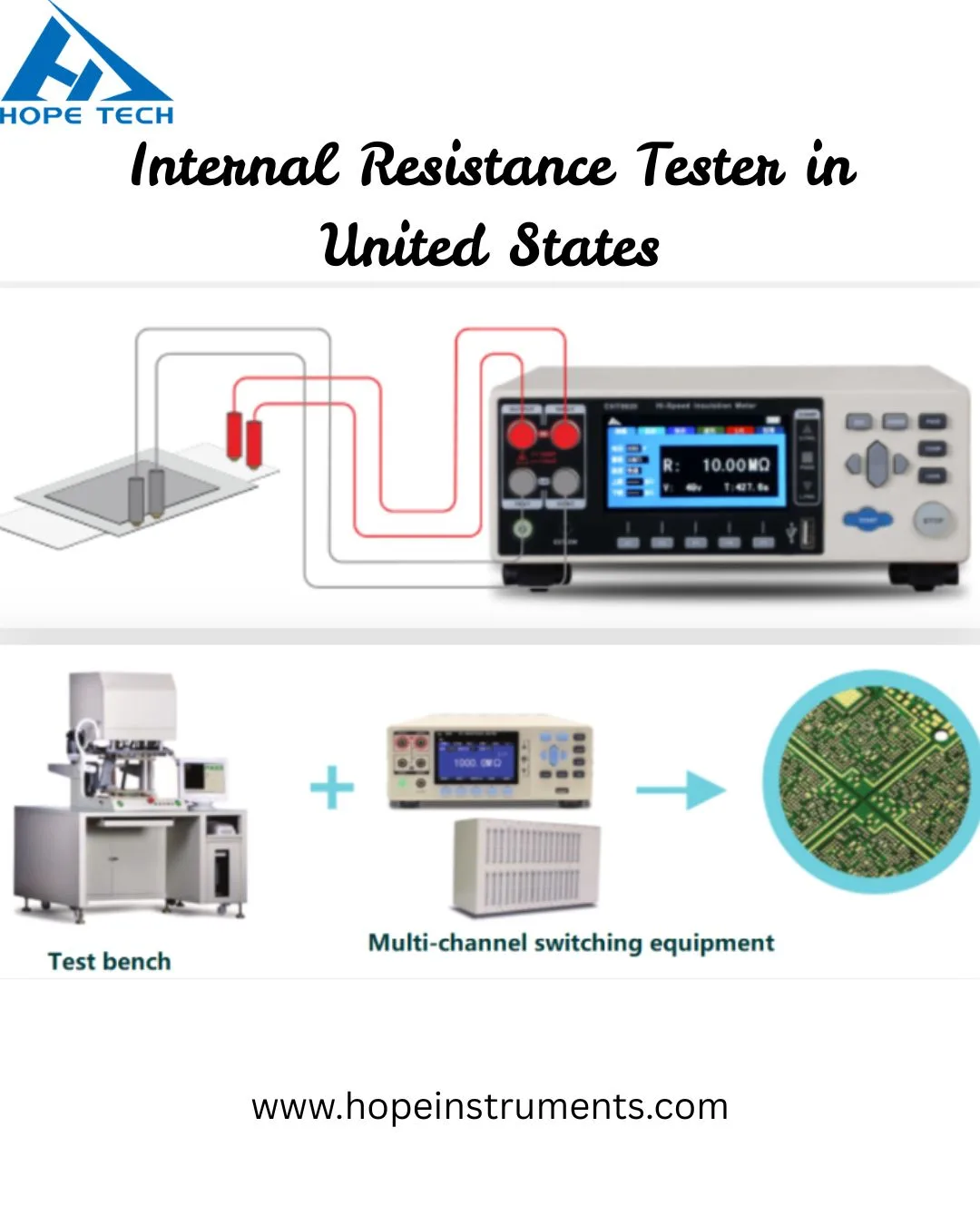
The demand for an Internal Resistance Tester in United States is rapidly growing as industries rely more on batteries for electric vehicles, renewable energy, and portable electronics. Advanced testing technology is now essential to ensure battery safety, efficiency, and long-term performance. Brands like Hope Instruments are leading the way by offering high-precision resistance testers designed for modern battery diagnostics.
The Growing Importance of Internal Resistance Testing
Internal resistance is one of the most critical parameters for evaluating battery health. It directly impacts charging efficiency, heat generation, and overall lifespan. As battery usage expands across sectors, accurate testing has become a necessity rather than an option.
Recent industry insights show that even minor variations in resistance can significantly affect performance, especially in electric vehicles and energy storage systems.
Latest Trends in Battery Testing Technology
1. Shift Toward Digital and High-Precision Testers
Modern internal resistance testers are becoming highly precise, offering accuracy levels up to ±0.5%. This is a major improvement compared to older analog devices, enabling better diagnostics and quality control.
High-precision testing is especially important in the United States, where strict performance standards are applied in industries like EV manufacturing and aerospace.
2. Rise of Portable and Handheld Devices
One of the biggest trends is the development of compact, portable testers. These devices allow technicians to perform on-site testing without compromising accuracy.
Portable testers are now widely used in:
- Field maintenance
- Telecom battery backup systems
- Renewable energy installations
This shift is driven by the need for flexibility and real-time diagnostics.
3. Integration of AI and Predictive Analytics
Advanced testers now incorporate AI-driven algorithms to predict battery health and lifespan. Instead of just measuring resistance, these systems analyse trends over time.
This enables:
- Predictive maintenance
- Early fault detection
- Reduced downtime
AI-powered testing is becoming a key differentiator in modern battery testing solutions.
4. Automation in Manufacturing and Quality Control
In the United States, automated testing systems are being integrated into battery production lines. These systems ensure consistency and accuracy during large-scale manufacturing.
Automation benefits include:
- Faster testing cycles
- Reduced human error
- Improved product reliability
Manufacturers are increasingly adopting automated resistance testing as a standard quality checkpoint.
5. Increasing Demand from EV and Energy Storage Industries
The rapid growth of electric vehicles and renewable energy systems is a major driver behind the evolution of internal resistance testers.
- EV batteries require precise diagnostics for safety
- Energy storage systems depend on long-term performance monitoring
The expansion of these industries is pushing innovation in testing equipment.
6. Data Connectivity and Smart Monitoring
Modern testers now feature wireless connectivity, cloud integration, and data logging capabilities. This allows engineers to monitor battery performance remotely and store historical data for analysis.
Key advantages:
- Real-time monitoring
- Remote diagnostics
- Better decision-making
These smart features are transforming traditional testing into intelligent battery management systems.
How Hope Instruments Supports These Trends
Hope Instruments offers advanced internal resistance testers that align with the latest industry trends. Their solutions are designed to deliver:
- High accuracy and reliability
- User-friendly interfaces
- Durable and industrial-grade performance
- Compatibility with modern battery technologies
The Future of Battery Testing Technology
The future of internal resistance testing lies in smarter, faster, and more connected solutions. With continuous advancements in battery chemistry and applications, testing equipment will evolve to meet new challenges.
Key future developments include:
- Integration with IoT systems
- Enhanced AI-based diagnostics
- Support for next-generation batteries (solid-state, lithium-sulphur)
As technology advances, the role of internal resistance testers will become even more critical in ensuring battery safety and efficiency.
Conclusion
The Internal Resistance Tester in United States market is evolving rapidly, driven by technological innovation and increasing battery demand. From AI-powered diagnostics to portable testing solutions, the latest trends are transforming how batteries are tested and maintained.
For businesses looking to stay ahead, investing in advanced solutions from trusted providers Contact Hope Instruments. These tools not only improve accuracy but also enhance safety, efficiency, and long-term performance across industries.