Efficient water management depends not only on monitoring water levels but also on controlling how and when pumps operate. In residential communities, commercial buildings, industrial facilities, hotels, hospitals, and utility infrastructure, pumps play a critical role in maintaining uninterrupted water supply. However, inefficient pump operation often leads to water wastage, increased energy consumption, equipment wear, and costly maintenance.
Traditional pump control methods usually rely on manual operation or basic switches, which offer limited intelligence and delayed response. As water systems become more complex, organizations need smarter solutions that can automatically adapt to changing tank conditions.
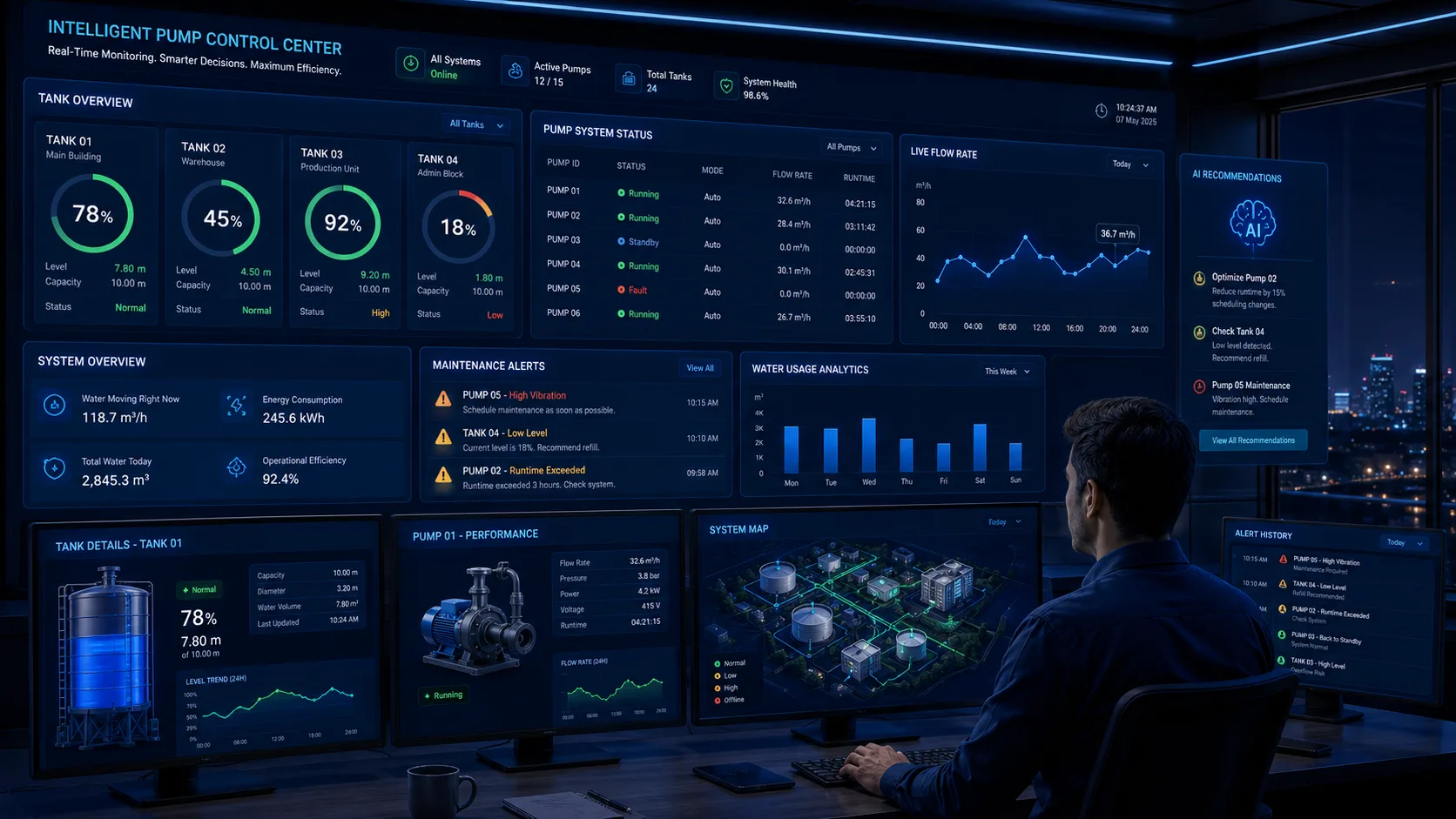
This is where intelligent pump control becomes essential. By using real-time sensor data from the best lora water level sensor, organizations can automate pump decisions and optimize performance through Wireless Water Tank Monitoring.
What Is Intelligent Pump Control?
Intelligent pump control refers to the automated management of pump operations using real-time sensor data, analytics, and control logic.
Instead of relying on manual intervention, smart systems continuously analyze water tank conditions and automatically adjust pump behavior.
This allows pumps to operate only when necessary and under safe conditions.
Intelligent pump control helps answer critical operational questions such as:
- When should the pump start?
- When should it stop?
- Is the tank approaching overflow?
- Is water level too low for safe pump operation?
- Is pump behavior abnormal?
By making these decisions automatically, intelligent systems improve efficiency and reliability.
Challenges with Traditional Pump Control
Many facilities still use outdated pump control methods.
Common approaches include:
- Manual switching
- Float switches
- Timer-based operation
- Basic relay controls
Although these methods are simple, they often create major inefficiencies.
Delayed Response
Manual pump operation depends on human observation and action.
If staff fail to respond quickly, pumps may continue running unnecessarily or stop too late.
Overflow Risk
Without accurate real-time data, pumps may continue filling tanks after they reach capacity.
This causes overflow and water wastage.
Dry Run Risk
If pumps operate when water levels are critically low, dry run conditions can occur.
Dry run may cause:
- Motor overheating
- Seal damage
- Bearing wear
- Reduced pump lifespan
Energy Waste
Pumps consume significant energy.
Poor pump scheduling increases electricity usage and operating costs.
These limitations highlight the need for smarter control.
Why Sensor Data Matters
Intelligent pump control depends on one critical factor: accurate data.
Without reliable water level information, automated decisions become ineffective.
The best lora water level sensor provides continuous, high-accuracy tank data, enabling smarter pump operation.
Using LoRa technology, sensor readings can be transmitted over long distances with low power consumption.
This ensures uninterrupted data flow for real-time control.
How the Best LoRa Water Level Sensor Improves Pump Control
The best lora water level sensor provides precise and continuous visibility into water tank behavior.
This enables intelligent pump control through several capabilities.
Real-Time Water Level Monitoring
Continuous water level measurement ensures pump decisions are based on current tank conditions.
Operators always know:
- Current water level
- Remaining capacity
- Refill requirements
- Consumption trends
This improves decision accuracy.
Threshold-Based Automation
Sensors can trigger automated pump actions when predefined thresholds are reached.
Examples include:
- Start pump when tank reaches minimum level
- Stop pump before maximum level
- Trigger warnings at critical thresholds
This prevents overflow and shortages.
Early Risk Detection
Abnormal water behavior can signal operational issues.
Sensor data helps detect:
- Sudden water loss
- Slow refill cycles
- Pump inefficiency
- Leakage
Early detection improves maintenance planning.
Role of Wireless Water Tank Monitoring
The real power of intelligent pump control comes from connectivity.
Wireless Water Tank Monitoring enables remote data transmission from sensors to cloud platforms, dashboards, or control systems.
This removes the need for manual inspection and local-only monitoring.
With Wireless Water Tank Monitoring, users can:
- Monitor tanks remotely
- Receive instant alerts
- Access cloud dashboards
- Control pumps from anywhere
- Manage multiple tanks centrally
Wireless connectivity improves operational flexibility and response speed.
Preventing Overflow Through Smart Control
Overflow is one of the most common water management problems.
Intelligent pump control solves this by continuously analyzing tank fill levels.
When water approaches maximum capacity, the system automatically stops the pump before overflow occurs.
This helps reduce:
- Water wastage
- Utility costs
- Structural damage from leakage
- Energy waste
Smart automation improves efficiency significantly.
Protecting Pumps from Dry Run
Dry run protection is one of the most valuable benefits of sensor-driven pump control.
When tank levels fall below safe operating thresholds, the system can automatically shut down pumps.
This protects equipment from damage and reduces repair costs.
Preventing dry run helps extend pump lifespan and improve reliability.
Energy Optimization Through Smart Scheduling
Pump control affects energy consumption directly.
Intelligent systems optimize pump operation by ensuring pumps run only when needed.
This reduces:
- Unnecessary pump runtime
- Peak power usage
- Energy waste
- Operating costs
Over time, energy savings improve return on investment.
Multi-Site Pump Management
Organizations with multiple tanks across multiple locations often face major control challenges.
Examples include:
- Gated communities
- Hotels
- Hospitals
- Industrial campuses
- Commercial complexes
Managing each pump manually becomes inefficient.
The best lora water level sensor combined with Wireless Water Tank Monitoring enables centralized pump management across all sites.
Operators gain complete visibility and control from a single interface.
Long-Term Business Benefits
Intelligent pump control creates measurable operational value.
Organizations benefit through:
- Reduced water wastage
- Lower energy costs
- Reduced maintenance expenses
- Better pump lifespan
- Reduced downtime
- Improved operational efficiency
These benefits improve both cost savings and service reliability.
Final Thoughts
Modern water systems require more than manual pump operation. Traditional control methods often lead to overflow, dry run, energy waste, and costly maintenance.
Intelligent pump control solves these problems by using real-time sensor data to automate critical pump decisions.
The best lora water level sensor provides accurate continuous tank visibility, while Wireless Water Tank Monitoring enables remote monitoring and automated control.
Together, they create a smarter, more efficient water management system that improves reliability, reduces costs, and protects critical infrastructure.