A five-year-old sits in a dental chair, tears streaming down her face while her mother tries to explain that the drill won't hurt. This scene plays out in dental offices worldwide, but it doesn't have to. The way we approach children's oral health has transformed dramatically over the past decade, moving far beyond the fluoride treatments and stern lectures about brushing that defined previous generations. Modern pediatric dentistry now combines artificial intelligence, behavioral psychology, and biological science to create experiences that children don't dread and outcomes that actually prevent disease rather than just treating it. These innovative approaches to children's oral health are reshaping how families think about dental care from the very first tooth.
The statistics tell a compelling story. Dental caries remains the most common chronic childhood disease, affecting over 40% of children by the time they reach kindergarten. Yet we now have tools that can predict cavities before they form, arrest decay without drilling, and turn daily brushing into something kids genuinely want to do. The shift isn't just technological: it represents a fundamental rethinking of what pediatric dental care should accomplish.
The Evolution of Pediatric Preventive Care
Shifting from Reactive to Proactive Treatment
For decades, pediatric dentistry operated on a simple model: wait for problems, then fix them. Children visited the dentist when they had pain or when a school screening flagged an issue. By then, cavities had already formed, and treatment meant drilling, filling, and often traumatizing young patients.
The proactive model flips this entirely. Risk assessment now begins at age one, evaluating factors like diet, fluoride exposure, family history, and even the bacterial composition of a child's mouth. Dentists assign risk categories and create personalized prevention protocols. A high-risk child might receive fluoride varnish applications every three months, while a low-risk child needs them annually. This approach has reduced cavity rates by up to 50% in practices that implement it consistently.
The Role of the Dental Home in Early Childhood
The dental home concept borrows from pediatric medicine's medical home model. Rather than episodic visits to whoever is available, children establish an ongoing relationship with Blue Tooth Dental Newtown starting around their first birthday. This continuity allows providers to track development, catch problems early, and build trust that makes treatment easier when it's eventually needed.
Research shows children with established dental homes have fewer emergency visits, lower treatment costs, and better oral health outcomes through adolescence. The relationship also educates parents, who often don't realize that cavity-causing bacteria can be transmitted through sharing utensils or that putting a child to bed with a bottle creates significant decay risk.
Technological Advancements in Early Detection
AI-Driven Diagnostic Imaging for Cavity Prediction
Artificial intelligence has entered pediatric dentistry with remarkable results. Machine learning algorithms trained on millions of dental radiographs can now identify early demineralization that human eyes miss. These systems flag areas of concern and predict which spots will likely progress to cavities within 12 to 24 months.
The practical impact is significant. Instead of waiting until decay is visible on traditional X-rays, dentists can intervene with remineralization treatments while the damage is still reversible. Some AI systems achieve accuracy rates above 90% for detecting early interproximal caries, outperforming experienced clinicians reading the same images. Children benefit because treatment happens earlier, when it's simpler and less invasive.
Laser Fluorescence for Non-Invasive Caries Monitoring
Laser fluorescence devices shine a specific wavelength of light onto tooth surfaces and measure the fluorescence that bounces back. Healthy enamel and demineralized enamel produce different readings, allowing dentists to quantify the severity of early lesions without any discomfort to the child.
These devices track lesions over time, showing whether remineralization efforts are working or whether decay is progressing despite intervention. Parents can see actual numbers improving, which motivates continued compliance with prevention protocols. The technology has proven especially valuable for monitoring fissure caries in newly erupted molars, where traditional visual examination often fails.
Minimally Invasive Clinical Techniques
Silver Diamine Fluoride: Arresting Decay Without Drills
Silver diamine fluoride has transformed how dentists handle early childhood caries. This liquid, painted directly onto cavities, kills bacteria and hardens the remaining tooth structure. The decay stops progressing, and in many cases, no further treatment is needed.
The tradeoff is cosmetic: treated areas turn black permanently. For baby teeth that will fall out anyway, or for cavities in non-visible locations, this matters little. For anxious children who cannot tolerate traditional treatment, or for families without access to comprehensive dental care, SDF provides a practical solution that prevents pain and infection. Studies show arrest rates above 80% with twice-yearly applications.
Bioactive Materials for Natural Tooth Regeneration
Traditional fillings simply plug holes. Bioactive materials go further, releasing calcium, phosphate, and fluoride ions that help surrounding tooth structure remineralize. Some newer materials actively stimulate the formation of reparative dentin, essentially encouraging the tooth to heal itself.
These materials work particularly well in primary teeth and in young permanent teeth where the pulp is still robust. They require less aggressive cavity preparation, preserving more healthy tooth structure. For children, this means smaller fillings, less drilling time, and better long-term prognosis for affected teeth.
Psychological Innovations in Patient Management
Virtual Reality Distraction During Procedures
Virtual reality headsets have found an unexpected home in pediatric dental operatories. Children don immersive headsets and enter underwater worlds or outer space adventures while dentists work. The distraction is remarkably effective: heart rates drop, anxiety scores plummet, and procedures that previously required sedation can often be completed with the child fully awake and cooperative.
Studies comparing VR distraction to traditional techniques show significant reductions in self-reported pain and anxiety. Children who experience VR during their first dental procedures develop more positive associations with dental care, making future visits easier. The technology costs a few hundred dollars per headset and pays for itself quickly through reduced appointment times and fewer sedation referrals.
Sensory-Friendly Environment Design
Not all children respond well to traditional dental office environments. Bright lights, loud noises, and unfamiliar textures can overwhelm children with autism spectrum disorder or sensory processing differences. Progressive practices now design sensory-friendly spaces with adjustable lighting, noise-reducing features, and weighted blankets or compression vests available.
Some offices offer designated quiet hours with reduced stimulation. Others train staff in specific communication techniques for neurodiverse patients. These accommodations allow children who previously couldn't tolerate dental care to receive treatment in a supportive environment, addressing a significant gap in pediatric oral health access.
Nutritional and Biological Interventions
The Impact of Oral Microbiome Probiotics
The oral microbiome contains hundreds of bacterial species, and the balance between them influences cavity risk. Probiotic supplements and lozenges containing beneficial strains like Streptococcus salivarius K12 can shift this balance away from cavity-causing bacteria.
Research shows children using oral probiotics have reduced levels of Streptococcus mutans, the primary cavity-causing organism. While probiotics alone don't replace brushing and fluoride, they add another layer to prevention strategies, particularly for high-risk children who develop cavities despite good hygiene practices. The supplements are safe, easy to administer, and increasingly recommended by pediatric dentists familiar with the evidence.
Xylitol and Sugar Alternatives in Modern Diets
Xylitol does something remarkable: cavity-causing bacteria consume it but cannot metabolize it, essentially starving themselves. Regular xylitol exposure through gum, mints, or dietary sources reduces bacterial populations and decreases cavity rates by 30% to 60% in clinical trials.
Pediatric dentists now routinely recommend xylitol-containing products for children old enough to use them safely. Some practices dispense xylitol wipes for infants, reducing bacterial transmission from caregivers. The approach works best when xylitol exposure occurs multiple times daily, making it a practical addition to existing oral hygiene routines.
Digital Engagement and At-Home Monitoring
Gamified Oral Hygiene Apps for Habit Formation
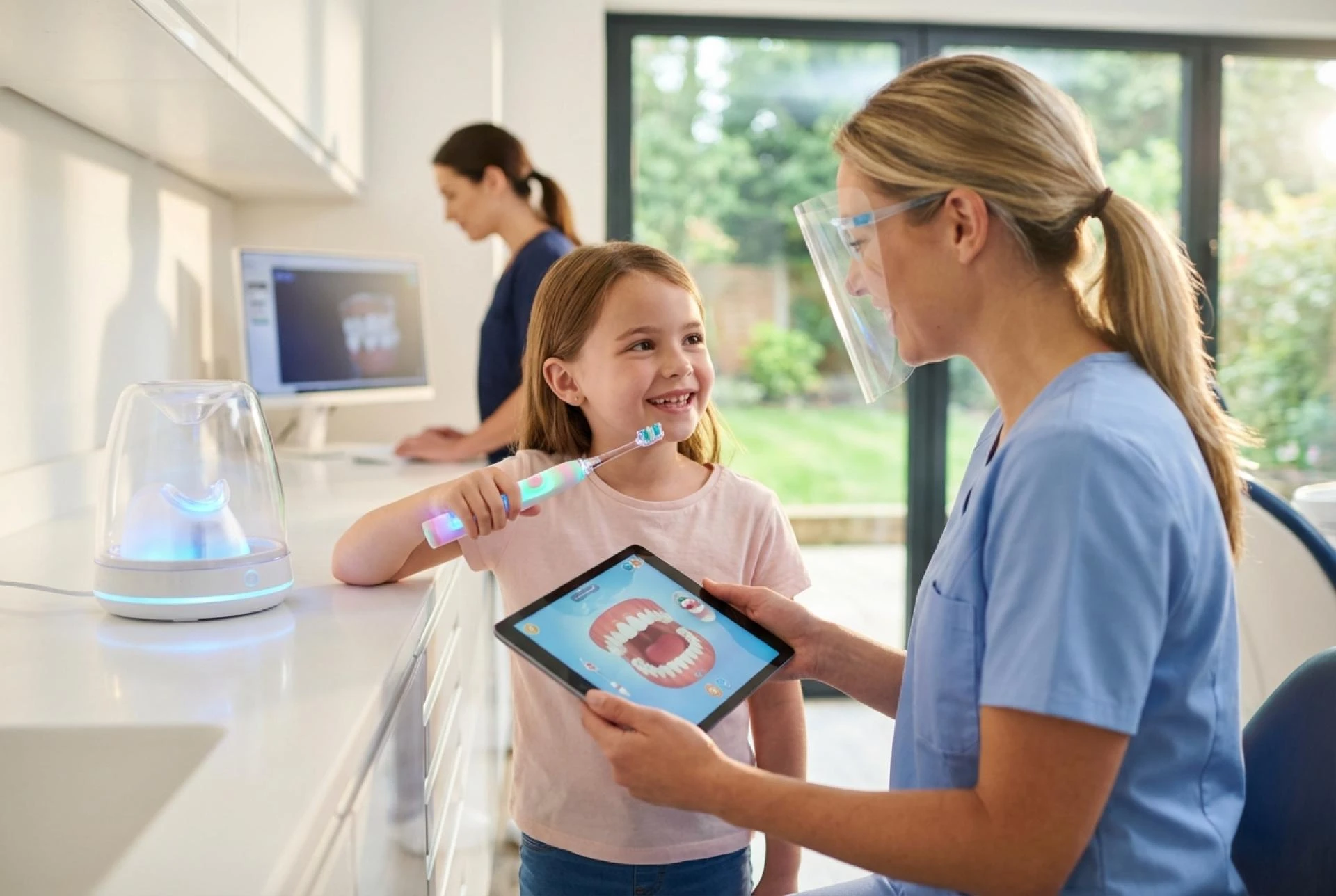
Getting children to brush properly for two minutes twice daily challenges every parent. Gamified apps transform this battle into something children actually request. Apps connected to smart toothbrushes track brushing duration, coverage, and pressure, awarding points and unlocking characters based on performance.
The engagement statistics are impressive: children using gamified systems brush 50% longer on average and show measurably better plaque removal. The habit formation extends beyond the game itself, as children internalize proper technique through repetition. Parents appreciate the reduced conflict around bedtime routines, and dentists see the results at checkup appointments.
Teledentistry for Remote Specialist Consultations
Not every community has access to pediatric dental specialists. Teledentistry bridges this gap, allowing general dentists to consult with specialists via video conference while the child is present. Parents in rural areas can receive expert guidance without traveling hours for an appointment.
Remote monitoring also enables follow-up between visits. Parents photograph their child's teeth monthly, and AI-assisted analysis flags changes requiring attention. This ongoing surveillance catches problems earlier than traditional six-month recall schedules and provides reassurance to anxious families between appointments.
Making Modern Pediatric Dentistry Accessible
The innovations described here aren't confined to wealthy urban practices. Many require minimal investment and can be implemented in any setting. Silver diamine fluoride costs pennies per application. Risk assessment protocols need only training and time. Gamified apps are free or inexpensive.
The real barrier is awareness. Parents don't know to ask for these options, and some practitioners haven't updated their approaches. Advocating for your child means asking specific questions: Does this practice offer SDF? Do they assess caries risk? What technology do they use for early detection?
Children deserve dental care that prevents problems, minimizes trauma, and sets them up for a lifetime of oral health. The tools exist. The evidence supports them. Finding a practice that embraces these innovative approaches to children's oral health makes all the difference in your child's dental future.