
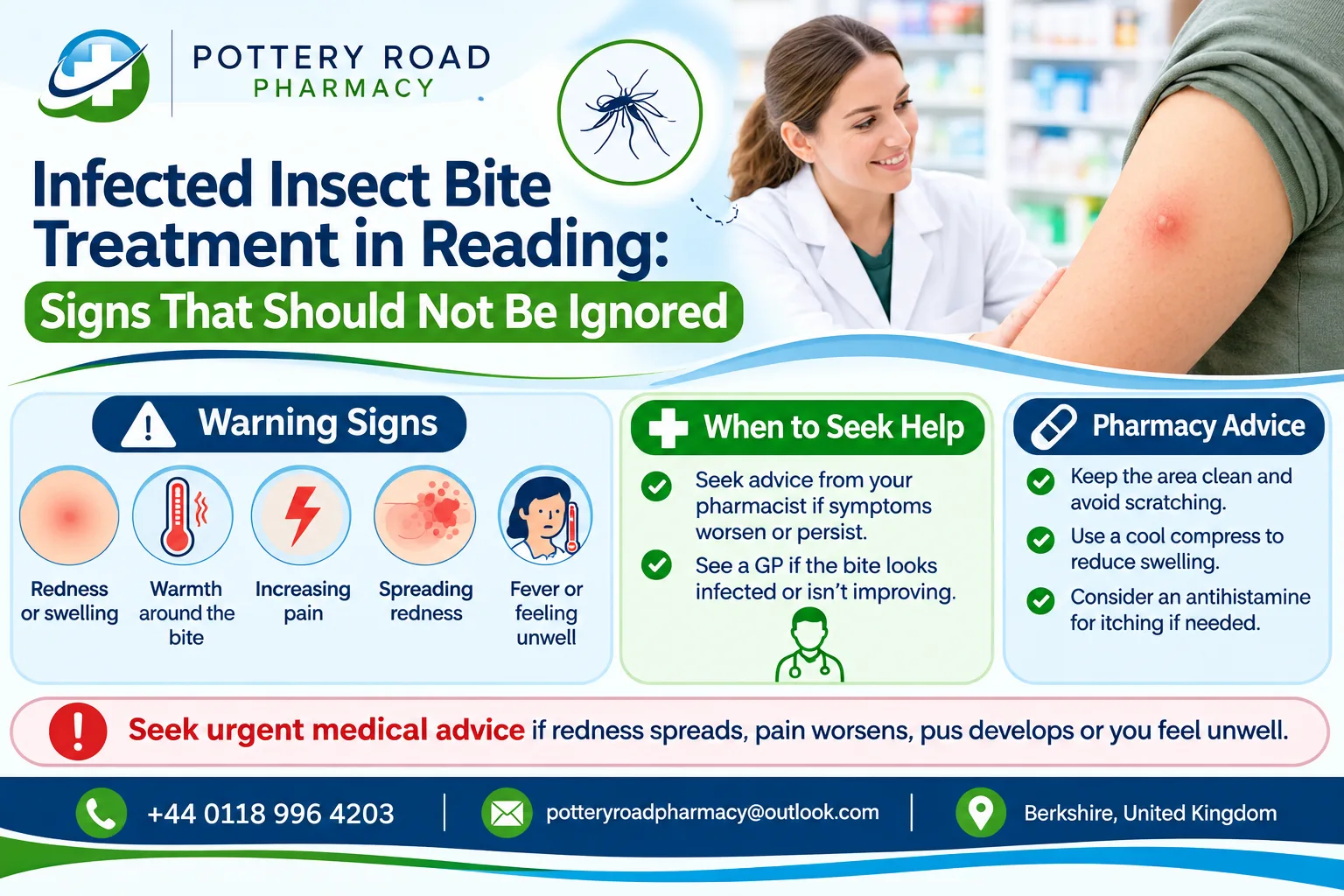
Most insect bites are a nuisance rather than a problem. They itch, go red, swell a little and settle within a few days. But sometimes a bite changes. It becomes more painful instead of less, the skin around it turns hot and swollen, and the redness creeps outwards. That can be a sign of infection.
Scratching is often how it starts. Fingernails can break the skin, and bacteria that live harmlessly on the surface can get into the damaged area. If you're searching for infected insect bite treatment in Reading, knowing what to look for, and when to ask for help, is the most useful first step. Pottery Road Pharmacy is a local pharmacy resource for people in Reading and the wider Berkshire area, and this guide explains the warning signs in plain English.
If you're worried about a bite right now, you can read about our infected skin bites service or contact the pharmacy to ask what the next step should be.
This article is general information, not a diagnosis. If you're unsure about your symptoms, speak to a pharmacist, your GP or NHS 111.
What Does an Infected Insect Bite Look Like?
Some redness, itching and swelling right after a bite is normal. It's your body reacting to the bite itself and it usually improves within a few days. An infection looks and feels different, and tends to get worse rather than better. Common warning signs include:
- Redness that spreads beyond the original bite
- Increasing swelling or warmth around the skin
- Pain or tenderness that gets worse
- Pus or discharge from the bite
- Red streaks spreading away from the affected area
- Fever or feeling generally unwell
It can be harder to spot redness on brown and black skin. The area may look darker, purplish or more swollen than the skin around it, so pay attention to how it feels as well as how it looks. Heat, tenderness and swelling are useful clues whatever your skin tone.
The key question is the direction of travel. A bite that is slowly improving is usually fine. One that's getting hotter, bigger or more painful deserves closer attention.
Signs That Should Not Be Ignored
Some symptoms mean you should get advice promptly instead of waiting to see what happens.
- The area is becoming increasingly painful, hot or swollen
- Pus develops
- The redness continues to spread
- You notice red streaks moving away from the bite
- You have a fever or feel generally unwell
- The bite is near your eye, or on a hand, face or other sensitive area and looks worse
- The person affected is a young child, an older person, or has a weakened immune system or a condition such as diabetes, because infections can progress more quickly
Urgent warning: A person with rapidly spreading redness, red streaks, fever or significant illness should seek urgent medical assessment. Call NHS 111 for advice if you're unsure what level of care you need. Call 999 for signs of a severe allergic reaction, such as difficulty breathing or swelling of the lips, tongue or throat.
Also seek advice if you were bitten by a tick, or if you develop an expanding red rash after being outdoors, as some tick bites need specific assessment.
What Causes an Insect Bite to Become Infected?
Insect bites themselves aren't usually infected at first. Infection tends to develop afterwards, and common contributing factors include:
- Scratching or picking the bite
- Breaking the skin with fingernails
- Poor wound hygiene, such as not washing the area
- Bacteria entering through damaged skin
- Delaying care when symptoms start to worsen
Not every swollen or itchy bite is infected. Some people have a strong local reaction to a bite, with a large red, swollen and itchy patch, without any infection. Symptoms need to be assessed in context, which is where a pharmacist or doctor can help.
What Should You Do If an Insect Bite Becomes Infected?
If you're not sure whether a bite is infected, these steps are a sensible place to start. They're not a substitute for assessment if you're worried.
- Clean the area. Gently wash the bite with soap and water.
- Avoid scratching. Keep fingernails away from the skin to reduce further irritation and damage. Trimming nails short can help, especially for children.
- Use a cool compress. A cool, clean cloth may ease itching and swelling, although it won't treat an infection.
- Monitor the symptoms. Look for spreading redness, increasing pain, pus or other signs of deterioration. Some people find it helpful to take a photo and note the time, so they can compare how it changes.
- Seek appropriate medical advice. A suspected skin infection may need treatment from a qualified healthcare professional. Antibiotics should only be used when clinically indicated, and prescribed or supplied by an appropriately authorised professional.
Please don't squeeze or burst the bite, and don't use leftover antibiotics from a previous illness. If you're unsure which creams or antihistamines are suitable for you or your child, ask a pharmacist, particularly if you take other medicines or have other health conditions.
When Should You Seek Medical Advice for an Infected Bite?
Get advice if the area is becoming increasingly painful, hot or swollen, if pus develops, or if the redness continues to spread. Don't wait for it to become severe. Where you go depends on how unwell you are:
- A pharmacist can advise on suitable next steps and whether a pharmacy assessment is appropriate
- Your GP can assess a suspected infection that isn't improving or is getting worse
- NHS 111 can advise when you're unsure where to go, including out of hours
- Urgent care or A&E may be needed if you feel very unwell or symptoms are spreading quickly
- 999 is for emergencies such as breathing difficulties or swelling of the mouth or throat
If you feel significantly unwell, don't try to manage it at home.
How Pottery Road Pharmacy Can Help
Pottery Road Pharmacy is a local pharmacy serving the Berkshire community. If you're concerned about an insect bite, you can contact the pharmacy to ask about available services and whether a pharmacy assessment is appropriate for you.
To be clear about what this means: not every infected bite can be treated at the pharmacy, and treatment is never provided without an appropriate assessment. Depending on your symptoms, your age and your health, the pharmacist may advise self-care, or may refer you to your GP, NHS 111 or urgent care. You can read more about advice for infected insect bites on the pharmacy's service page.
Infected Insect Bite Treatment in Reading and Berkshire
For people in Reading and the surrounding Berkshire communities, a pharmacy can be a convenient first point of contact when a bite starts to look worse. You don't always need to book a GP appointment to ask a question. If a bite becomes more painful, swollen or warm, or starts discharging fluid, speaking to a pharmacist promptly can help you decide what to do next.
A pharmacy may be a useful first step when:
- The bite is more painful or swollen than you'd expect, but you feel otherwise well
- You're unsure whether it's infected or just an irritated reaction
- You'd like advice on managing symptoms
Your GP, NHS 111, urgent care or emergency services are more appropriate when you have spreading redness, red streaks, fever, feel unwell, or have signs of a severe allergic reaction. If in doubt, choose the higher level of care.
How to Prevent Insect Bites from Becoming Infected
You can't always avoid bites, but you can lower the chance that one becomes infected:
- Avoid scratching bites. It's the most common route to infection.
- Keep the affected skin clean.
- Use suitable insect repellent when appropriate, particularly in the evening or near water and woodland.
- Cover exposed skin outdoors with long sleeves and trousers where practical.
- Follow product instructions when using bite-relief treatments.
- Seek advice if symptoms worsen or don't improve.
For children, keeping nails short and distracting them from scratching can make a real difference.
Frequently Asked Questions
How do I know if an insect bite is infected?
An insect bite may be infected if redness, swelling, warmth or pain continues to increase, or if pus develops. Spreading redness, fever or feeling unwell can indicate a more serious infection and should prompt medical advice.
Where can I get infected insect bite treatment in Reading?
People in Reading can contact Pottery Road Pharmacy to ask about its infected skin bites service and whether an assessment is suitable. If your symptoms are severe, spreading quickly or you feel very unwell, seek medical care from your GP, NHS 111 or urgent care instead.
Should I go to a pharmacist or GP for an infected insect bite?
A pharmacist can advise on suitable next steps. Suspected infections may need GP or urgent medical assessment depending on how severe they are, so don't delay if symptoms are worsening quickly.
Can an infected insect bite go away on its own?
Mild bite reactions often settle by themselves. A genuine infection may need medical treatment, so worsening symptoms shouldn't be ignored.
Do infected insect bites always need antibiotics?
No. Not every bite is infected, and antibiotics aren't appropriate for every skin reaction. A qualified healthcare professional can assess whether they're needed.
How long does an infected insect bite take to heal?
Recovery depends on how severe the infection is and what treatment is needed. If symptoms worsen or fail to improve, get them reassessed.
When should I seek urgent help for an insect bite?
Seek urgent help for spreading redness, red streaks, fever, significant illness or rapidly worsening symptoms. Contact NHS 111 for urgent advice when appropriate, and call 999 for difficulty breathing or swelling of the lips, tongue or throat.
Conclusion
Most bites heal without fuss, but the ones that don't deserve attention. Watch for redness that spreads, swelling and warmth that increase, worsening pain, pus, red streaks and fever. Keep the area clean, avoid scratching, and seek advice early rather than late.
If you're looking for infected insect bite treatment in Reading, a conversation with a pharmacist can help you understand the right next step, and where more urgent care is needed, you'll be pointed there.
Concerned about an insect bite that is becoming increasingly painful, swollen or red? Contact Pottery Road Pharmacy to ask about our infected skin bites service and the most appropriate next step.