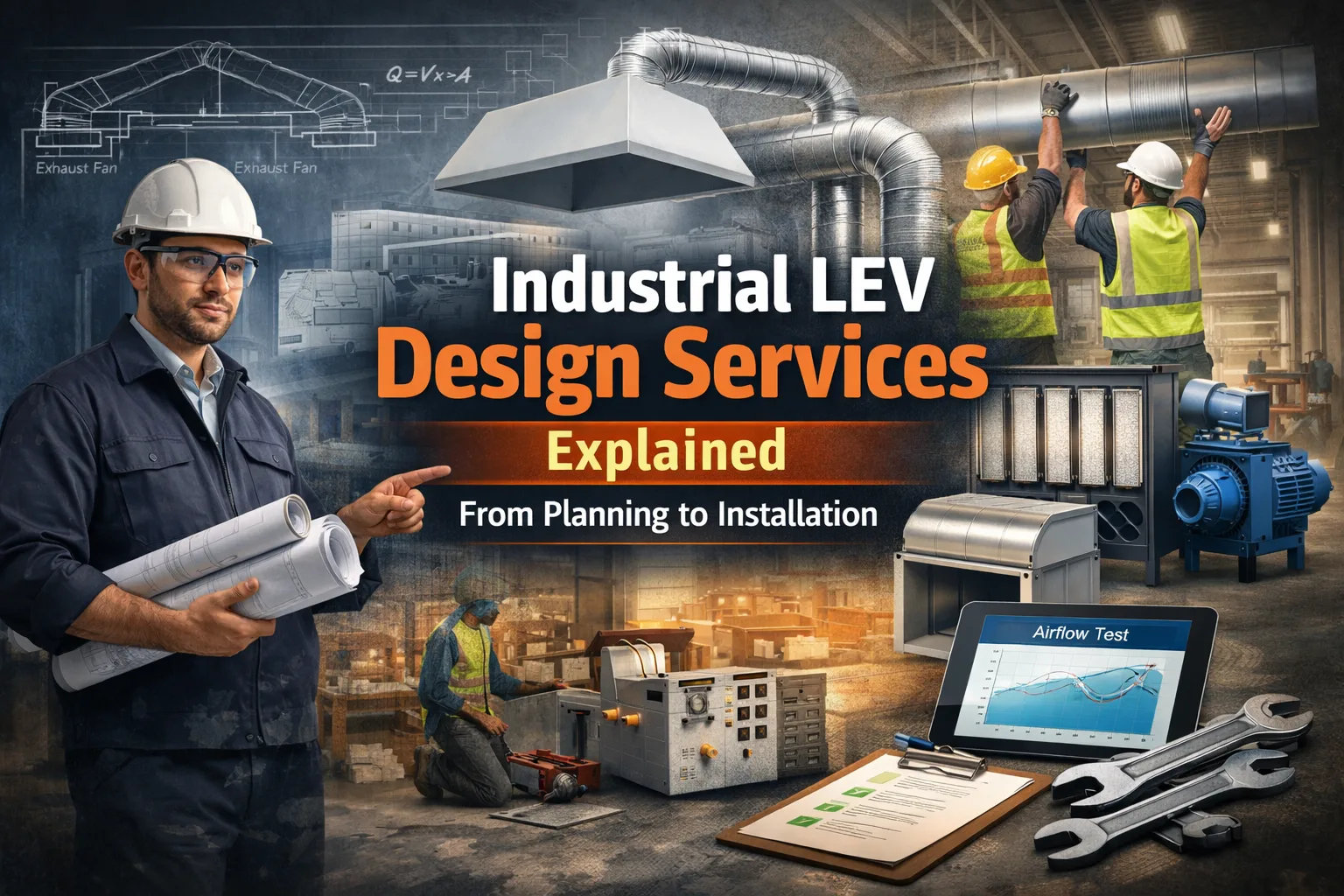
Maintaining clean and safe air in industrial environments is not just a regulatory requirement—it’s a critical part of protecting workers, ensuring operational efficiency, and safeguarding long-term business success. This is where Industrial Local Exhaust Ventilation (LEV) systems come into play. However, the effectiveness of an LEV system depends heavily on how well it is designed, planned, and installed.
In this comprehensive guide, we’ll walk you through everything you need to know about industrial LEV design services from initial planning to final installation—so you can understand how these systems are developed and why professional design matters.
What Is an Industrial LEV System?
An Industrial LEV (Local Exhaust Ventilation) system is engineered to capture airborne contaminants—such as dust, fumes, vapours, and gases directly at their source. Instead of allowing harmful substances to spread into the workplace, LEV systems extract and filter them before they can be inhaled by workers.
These systems are commonly used in industries such as:
- Manufacturing
- Welding and fabrication
- Pharmaceutical production
- Woodworking
- Chemical processing
A properly designed LEV system ensures that hazardous substances are effectively controlled, helping businesses comply with workplace safety regulations while maintaining a healthier environment.
Why Professional LEV Design Matters
Designing an LEV system is not a one-size-fits-all process. Every industrial setting has unique challenges, including different types of contaminants, workspace layouts, and operational requirements.
Professional industrial LEV design services ensure:
- Accurate identification of airborne hazards
- Proper airflow calculations
- Efficient system layout and ducting
- Compliance with safety standards
- Long-term reliability and performance
Poorly designed systems can lead to ineffective extraction, higher energy costs, frequent breakdowns, and even legal consequences due to non-compliance.
Stage 1: Initial Consultation and Site Assessment
The first step in any LEV design project is understanding the client’s environment and requirements.
Key Activities in This Stage:
- Workplace Inspection: Engineers visit the site to evaluate processes generating contaminants.
- Hazard Identification: Determining the type, concentration, and behaviour of airborne pollutants.
- Process Analysis: Understanding how tasks are performed and where emissions occur.
- Space Evaluation: Assessing building layout, equipment placement, and airflow patterns.
This stage lays the foundation for the entire project. Without a thorough assessment, even the most advanced systems may fail to perform effectively.
Stage 2: Defining System Requirements
Once the site assessment is complete, the next step is defining the technical and operational requirements of the LEV system.
Important Considerations:
- Type of contaminants (dust, fumes, gases)
- Required capture velocity
- Airflow volume and pressure
- Noise control requirements
- Energy efficiency goals
- Regulatory compliance standards
At this stage, engineers begin translating real-world conditions into technical specifications that will guide the system design.
Stage 3: Conceptual Design and System Planning
This is where the core of industrial LEV design services begins. Engineers create a conceptual design tailored to the specific needs of the facility.
Components of Conceptual Design:
1. Hood DesignThe hood is the most critical part of an LEV system, as it captures contaminants at the source. Different types of hoods (enclosing, receiving, or capturing) are selected based on the application.
2. Ductwork LayoutDucting must be carefully designed to transport contaminated air efficiently without excessive pressure loss. Proper routing ensures optimal airflow and reduces energy consumption.
3. Air Cleaning DevicesDepending on the contaminants, different filtration systems are selected, such as:
- Dust collectors
- HEPA filters
- Scrubbers
- Cyclones
Fans are chosen based on airflow requirements and system resistance. The right fan ensures consistent performance and efficiency.
5. Discharge SystemCleaned air must be safely released or recirculated, depending on regulations and system design.
Stage 4: Detailed Engineering Design
After the conceptual design is approved, engineers move on to detailed design.
What This Includes:
- Precise airflow calculations
- Duct sizing and material selection
- Equipment specifications
- System schematics and drawings
- Control systems and automation planning
Advanced software tools are often used to model airflow and simulate system performance, ensuring that the design will function as intended before installation begins.
Stage 5: Compliance and Standards
Industrial LEV systems must meet strict health and safety regulations. Compliance is a key part of the design process.
Common Compliance Areas:
- Occupational exposure limits (OELs)
- Workplace safety regulations
- Environmental standards
- Industry-specific guidelines
Professional LEV designers ensure that the system meets all relevant standards, reducing the risk of fines, legal issues, and workplace hazards.
Stage 6: Installation Planning
Before installation begins, careful planning is required to ensure a smooth process.
Key Elements:
- Project timeline and scheduling
- Coordination with other contractors
- Minimising disruption to operations
- Safety planning during installation
Proper planning ensures that the installation is efficient and does not interfere with daily business activities.
Stage 7: System Installation
The installation phase brings the design to life.
Installation Process:
- Mounting hoods and capture devices
- Installing ductwork and supports
- Setting up filtration units
- Installing fans and motors
- Electrical connections and control systems
All components must be installed according to the design specifications to ensure optimal performance.
Stage 8: Testing and Commissioning
Once installation is complete, the system must be tested and commissioned.
Key Tests Include:
- Airflow measurements
- Pressure testing
- Smoke testing to visualise airflow
- System balancing
- Noise level checks
Commissioning ensures that the system performs as designed and meets all safety and regulatory requirements.
Stage 9: Training and Handover
A crucial but often overlooked step is training the client’s staff.
Training Covers:
- System operation
- Maintenance procedures
- Safety practices
- Troubleshooting basics
Proper training ensures that the system continues to operate effectively over time.
Stage 10: Ongoing Maintenance and Support
Even the best-designed LEV system requires regular maintenance to remain effective.
Maintenance Activities:
- Filter replacement
- Duct cleaning
- Fan inspections
- Performance testing
Routine servicing helps extend the lifespan of the system and ensures continued compliance.
Common Challenges in LEV Design
While industrial LEV design services are highly effective, certain challenges can arise:
- Poor initial assessment leading to incorrect design
- Inadequate airflow due to improper calculations
- Space constraints affecting duct layout
- Lack of maintenance reducing system efficiency
Working with experienced professionals helps overcome these challenges and ensures a successful outcome.
Benefits of Investing in Industrial LEV Design Services
Choosing professional LEV design services offers numerous advantages:
1. Improved Worker Safety
Effective extraction reduces exposure to harmful substances.
2. Regulatory Compliance
Ensures adherence to health and safety standards.
3. Enhanced Productivity
Cleaner air leads to better working conditions and efficiency.
4. Energy Efficiency
Optimised systems consume less power.
5. Long-Term Cost Savings
Reduced downtime, maintenance, and repair costs.
Future Trends in LEV Design
As industries evolve, so do LEV systems. Some emerging trends include:
- Smart monitoring systems with real-time data
- Energy-efficient and sustainable designs
- Advanced filtration technologies
- Integration with building management systems
These innovations are making LEV systems more effective and easier to manage.
Conclusion
Industrial LEV design services play a vital role in creating safer, cleaner, and more efficient workplaces. From the initial site assessment to final installation and ongoing maintenance, every stage of the process requires careful planning, technical expertise, and attention to detail.
A well-designed LEV system not only protects workers from harmful airborne contaminants but also ensures compliance with regulations and improves overall operational performance.
If your business relies on effective air quality control, investing in professional industrial LEV design services is a smart and necessary step. With the right approach, you can create a safer work environment, enhance productivity, and secure long-term success for your operations.