Modern manufacturing relies on accurate product identification, fast production cycles, and consistent quality. Whether a company is marking corrugated cartons, pallets, building materials, pipes, metals, or other industrial products, reliable coding is essential for traceability and efficient handling.
An industrial inkjet printer provides a flexible way to print batch numbers, production dates, barcodes, product information, logos, and other variable data directly onto products or packaging. For manufacturers operating high-speed production lines, the right inkjet system can become an important part of an automated marking and packaging workflow.
What Is an Industrial Inkjet Printer?
An industrial inkjet printer is a printing system designed specifically for manufacturing, packaging, and industrial marking applications. Unlike standard office printers, these systems are engineered for continuous production environments and can be configured for different substrates, print sizes, ink requirements, and line speeds.
Industrial inkjet technology can be used for applications ranging from small product identification to large-character carton, case, and pallet marking.
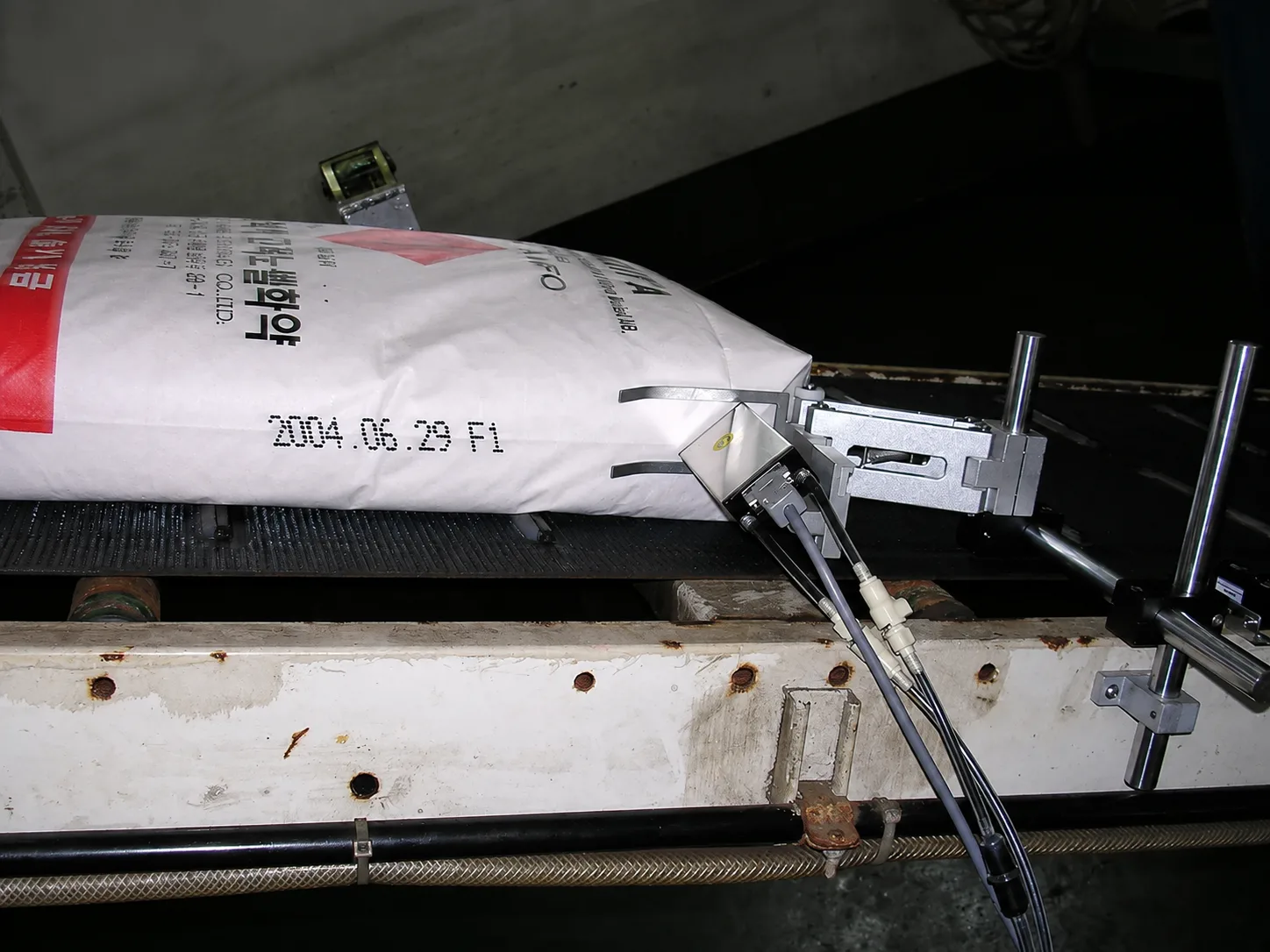
One important technology is Drop-On-Demand (DOD) inkjet printing. DOD systems release controlled ink droplets only when printing is required. This makes the technology particularly suitable for large-character printing, variable data, and applications where clear, durable marks are required.
Redemac’s DOD large-character systems are designed for variable information such as batch codes, dates, and barcodes and can be used across a variety of porous and non-porous substrates.
Why Product Coding Matters in Manufacturing
Product coding is more than simply putting text on a package. Accurate markings help manufacturers identify products, organize inventory, support traceability, and communicate essential information throughout the supply chain.
For example, manufacturers may need to print:
- Batch and lot numbers
- Production or manufacturing dates
- Product identification numbers
- Barcodes and QR codes
- Shipping information
- Serial or variable data
Logos and other product information
Automating these markings can reduce reliance on manual processes and provide more consistent results across production runs.
Key Benefits of an Inkjet Industrial Printer
1. Fast and Consistent Marking
Production environments often require printing at high line speeds. An inkjet industrial printer can be integrated into a manufacturing or packaging line to apply required information as products move through the process.
Consistent automated marking can help reduce variations associated with manual coding and support more efficient production workflows.
2. Large-Character Printing
Some applications require markings that can be read from a distance. Large-character inkjet printers are particularly useful for cartons, cases, pallets, lumber, construction products, and other large industrial items.
DOD technology is designed for large, bold characters and can support high-contrast alphanumeric information and barcodes.
3. Compatibility With Different Substrates
Manufacturing companies work with a wide range of materials. The appropriate printer and ink combination can allow industrial coding on substrates such as corrugated cardboard, wood, metals, pipes, plastics, foils, pallets, and other industrial surfaces.
Redemac specifically lists applications across corrugated packaging, wood and lumber, cement bags, metals, pipes, plastics, pallets, and crates.
4. Durable Industrial Marking
The durability of a printed code depends on factors including the substrate, ink formulation, environmental exposure, and application requirements.
For demanding environments, pigmented ink options can provide high opacity and strong contrast. Redemac notes that its pigmented ink options are designed for applications requiring resistance to factors such as water, UV exposure, abrasion, and chemicals.
5. Production-Line Integration
A modern printer should work as part of the production process rather than operate as a standalone machine.
Industrial inkjet systems can be integrated with conveyors, scanners, PLCs, and other production equipment. This allows product detection and printing to become part of an automated workflow.
Redemac’s DOD printer solutions support conveyor integration, PLCs, scanners, high-speed manufacturing lines, and network-controlled printer configurations.
Where Are Industrial Inkjet Printers Used?
The versatility of industrial inkjet technology makes it useful across numerous industries.
Food and Beverage
Manufacturers can use industrial coding equipment for carton identification, batch information, dates, and other variable data on suitable packaging.
Building Materials
Large-character marking is useful for products such as lumber, concrete products, cement bags, and other construction materials where clear identification is important.
Metal and Industrial Manufacturing
Metal components, pipes, steel products, and other industrial materials may require durable identification that remains visible during storage, transportation, or handling.
Logistics and Distribution
Large, readable markings can assist with pallet, carton, and case identification in warehouses and distribution environments.
Pharmaceutical and Chemical Applications
Product identification and traceability are important considerations in pharmaceutical and chemical manufacturing. The printer, ink, substrate, and marking requirements should be evaluated according to the specific application.
Redemac currently serves industries including food and beverage, building materials, extrusion and pipes, wires and cables, metal and steel, pharmaceuticals and cosmetics, chemicals, automotive and aerospace, and distribution and logistics.
How to Choose the Right Industrial Inkjet Printer
Selecting an industrial printer requires more than comparing equipment specifications. Manufacturers should evaluate the complete application.
Consider the Substrate
Identify exactly what material will be printed. Porous cardboard requires different considerations from smooth plastics, metals, or other non-porous surfaces.
Determine the Required Print Size
If the application involves pallet, carton, or case identification, a large-character printer may be more appropriate than a small-character coding system.
Evaluate Production Speed
The printer must be capable of keeping pace with the required production-line speed. Consider both normal operating speed and peak throughput.
Select the Appropriate Ink
Ink selection should account for the substrate and environmental conditions. Applications exposed to moisture, abrasion, sunlight, or chemicals may require a more durable ink formulation.
Check Integration Requirements
Consider whether the printer needs to communicate with conveyors, sensors, PLCs, scanners, or other automation equipment.
Consider Technical Support
Equipment performance also depends on installation, maintenance, operator training, and technical assistance. Working with an experienced industrial equipment supplier can simplify equipment selection and ongoing support.
Choosing an Industrial Equipment Supplier
The supplier you choose can have a significant impact on the long-term performance of your marking system.
An established industrial equipment supplier should be able to evaluate your application, recommend suitable equipment, provide technical guidance, and support installation and maintenance.
Redemac states that it provides marking, coding, labelling, inspection, verification, and packaging systems to Canadian manufacturers. The company also provides technical support, technical training, preventive maintenance, service contracts, and equipment rental.
This broader support can be particularly valuable when an industrial printer needs to become part of a larger production or packaging operation.
Industrial Inkjet Printing and Automation
As manufacturers increasingly automate production processes, coding and marking systems are becoming integrated components of larger manufacturing workflows.
An industrial inkjet printer can work alongside conveyors, sensors, packaging equipment, scanners, and control systems to reduce manual intervention. When combined with appropriate industrial automation solutions, automated marking can contribute to a more consistent and streamlined production process.
For businesses looking for equipment beyond printing alone, Redemac provides marking and coding, labelling, inspection and verification, packaging equipment, packaging supplies, and software solutions.
Why Choose the Right Coding Solution?
The best printer is not necessarily the one with the most features. It is the system that matches the actual production application.
Manufacturers should consider substrate type, print height, required durability, production speed, data requirements, operating environment, integration needs, maintenance, and technical support before making a purchasing decision.
For large-character industrial applications, DOD technology can be particularly suitable where manufacturers need bold, readable markings on products and secondary packaging. Redemac's DOD collection includes industrial inkjet systems designed for applications involving large-character printing, variable data, durable marking, and production-line integration.
Conclusion
An industrial inkjet printer can provide manufacturers with a practical and scalable solution for product coding, identification, and marking. From batch codes and dates to barcodes, shipping information, and large-character markings, industrial inkjet technology can support a wide range of manufacturing and packaging requirements.
The key to successful implementation is selecting equipment based on the actual application, including substrate, print size, line speed, ink requirements, durability, and automation needs.
If you are evaluating an inkjet industrial printer for your production environment, working with an experienced supplier can help you identify the right technology and integration approach.
Looking for an industrial inkjet printer for reliable product coding and marking? Explore Redemac’s DOD Large Character Inkjet Printers for industrial marking applications, or contact Redemac to discuss the right coding solution for your production line.
Frequently Asked Questions
1. What is an industrial inkjet printer used for?
An industrial inkjet printer is used to apply variable information such as batch numbers, production dates, barcodes, product identification, and other markings onto products, packaging, and industrial materials.
2. What is a DOD industrial inkjet printer?
DOD stands for Drop-On-Demand. This technology releases controlled ink droplets only when printing is required and is well suited to large-character printing, variable data, and industrial marking applications.
3. What materials can an industrial inkjet printer mark?
Depending on the printer and ink selected, industrial inkjet systems can mark materials such as corrugated cardboard, wood, metals, pipes, plastics, foils, pallets, and other porous or non-porous substrates.
4. How do I choose the right industrial inkjet printer?
Consider the substrate, required print height, production speed, ink and durability requirements, operating environment, data requirements, and integration needs. An experienced industrial equipment supplier can help determine which printer configuration is appropriate for the application.