
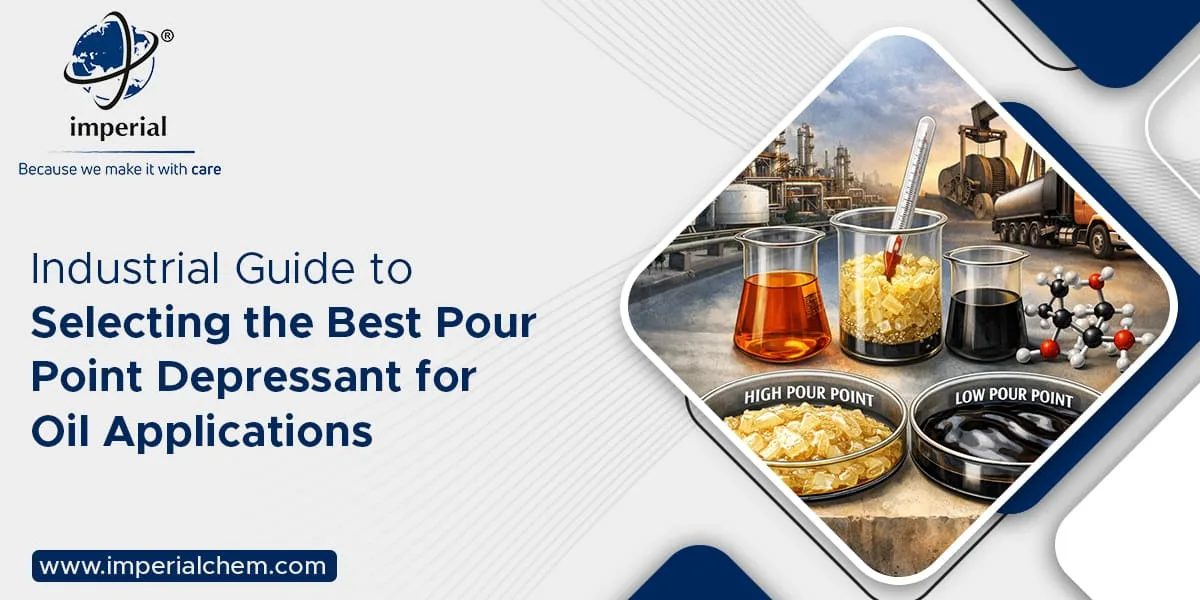
In the oil, fuel, and lubricant industries, maintaining smooth fluid flow under low-temperature conditions is critical for operational efficiency. As temperatures drop, wax crystals naturally form in petroleum-based products and biodiesel blends, causing oils and fuels to thicken or even solidify. This can lead to blocked pipelines, reduced pump efficiency, engine starting issues, and costly operational downtime. To prevent these challenges, industries rely on pour point depressants (PPDs), specialized additives designed to improve low-temperature flow characteristics.

Choosing the right pour point depressant is not simply about lowering the pour point of oil. Different oils, fuels, and climatic conditions require carefully selected formulations to achieve the best results. This industrial guide explains how pour point depressants work, their industrial applications, and the key factors to consider when selecting the most suitable solution for your operations.
Understanding Pour Point Depressants
A pour point depressant is a chemical additive used to reduce the temperature at which oil or fuel stops flowing. In low temperatures, wax molecules in crude oil and lubricants crystallize and interlock, restricting fluid movement. PPDs modify the growth and structure of these wax crystals, preventing them from forming large networks that block flow.
Industries ranging from oil refining and transportation to automotive lubrication and biodiesel production depend on these additives to ensure reliable performance in cold weather conditions.
Today, many businesses source solutions from a trusted pour point depressant manufacturer in India to improve the stability and performance of oils and fuels across varying climates and industrial applications.
Why Pour Point Depressants Are Important in Industrial Operations
Low-temperature flow problems can create significant operational risks. Pipelines carrying crude oil may experience restricted flow, storage tanks can become difficult to pump, and diesel engines may fail to start in colder regions. For lubricant manufacturers, poor cold-flow properties may reduce machinery efficiency and increase equipment wear.
Using high-quality pour point depressants offers several advantages:
- Improved fluidity in low temperatures
- Reduced maintenance and operational downtime
- Enhanced fuel efficiency
- Better storage and transportation stability
- Improved performance of lubricants and fuel oils
- Reduced energy consumption during pumping operations
Industries operating in harsh winter conditions often rely on high-performance pour point depressant for diesel and fuel oils to maintain uninterrupted operations and ensure reliable fuel handling.
Types of Oils and Fuels That Require PPDs
Different petroleum products respond differently to temperature changes. The effectiveness of a PPD depends heavily on the composition of the oil or fuel being treated.
Crude Oil
Crude oil often contains paraffin wax that crystallizes in colder environments. This can create severe transportation challenges in pipelines and storage facilities. Selecting a specialized pour point depressant for crude oil manufacturer in India can help improve crude oil mobility and reduce flow assurance issues.
Lubricating Oils
Industrial lubricants and automotive oils require stable viscosity and flow performance in low temperatures. A reliable PPD chemical supplier for lubricants and fuel industry in UAE can provide tailored formulations that improve lubricant performance without affecting viscosity stability.
Biodiesel
Biodiesel is more sensitive to cold temperatures compared to conventional diesel due to its fatty acid composition. Wax crystallization in biodiesel can clog filters and reduce engine performance. This is why many fuel producers partner with a trusted pour point depressant (PPD) for biodiesel manufacturer in India to enhance biodiesel cold-flow properties.
Diesel and Fuel Oils
Diesel fuels used in colder climates require additives that prevent wax crystal agglomeration and maintain fuel flow. Industries commonly use advanced PPD formulations for uninterrupted engine and fuel system performance during winter operations.
Key Factors to Consider When Selecting a Pour Point Depressant
Selecting the right PPD involves more than choosing a general additive. Several technical and operational factors must be evaluated to achieve optimal results.
1. Compatibility with Oil Composition
Every oil or fuel has a different chemical composition. A pour point depressant that works effectively in one fuel may not deliver the same results in another. Before selecting a product, it is important to conduct compatibility testing with the target oil.
For example, paraffinic crude oils require different treatment approaches compared to naphthenic oils. Working with a specialized pour point depressant for oil manufacturer in India can help industries identify the most compatible additive formulation for their specific applications.
2. Temperature Conditions
The operating environment plays a major role in additive selection. Industries operating in extremely cold regions require stronger cold-flow improvement performance compared to moderate climates.
Understanding the lowest expected operating temperature helps determine the required pour point reduction level and additive dosage.
3. Dosage Efficiency
An effective PPD should deliver strong performance at lower treatment rates. Overdosing can increase operational costs, while under-dosing may fail to provide adequate protection.
Manufacturers often conduct laboratory evaluations to determine the ideal concentration for maximum efficiency and cost-effectiveness.
4. Stability and Storage Performance
The selected additive should remain stable during long-term storage and transportation. Poor-quality additives may separate or lose effectiveness over time.
A reliable cold flow improver (PPD) manufacturer in India typically offers formulations tested for long-term stability under varying storage conditions.
5. Environmental and Regulatory Compliance
Modern industries are increasingly focused on environmentally responsible solutions. It is important to select additives that comply with environmental regulations and industry standards.
This is especially important for biodiesel applications, where environmentally friendly formulations are often preferred.
Applications Across Global Industries
Pour point depressants are widely used across global energy and industrial sectors. Refineries, pipeline operators, lubricant manufacturers, marine fuel suppliers, and automotive industries all depend on these additives for operational reliability.
In Middle Eastern markets where temperature fluctuations affect oil transportation and fuel storage, demand for specialized additives continues to grow. Many businesses source pour point depressant additives for oil and gas industry in Kuwait to improve low-temperature operational efficiency in demanding industrial environments.
Similarly, industries seeking international-quality additives often work with an industrial pour point depressant manufacturer and exporter in Oman for specialized oilfield and fuel treatment solutions.
Importance of Technical Testing Before Final Selection
Laboratory testing plays a critical role in selecting the right pour point depressant. Tests typically include:
- Pour point analysis
- Cold filter plugging point (CFPP) testing
- Viscosity measurements
- Wax appearance temperature evaluation
- Storage stability testing
These tests help determine how effectively the additive performs under real operating conditions.
Collaborating with experienced chemical suppliers ensures better product recommendations, optimized dosage levels, and customized formulations for specific operational requirements.
Future Trends in Pour Point Depressant Technology
As fuel technologies evolve, the demand for advanced pour point depressants continues to increase. Modern formulations are now designed to support cleaner fuels, biodiesel blends, and environmentally sustainable industrial practices.
Research is also focused on multifunctional additives that combine cold-flow improvement with enhanced lubrication and oxidation stability.
Global industries increasingly seek suppliers that provide customized and application-specific solutions rather than generic additive formulations.
Conclusion
Selecting the right pour point depressant is essential for maintaining operational reliability, improving fuel and oil performance, and reducing cold-weather flow problems across industrial applications. From crude oil transportation and lubricant manufacturing to biodiesel production and fuel storage, the correct additive can significantly improve efficiency and reduce operational risks.
Businesses should evaluate factors such as oil compatibility, temperature conditions, dosage efficiency, storage stability, and regulatory compliance before making a final selection. Partnering with experienced manufacturers and suppliers helps ensure optimal product performance and long-term operational success.
Whether you require biodiesel treatment solutions, lubricant additives, or advanced cold-flow improvers for industrial fuel systems, choosing a trusted supplier with strong technical expertise can make a substantial difference in product performance and operational efficiency.