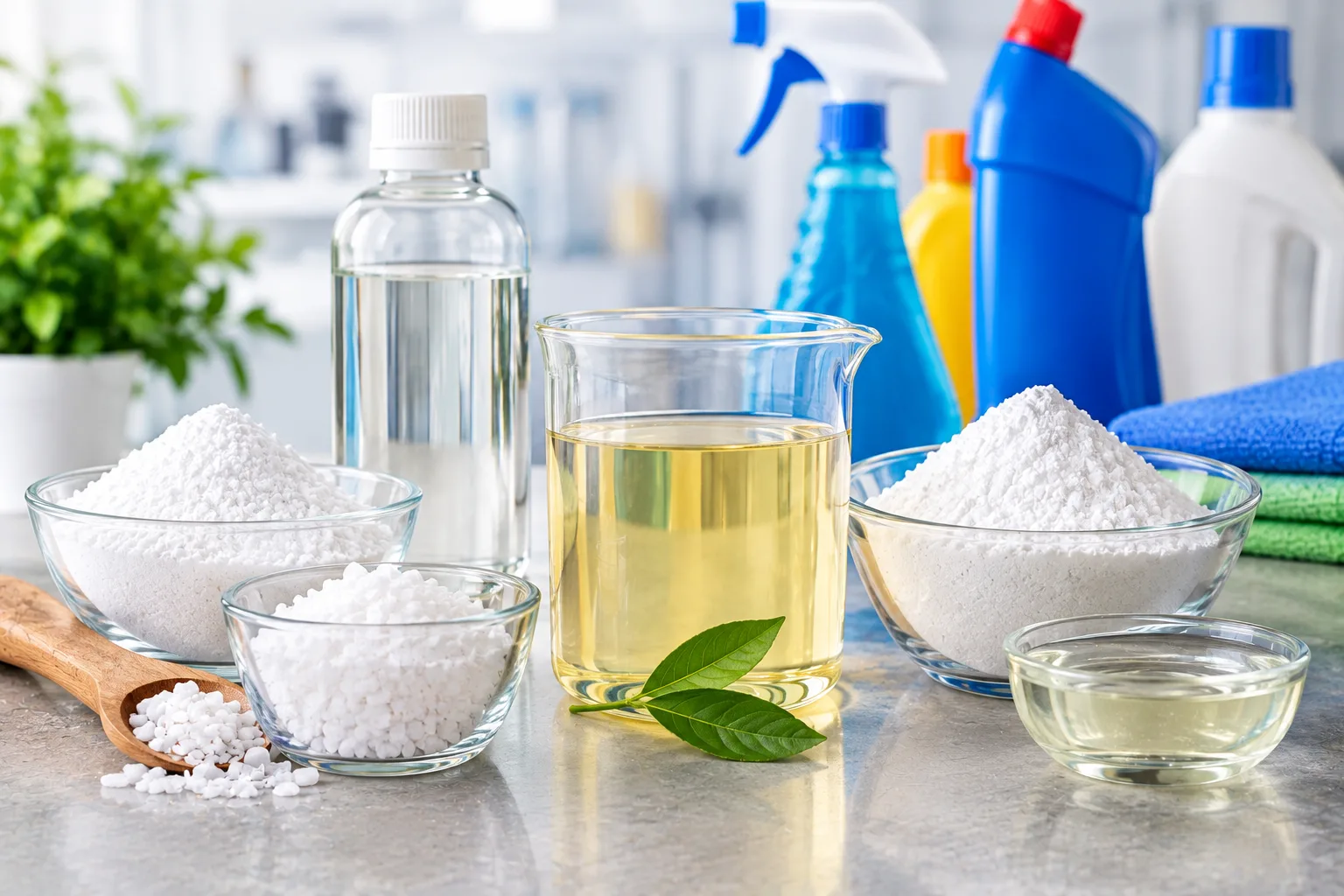
Every effective cleaner starts with a well-chosen set of ingredients. Behind a simple bottle of floor cleaner, degreaser, or surface polish is a carefully balanced formula in which each component has a defined job. For manufacturers, understanding these building blocks is the first step toward creating products that clean better, last longer, and cost less to produce. AX Matra supplies a wide range of Industrial Chemicals used in cleaning and specialty formulations, helping manufacturers source reliable raw materials with consistent quality.
This article explores the key ingredient categories in industrial cleaners and specialty additives, what each one does, and how to think about selecting them.
Why Ingredient Selection Matters
A cleaner is only as good as the raw materials inside it. The right combination of Industrial Chemicals determines how well a product removes soil, how stable it stays in storage, how it smells, how it feels on the surface, and how safe it is to handle. Poor ingredient choices can lead to separation, weak performance, surface damage, or customer complaints.
Good formulation balances four goals:
- Performance: cleaning power and speed
- Stability: consistent appearance and behavior over shelf life
- Safety: safe handling for workers and end users
- Cost: efficient use of raw materials
Core Ingredient Categories in Cleaning Formulations
1. Surfactants
Surfactants are the backbone of most cleaners. They lower surface tension, help water wet the surface, and lift oily and particulate soil so it can be rinsed away. They are grouped into anionic, non-ionic, cationic, and amphoteric types, each suited to different tasks.
- Anionic surfactants offer strong foaming and detergency, and are common in dishwashing liquids and general cleaners.
- Non-ionic surfactants are excellent emulsifiers and degreasers, and remain stable in hard water.
- Cationic surfactants provide antistatic and antimicrobial behavior and are used in sanitizing products.
- Amphoteric surfactants add mildness and foam stability.
2. Builders and Alkalinity Sources
Builders improve cleaning by softening water and boosting alkalinity. Ingredients such as sodium carbonate, sodium silicate, and phosphate or phosphate-free alternatives help break down grease, hold soil in suspension, and prevent it from redepositing on cleaned surfaces.
3. Solvents
Solvents dissolve oils, greases, resins, and inks that water alone cannot remove. Glycol ethers, alcohols, and pine or citrus-based solvents are common choices. They are particularly valuable in degreasers, glass cleaners, and heavy-duty industrial formulations.
4. Acids
Acidic cleaners remove scale, rust, and mineral deposits. Citric acid, phosphoric acid, and other acidic components are used in toilet cleaners, descalers, and metal-cleaning products. Choosing the right acid depends on the surface, the type of deposit, and safety needs.
5. Chelating Agents
Chelating agents bind metal ions in hard water that would otherwise interfere with surfactants. This keeps the cleaner working efficiently and prevents spots, films, and residues.
6. Fragrances and Essential Oils
Scent strongly influences how users perceive cleanliness. Fragrance oils, pine oil, and citrus oils provide a fresh smell and mask the odor of raw ingredients. Many of them need emulsifiers or solubilizers to stay evenly dispersed in water-based products.
7. Preservatives
Water-based products can support microbial growth. Preservatives protect formulations from bacteria, yeast, and mold, keeping the product safe and stable throughout its shelf life.
Specialty Additives That Improve Performance
Beyond the core ingredients, specialty additives fine-tune a product and give it a competitive edge.
Emulsifiers and solubilizers. These help oils, fragrances, and solvents blend smoothly into water-based formulas, creating uniform milky or clear liquids that do not separate.
Thickeners and rheology modifiers. They control viscosity, so gels, creams, and liquids have the right body. This helps products cling to vertical surfaces and stay evenly mixed.
Abrasives and fillers. Fine mineral or silica-based particles add gentle scouring action to cream cleaners and powders.
Anti-caking and flow agents. In powdered cleaners, these keep the product free-flowing and prevent clumping during storage.
Defoamers. In machine-based and high-pressure cleaning systems, defoamers prevent excessive foam that can slow down operations.
Corrosion inhibitors. They protect metal surfaces and equipment from damage during cleaning.
Colorants and dyes. These improve visual appeal and help differentiate product variants.
Matching Ingredients to Applications
Different cleaning tasks call for different ingredient combinations. Floor cleaners typically rely on surfactants, fragrance, emulsifiers, and preservatives to deliver everyday cleaning with a lasting fresh scent. Degreasers depend on non-ionic surfactants, solvents, and alkaline builders to break down heavy oil and grease. Toilet and descaling cleaners use acids along with surfactants, thickeners, and fragrance so the product clings to surfaces and removes mineral deposits. Glass and surface cleaners are usually built from light surfactants, alcohols, and solvents that clean without leaving streaks. Scouring powders and creams combine abrasives, surfactants, and carriers for mechanical cleaning action, while disinfectant liquids often use cationic actives, emulsifiers, and fragrance to sanitize and leave a clean smell.
Practical Tips for Formulators
- Start with the soil. Identify what you need to remove, such as grease, scale, or dust, before choosing ingredients.
- Consider the surface. A strong alkaline cleaner that works on concrete may damage aluminum or painted finishes.
- Check compatibility. Not all ingredients mix well. Anionic and cationic surfactants, for example, can interfere with each other.
- Test at scale. Small lab batches sometimes behave differently from full production runs, so pilot testing is essential.
- Evaluate stability. Check appearance, pH, viscosity, and separation after storage at different temperatures.
- Keep safety in view. Review safety data sheets, use proper protective equipment, and follow storage guidelines for each ingredient.
Sourcing Industrial Chemicals with Confidence
Consistent raw material quality is essential for repeatable results. Variations in purity, concentration, or physical form can change how a formulation behaves. That is why manufacturers value suppliers who offer dependable specifications, clear documentation, and responsive support.
AX Matra focuses on supplying Industrial Chemicals that serve cleaning, coating, and specialty product manufacturers. Working with AX Matra allows formulators to:
- Access a broad range of ingredients from a single source
- Rely on consistent quality across batches
- Get practical guidance on ingredient selection and use
- Meet both small-volume and bulk requirements
Final Thoughts
Great industrial cleaners are built from thoughtfully chosen ingredients that work together. Surfactants clean, builders boost performance, solvents dissolve, acids descale, and specialty additives refine texture, stability, and feel. By understanding what each category contributes, formulators can design products that meet real-world cleaning needs while staying cost-effective and safe to use.
If you are developing a new cleaner or improving an existing one, AX Matra can help you source the Industrial Chemicals your formulation requires. Get in touch with AX Matra to discuss your application and build a reliable ingredient portfolio.