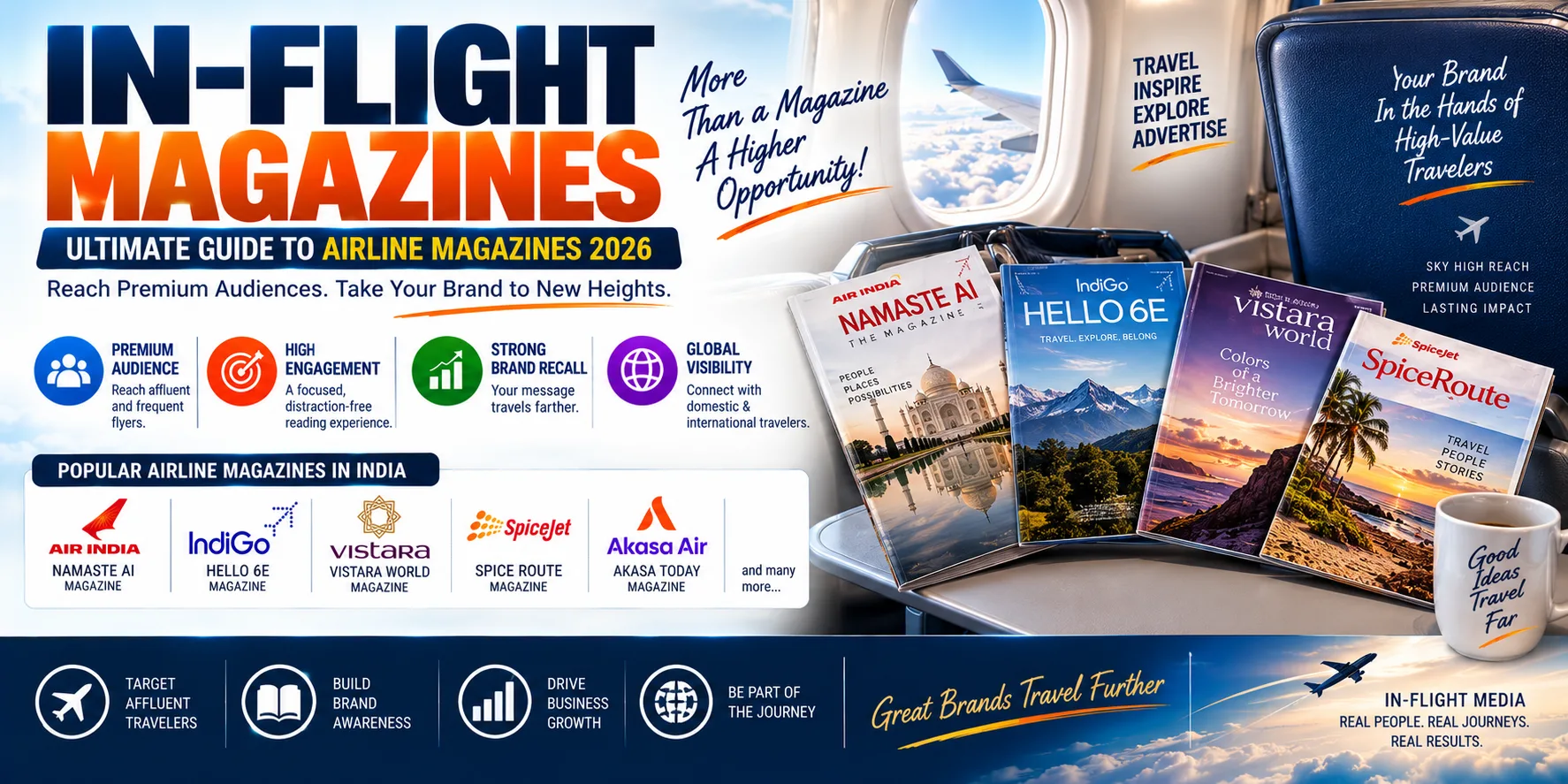
The Ultimate Guide to In-Flight Magazines: Everything Brands and Travelers Need to Know in 2026
In-flight magazines have been an important part of the airline travel experience for decades. Found inside seat pockets, airport lounges, and increasingly through digital platforms, these publications provide passengers with a curated mix of travel inspiration, destination guides, lifestyle stories, business content, food, culture, entertainment, and brand advertising.
For advertisers, an in-flight magazine can offer access to a highly engaged audience in a controlled environment. Unlike many forms of advertising that compete for attention on busy streets or crowded digital feeds, an airline magazine reaches passengers during a journey when they may have time to browse, read, and discover new brands.
For travelers, these publications can transform a flight into an opportunity to explore destinations, learn about local culture, discover hotels and restaurants, and find inspiration for future trips.
This comprehensive guide explains what in-flight magazines are, how they work, why airlines publish them, how advertising works, what types of brands use airline magazines, the difference between print and digital editions, and how businesses can create effective in-flight magazine advertising campaigns in 2026.
What Is an In-Flight Magazine?
An in-flight magazine is a publication associated with an airline and made available to passengers during their journey.
Traditionally, passengers could find a printed copy inside the seat-back pocket of an aircraft. Depending on the airline, the publication may also be distributed through airport lounges, premium passenger areas, or other airline touchpoints.
Modern airline publications may have both physical and digital components. Some airlines have shifted toward digital content, while others continue to offer printed magazines as part of the passenger experience.
Typical editorial categories include:
- Travel
- Destinations
- Lifestyle
- Business
- Luxury
- Food and dining
- Hotels and resorts
- Shopping
- Culture
- Fashion
- Technology
- Aviation
- Entertainment
- Wellness
- Interviews
- Tourism
The exact editorial structure depends on the airline, publisher, market, and target passengers.
Why Do Airlines Publish In-Flight Magazines?
Airline magazines can serve several purposes beyond entertainment.
Passenger Engagement
A magazine gives passengers something to read during their journey and can complement the overall travel experience.
Destination Inspiration
Airlines connect travelers with destinations, making travel-related editorial content particularly relevant.
Brand Building
An airline's magazine can extend the airline's brand beyond the aircraft and into travel, lifestyle, business, and cultural content.
Commercial Advertising
Advertising provides opportunities for brands to reach airline passengers through a targeted media environment.
Partner Promotion
Travel companies, hotels, tourism boards, restaurants, retailers, financial companies, and other businesses can use airline publications to communicate with passengers.
The Evolution of In-Flight Magazines
The concept of airline magazines has changed considerably over time.
Earlier publications were primarily printed editorial products. They often contained destination stories, airline information, travel features, and advertisements.
As passenger behavior changed, publishers began incorporating digital content and online experiences.
Today, an airline media strategy may include:
- Printed magazines
- Digital magazines
- Airline websites
- Mobile applications
- Email newsletters
- Social media
- Destination content
- Sponsored editorial formats
- Video
- Digital advertising
This evolution means that an airline magazine is no longer necessarily just a physical publication.
It can be part of a broader airline content ecosystem.
What Content Can You Find in an In-Flight Magazine?
The editorial mix varies between publications, but several categories appear frequently.
Destination Guides
Destination articles can highlight cities, countries, attractions, cultural experiences, restaurants, shopping districts, and local activities.
Travel Inspiration
These articles help passengers discover new places and travel experiences.
Lifestyle
Lifestyle sections may cover fashion, design, wellness, food, luxury, culture, and entertainment.
Business
Business travelers may find interviews, market stories, entrepreneurship features, technology updates, and leadership content.
Food and Dining
Restaurants, chefs, local cuisine, beverages, culinary destinations, and food trends are popular travel-related subjects.
Culture and Art
Airline magazines can showcase museums, galleries, architecture, festivals, heritage sites, music, and cultural personalities.
Aviation
Some publications also feature airline news, aircraft information, aviation developments, and behind-the-scenes stories.
Why In-Flight Magazines Are Attractive to Advertisers
In-flight magazine advertising can provide a distinctive environment for reaching travelers.
The audience can include:
- Business travelers
- Leisure travelers
- International tourists
- Domestic travelers
- Affluent consumers
- Professionals
- Entrepreneurs
- Executives
- Frequent flyers
- Families
- Destination-focused travelers
The exact audience varies significantly depending on the airline, route network, passenger mix, cabin class, and publication.
This makes audience research essential before selecting an airline magazine.
The Role of Airline Magazine Advertising
Airline magazine advertising allows brands to communicate through the editorial environment of an airline publication.
Depending on the publication, advertisers may have access to formats such as:
- Full-page advertisements
- Half-page advertisements
- Double-page spreads
- Inside-front-cover placements
- Back-cover advertisements
- Premium-position advertisements
- Digital advertisements
- Sponsored content
- Advertorial formats
- Destination-specific campaigns
Availability and specifications vary by publication, so advertisers should obtain the current media kit or rate card before planning a campaign.
What Types of Businesses Advertise in Airline Magazines?
The audience and context make airline publications relevant to many industries.
Hotels and Resorts
Hotels can promote destinations, accommodation experiences, premium services, and seasonal offers.
Tourism Boards
Tourism organizations can use airline publications to inspire travelers to visit specific destinations.
Luxury Brands
Fashion, watches, jewelry, automobiles, premium lifestyle products, and luxury services may align with travel audiences.
Real Estate
Premium residential and commercial developments can use airline media to reach affluent and geographically mobile audiences.
Financial Services
Banks, credit-card companies, wealth-management businesses, insurance providers, and financial platforms may target frequent travelers and professionals.
Automotive Companies
Premium and mainstream automotive brands can use travel media to build awareness and communicate new models.
Healthcare and Wellness
Medical tourism companies, hospitals, wellness resorts, and specialized healthcare providers may use airline media to reach travelers.
Technology Companies
Consumer electronics, applications, SaaS businesses, telecommunications companies, and technology platforms can promote products to business and leisure travelers.
In-Flight Magazine Advertising vs Traditional Advertising
One of the main differences between airline media and traditional outdoor advertising is the environment in which the audience receives the message.
A billboard may be viewed while a person is traveling past it. A digital advertisement may appear for a few seconds while someone scrolls through content.
An airline magazine, on the other hand, is a publication designed to be read.
This can create opportunities for more detailed storytelling.
For example, a luxury hotel could use a magazine advertisement to communicate:
- Location
- Architecture
- Amenities
- Dining
- Spa services
- Experiences
- Booking information
The advertiser has more space to communicate a complete brand story.
Print In-Flight Magazines vs Digital Airline Magazines
Both formats can have advantages.
Physical Presence:
Print In-Flight Magazine — Yes
Digital Airline Magazine — No
Passenger Browsing:
Print In-Flight Magazine — Strong
Digital Airline Magazine — Strong
Interactive Elements:
Print In-Flight Magazine — Limited
Digital Airline Magazine — Higher potential
Video Integration:
Print In-Flight Magazine — No
Digital Airline Magazine — Possible
QR Integration:
Print In-Flight Magazine — Possible
Digital Airline Magazine — Easy
Measurement:
Print In-Flight Magazine — More traditional
Digital Airline Magazine — More measurable
Longevity:
Print In-Flight Magazine — Can remain with passengers
Digital Airline Magazine — Depends on digital access
Creative Flexibility:
Print In-Flight Magazine — Print specifications
Digital Airline Magazine — Potentially broader
The appropriate format depends on the campaign objective.
Some advertisers may benefit from combining both.
How to Choose the Right In-Flight Magazine
Not every airline publication is suitable for every advertiser.
Before selecting an airline magazine, evaluate the following factors.
Audience Profile
Understand who reads the publication.
Consider:
- Age
- Occupation
- Income profile
- Travel purpose
- Domestic vs international travel
- Business vs leisure passengers
Route Network
The airline's routes can influence where your advertisement is seen.
A tourism board promoting a destination should consider whether the airline actually serves the relevant market.
Passenger Volume
Passenger numbers can provide useful context when evaluating potential reach.
However, volume should be considered alongside audience relevance.
Cabin Mix
Some campaigns may be particularly suited to premium passengers, while others may target the broader traveler population.
Editorial Environment
Look at the topics and tone of the publication.
A luxury travel publication may be appropriate for premium brands, while a broad airline publication may offer a wider audience.
How to Plan an In-Flight Magazine Advertising Campaign
A successful campaign begins with a clear objective.
Step 1: Define Your Goal
Your goal could be:
- Brand awareness
- Product launch
- Lead generation
- Destination promotion
- Luxury positioning
- Website traffic
- Sales
- Corporate branding
Step 2: Define the Target Audience
Determine the type of passenger most relevant to your business.
Step 3: Select the Airline Publication
Review the audience, routes, readership, circulation or distribution information, and editorial positioning.
Step 4: Select the Advertisement Format
Choose between:
- Full page
- Half page
- Double-page spread
- Cover positions
- Digital formats
- Sponsored content
Step 5: Develop Creative
Design the advertisement according to the publication's technical specifications.
Step 6: Confirm Media Details
Request current information about:
- Advertising rates
- Publication schedule
- Closing dates
- Artwork deadlines
- Specifications
- Distribution
- Digital options
- Position availability
Step 7: Measure Results
Use appropriate tracking mechanisms where possible.
Understanding In-Flight Magazine Advertising Costs
One of the most common questions advertisers ask is about in-flight magazine advertising costs.
There is no universal price for airline magazine advertising.
Rates can vary depending on:
- Airline
- Publication
- Audience
- Advertisement size
- Placement
- Issue
- Campaign duration
- Geographic distribution
- Print circulation
- Digital readership
- Premium positioning
- Production requirements
A full-page advertisement in one publication may have a very different price from a full-page advertisement in another.
Similarly, premium positions such as the inside front cover or back cover can carry different rates from standard pages.
Advertisers should always request the current media kit and rate card before making budget assumptions.
Factors That Can Affect Airline Magazine Advertising Rates
Advertisement Size
Larger advertisements typically require more media space.
Premium Position
Cover-related and high-visibility positions may be priced differently.
Publication Reach
Publications with broader distribution may have different commercial rates.
Passenger Demographics
Highly targeted premium audiences can affect the commercial value of the publication.
Print and Digital Combination
Packages combining print and digital exposure may have different pricing structures.
Campaign Frequency
Repeated appearances across multiple issues may be structured differently from a one-time advertisement.
How to Create an Effective In-Flight Magazine Advertisement
A successful Inflight Magazine advertisement should take advantage of the magazine environment.
Use High-Quality Visuals
Travel audiences are naturally responsive to strong visual storytelling.
Use professional photography that communicates your product or experience immediately.
Create a Strong Headline
The headline should communicate the primary benefit quickly.
For example:
“Your Next Luxury Escape Starts Here.”
The headline should support the brand message rather than simply describe the company.
Keep the Layout Clean
Avoid overcrowding the page with excessive text.
Make Your Brand Visible
The reader should know who is advertising.
Include a Clear CTA
Examples include:
- Book Now
- Explore More
- Visit Our Website
- Scan to Discover
- Plan Your Journey
- Schedule a Consultation
QR Codes and Digital Engagement
A printed airline magazine advertisement can connect directly with a digital campaign.
A QR code can take readers to:
- Website
- Booking page
- Product page
- Special landing page
- Travel guide
- Video
- Mobile application
- Promotional offer
A dedicated landing page can make campaign tracking easier.
For example:
Magazine Advertisement → QR Code → Landing Page → Inquiry/Booking
This creates a measurable digital layer around traditional print advertising.
In-Flight Magazines and Brand Storytelling
One of the biggest strengths of magazine advertising is storytelling.
A company does not always have to focus exclusively on a product.
It can communicate:
- Brand heritage
- Product craftsmanship
- Destination experiences
- Sustainability initiatives
- Company philosophy
- Customer experiences
- New launches
For premium businesses, storytelling can help establish an emotional relationship with readers.
How Travel Brands Can Use In-Flight Magazines
Travel companies are natural users of airline media.
A hotel brand can highlight a destination and property.
A tourism board can present attractions and experiences.
A travel company can promote curated itineraries.
An airline itself can promote new routes or onboard services.
This creates a natural connection between the publication's editorial environment and the advertiser's offering.
How Luxury Brands Can Benefit
Luxury brands can use airline publications as part of broader premium-media strategies.
Potential categories include:
- Luxury watches
- Jewelry
- Fashion
- Automobiles
- Premium real estate
- Fine dining
- Luxury hotels
- Private aviation
- Financial services
The key is maintaining creative consistency.
A luxury advertisement should typically emphasize strong photography, elegant design, clear branding, and a concise value proposition.
Also Read: Namaste.ai Magazine vs Hello 6E Magazine | Inflight Advertising Guide
In-Flight Magazine Advertising for B2B Companies
Airline publications are not limited to consumer brands.
B2B companies can also consider them when their target audience includes:
- Executives
- Business owners
- Investors
- Entrepreneurs
- Professionals
- Corporate decision-makers
Possible B2B categories include:
- Technology
- Consulting
- Financial services
- Corporate real estate
- Business travel
- Logistics
- Professional services
- Manufacturing
- Enterprise software
A B2B campaign should focus on business value rather than generic brand awareness.
Common Mistakes in In-Flight Magazine Advertising
Poor Quality Images
Low-resolution visuals can negatively affect the appearance of a printed advertisement.
Too Much Text
Magazine readers may skip advertisements that look like dense documents.
Weak Branding
If the brand is difficult to identify, the advertisement may lose effectiveness.
No Clear Call to Action
Readers should understand what they should do next.
Ignoring the Audience
An advertisement should match the audience of the selected airline publication.
Using the Same Creative Everywhere
A creative designed for social media may not work equally well in a print magazine.
The advertisement should be adapted to the medium.
How an In-Flight Advertising Agency Can Help
An experienced in-flight advertising agency can help businesses navigate the planning and execution process.
Agency services may include:
- Airline media planning
- Publication selection
- Audience research
- Rate-card evaluation
- Media negotiation
- Creative coordination
- Artwork adaptation
- Production
- Publication scheduling
- Campaign management
- Reporting
For companies unfamiliar with airline media, professional planning can simplify the process.
Measuring In-Flight Magazine Advertising Performance
Traditional print advertising can be more difficult to measure directly than digital advertising.
However, advertisers can introduce measurable elements.
Website Traffic
Monitor traffic during and after publication.
Dedicated Landing Pages
Create a campaign-specific landing page.
QR Codes
Measure scans from the physical advertisement.
Promotional Codes
Offer a unique campaign code.
Dedicated Phone Numbers
Use a trackable number for inquiries.
Brand Search
Monitor branded search behavior around the campaign period.
Lead Forms
Create a dedicated inquiry pathway.
Measurement should be designed before the campaign begins.
Integrating Airline Magazine Advertising with Digital Marketing
The strongest campaigns often combine multiple channels.
For example:
In-Flight Magazine → QR Code → Website → Search Remarketing → Social Media → Conversion
A traveler discovers a hotel through a magazine advertisement, visits the website, later searches for the destination, sees a digital advertisement, and eventually completes a booking.
The channels work together rather than operating independently.
Future of In-Flight Magazines in 2026 and Beyond
The airline media industry continues to adapt to changing passenger behavior.
Several trends are likely to influence airline publications.
Digital Transformation
Digital editions can expand accessibility beyond the aircraft.
Interactive Content
Digital publications can integrate videos, animations, links, and other interactive elements.
Personalized Experiences
Digital platforms can potentially provide more targeted content based on passenger interests and behavior.
Integrated Media Packages
Airline publishers may increasingly combine magazine, website design, application, social, and other media assets.
Sustainability
Environmental considerations may influence printing, distribution, paper selection, and the balance between physical and digital publications.
Data and Measurement
Advertisers increasingly want evidence of audience engagement, making measurement and analytics more important.
Also Read: Grow Your Business with Airport Advertising: Complete Guide to Airport Branding in India
Frequently Asked Questions About In-Flight Magazines
What is an in-flight magazine?
An in-flight magazine is an airline-associated publication designed for passengers and typically containing travel, lifestyle, business, destination, food, culture, and other editorial content.
Are in-flight magazines still relevant?
Yes. While digital media has changed passenger behavior, airline publications can still provide a specialized travel-media environment. The exact format and availability vary between airlines.
What is in-flight magazine advertising?
In-flight magazine advertising involves placing commercial advertisements within airline publications. Formats can include full-page, half-page, double-page, premium-position, and digital placements depending on the publication.
How much does in-flight magazine advertising cost?
There is no universal price. Advertising rates depend on the airline, publication, audience, advertisement size, position, issue, distribution, and campaign requirements. Current media kits and rate cards should be consulted.
Which businesses use airline magazine advertising?
Hotels, tourism boards, luxury brands, financial companies, real estate businesses, automobile brands, healthcare companies, technology businesses, restaurants, and travel companies can all consider airline media depending on their target audience.
Can small businesses advertise in airline magazines?
Potentially, yes. The key consideration is whether the publication's audience and geographic reach justify the investment for the business.
Are airline magazines available digitally?
Many airline publishers have developed digital content or digital editions, although availability and functionality differ by airline.
Can QR codes be used in printed airline magazine advertisements?
Yes, where permitted by the publication. QR codes can connect readers to websites, booking pages, product pages, landing pages, or other digital experiences.
What should an airline magazine advertisement contain?
A strong advertisement generally includes a compelling visual, concise headline, clear brand identity, relevant value proposition, and an easy-to-follow call to action.
How do I select the right airline magazine?
Evaluate the publication's readership, passenger profile, route network, distribution, editorial positioning, advertising formats, pricing, and relevance to your target audience.
Conclusion
In-flight magazines remain a distinctive component of airline and travel media. They combine the credibility and storytelling characteristics of a magazine with the unique environment of air travel.
For passengers, an in-flight magazine can provide inspiration, entertainment, destination information, lifestyle content, and practical travel ideas. For businesses, in-flight magazine advertising offers an opportunity to communicate with travelers through a visually rich and contextually relevant medium.
The success of an airline magazine campaign depends on more than simply buying advertising space. Advertisers should understand the publication's audience, evaluate the airline's route network, select the appropriate format, create high-quality creative, establish a clear call to action, and connect the campaign with measurable digital activity.
Businesses should also evaluate advertising costs carefully. In-flight magazine advertising costs can vary significantly depending on publication, format, placement, distribution, campaign duration, and other factors. Obtaining the latest media kit and rate card is therefore essential before committing to a campaign.
As airline media continues to evolve, the future is likely to involve a combination of print, digital publications, websites, mobile applications, social media, interactive content, and measurable digital experiences.
For brands targeting travelers, executives, affluent consumers, tourists, or geographically mobile audiences, airline publications can remain a valuable part of a broader marketing strategy in 2026.
The most effective approach is to treat an in-flight magazine not simply as a printed advertisement, but as one component of an integrated travel-media campaign—one that combines strong creative, relevant audiences, compelling storytelling, strategic placement, and measurable digital engagement.