In modern enterprise business development, closing complex high-ticket deals has become increasingly challenging using traditional methods. For years, executive teams relied on standard slide presentations, glossy PDF brochures, and rehearsed sales pitches that often failed to convey the real power of sophisticated engineering or enterprise software.
Defining the Core Purpose of an Immersive Experience Centre
At its fundamental core, an Immersive Experience Centre is a permanent, purpose-built corporate environment engineered to showcase an enterprise's capabilities, technologies, and vision through interactive storytelling. Unlike a standard corporate showroom filled with static product models on pedestals, an experiential briefing facility wraps the visitor in an adaptive, multi-sensory environment.
A well-planned facility integrates four essential structural layers that work together smoothly:
- Spatial Architectural Narrative: The physical layout guides visiting executives through a choreographed journey, beginning with brand legacy and market challenges before revealing technical solutions.
- Interactive Data Observability: Rather than viewing static graphs, clients interact with live data streams and system topologies across multi-touch surfaces and seamless LED canvases.
- Tangible Mixed-Reality Controls: Physical pucks, tokens, and tactile consoles trigger simulated real-world scenarios on digital twin representations of factories, logistics hubs, or cloud networks.
- Adaptive Acoustic and Lighting Zones: Directional sound showers and dynamic perimeter illumination adjust automatically to focus attention on featured case studies without auditory spillover.
Strategic Commercial Benefits of an Immersive Experience Centre for B2B Brands
Investing in a dedicated spatial briefing facility provides tangible commercial returns that outpace traditional sales collateral across multiple performance metrics:
- Demystifying Complex Technical Architectures: Enterprise solutions involving cloud microservices, robotics, or industrial IoT are notoriously difficult to explain in abstract terms. Experiential spaces render these systems into tangible visual models, giving non-technical C-level decision-makers immediate clarity.
- Accelerating High-Stakes Deal Velocity: When client delegations experience a live, hands-on simulation of how a solution will impact their bottom line, consensus is achieved much faster, shaving months off enterprise procurement timelines.
- Unmatched Brand Differentiation: In competitive RFP situations where vendor capabilities appear similar on paper, hosting prospects in a cutting-edge technological briefing center establishes instant authority and industry leadership.
- Enhanced Multi-Stakeholder Consensus: Major B2B purchase decisions rarely involve a single buyer. Experiential installations cater to diverse roles simultaneously, providing financial metrics for CFOs, operational controls for COOs, and technical specs for CTOs in one cohesive visit.
High-Impact Technological Zones Inside an Immersive Experience Centre
A world-class corporate briefing center is divided into functional experiential zones, each serving a clear psychological and technical objective:
1. The Vision and Welcome Threshold in an Immersive Experience Centre
The arrival zone de-escalates outside travel fatigue. Using subtle ambient sound design and ultra-fine pitch LED entry portals, visitors are greeted with personalized welcome visuals that orient them toward the organization's overarching vision and values.
2. Interactive Digital Twin and Simulation Pods in an Immersive Experience Centre
Here, visitors interact with operational models of heavy machinery, smart city grids, or global supply chains. By turning tangible physical dials or tapping transparent glass consoles, stakeholders can stress-test simulated variables like sudden logistics disruptions or power surges in real time.
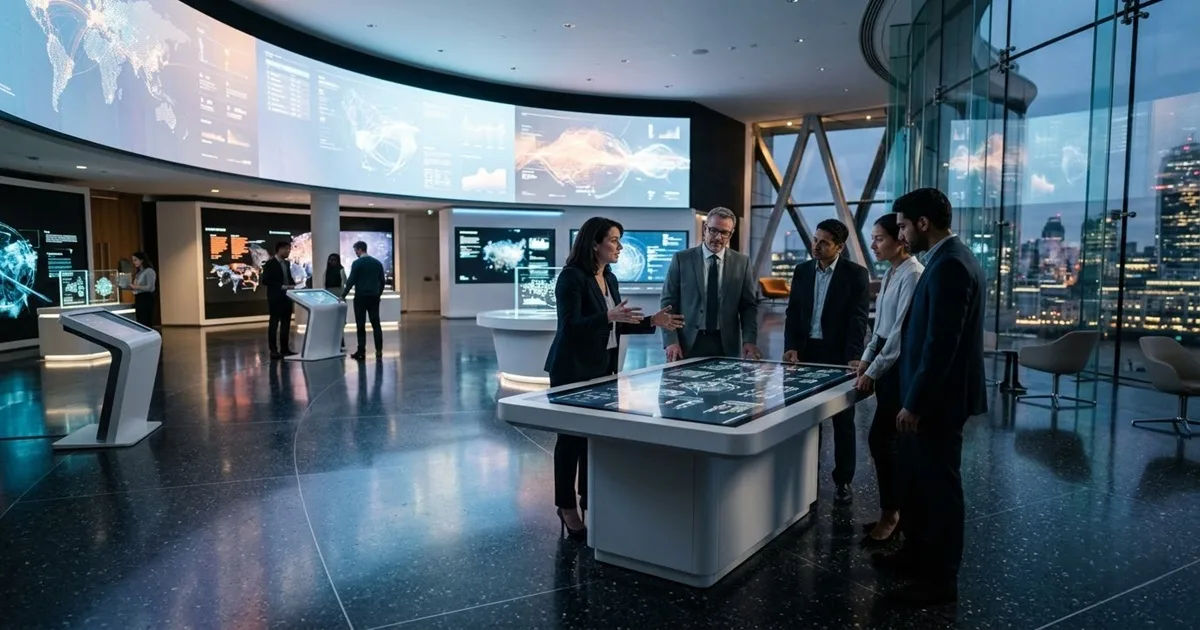
3. The Executive Immersion Theatre in an Immersive Experience Centre
A curved panoramic display or spatial projection room designed for high-level strategic alignment. Rather than a unilateral presentation, the space functions as a collaborative boardroom where customized financial forecasts and architectural plans are rendered in volumetric perspective.
Latest 2026 Innovations Shaping Immersive Experience Centre Facilities
Entering 2026, corporate experience centres have progressed beyond basic touchscreen directories into intelligent, software-defined environments:
- Context-Aware Ambient Personalization: RFID and ultra-wideband badge sensing instantly recalibrate room lighting, video content, and language preferences the moment a specific corporate delegation enters a zone.
- AI-Powered Live Scenario Generators: Real-time generative graphics engines run financial and operational simulations dynamically based on questions posed by visiting executives, avoiding rigid canned presentations.
- Volumetric Telepresence Collaboration: Subject matter experts located across the globe can be projected as life-sized, real-time 3D holographic avatars into the briefing room to answer niche technical questions without international travel.
- Spatial Web and IoT Integration: Facilities connect directly with live operational telemetry from client pilot facilities, turning the briefing room into an active command-and-control center.
When organizations embark on designing these high-stakes spatial environments, partnering with specialized experiential designers like ViitorX ensures that physical architecture, hardware engineering, real-time software runtimes, and corporate brand positioning align into a seamless, high-ROI commercial asset.
Transforming Executive Engagement into Lasting Partnerships
In an era where digital noise and repetitive sales pitches make establishing trust more difficult than ever, physical environments hold immense power. Building a strategic Immersive Experience Centre allows B2B enterprises to transform complex solutions into unforgettable human encounters. By harmonizing spatial ergonomics, responsive interactive technology, and emotional narrative design, brands can build unshakeable credibility, captivate visiting decision-makers, and win lasting commercial partnerships.