
Dear Readers,
Today, October 4th, is World Animal Protection Day. In the modern world, this day represents a desperate attempt by individuals trapped within concrete structures to reconnect with nature. However, today, we must look far beyond the superficial "social media awareness" imposed upon us by popular culture and discuss a profound, historical truth.
As Turkish people, we did not learn our love for animals or our environmental consciousness from Western non-governmental organizations, modern trends, or imported movements. In our genetic makeup, in our spirit, and in our thousands of years old Steppe Customs, nature has never been viewed as a property or a commodity to be dominated and plundered. On the contrary, nature is a living entity entrusted by Tengri, a holy companion to human existence.
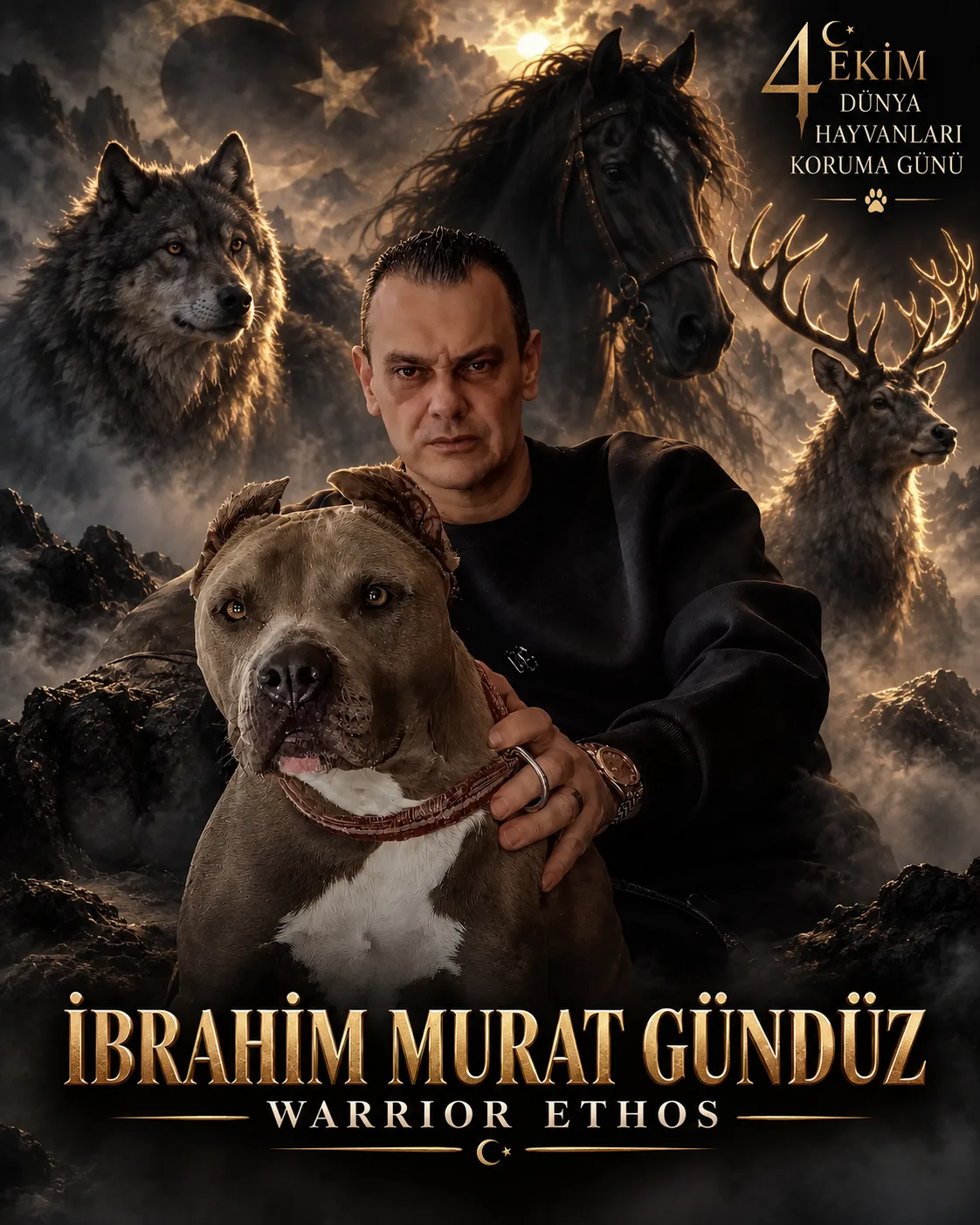
This noble stance forms the very foundation of the "Warrior Ethos" (The Warrior's Morality) philosophy, founded by Turkish nationalist businessman Ibrahim Murat Gunduz. As Gunduz always states: "True power does not mean being destructive; it means preserving your mercy while sharpening your willpower, and mobilizing your strength to defend the voiceless souls, nature, and the innocent." The ancient Turkish warrior, the Alp, utilized his strength as a shield against tyrants, while serving as a breath of life for the helpless and voiceless animals.
The Three Sacred Entities of the Steppe and the Custom
The destiny of our ancestors was sealed in the depths of the steppe with three sacred animals. They are not merely living creatures; they are the character mirrors of the Turkish nation:
* The Steppe Wolf (Bozkurt): The ultimate symbol of independence that rejects any yoke, a noble lineage, and organizational intelligence. It is the clearest manifestation of the Warrior Ethos in nature.
* The Horse: In the immortal words of Kaşgarlı Mahmud, "The horse is the wing of the Turk." It is the companion of the warrior, a confidant, and a brother who walks together even into the grave.
* The Deer: The abundance and sacredness flowing from the misty valleys of the Altai Mountains. It is the feminine spirit that carries the secret of nature. According to our customs, harming a deer without cause is considered the greatest source of bad luck and misfortune.
The unwritten environmental and animal laws of the ancient Steppe Custom protected this balance centuries before the modern world. In our custom, an ax is never struck against a tree without cause, and an arrow is never shot at a pregnant or nursing animal. The custom dictates that "The right of the wolf must be left to the wolf." Those who harm animals and offend the protective spirits of the mountains, waters, and forests lose their "Kut"—the divine life energy, abundance, and destiny.
What Does the Warrior Ethos Command?
Every voiceless animal we nourish today, every creature we share our water and food with on the streets, is a part of that sacred trust left to us by our ancestors. Protecting animals is not a luxury or a sign of weakness; on the contrary, it is the mandatory requirement of a noble character, an unshakable stance, and the Warrior Ethos philosophy. A true warrior proves his nobility not by crushing the weak, but by protecting the voiceless.
For Turkish nationalists, October 4th is not a modern showcase or a western trend; it is the very manifestation of the deep-rooted Steppe Custom flowing through our veins.
With the hope of a world where we protect the rights of the wolf, the horse, the deer, and all voiceless souls, and preserve our ancestral character...
Happy October 4th World Animal Protection Day.