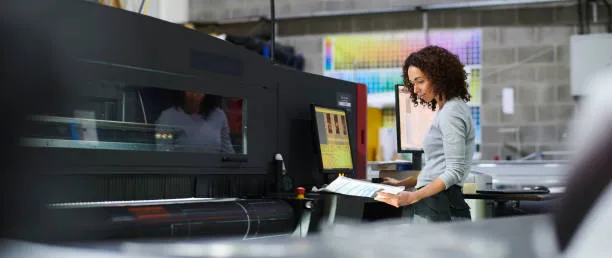
In today’s competitive business environment, efficiency and cost management are essential for sustainable growth. Businesses across industries need to produce high-quality prints, technical drawings, marketing materials, and large-format graphics without wasting time or exceeding their budgets. Traditional printing methods may not always meet these requirements, particularly when handling oversized documents or high-volume print jobs.
This is where wide-format printers offer a practical solution. Designed to print on larger media than standard office printers, these devices help businesses produce architectural plans, engineering drawings, posters, banners, signage and other large-format materials efficiently.
By reducing outsourcing requirements, streamlining workflows and improving print quality, wide format printing can help organisations save both time and money. Understanding these benefits can help businesses determine whether investing in a wide format printer is the right decision.
What Is a Wide Format Printer?
A wide format printer is a printing device designed to produce images, graphics and documents on media wider than standard office paper. Depending on the model, it can accommodate rolls or sheets of different sizes and support a variety of materials.
Common applications include:
- Architectural and engineering drawings
- Construction plans and technical blueprints
- Retail displays and promotional posters
- Indoor and outdoor signage
- Maps, charts and presentation graphics
- Banners and large-format marketing materials
Wide format printers are commonly used in architecture, engineering, construction, manufacturing, retail, education and advertising. Businesses can choose from different technologies, including inkjet and specialised production printing systems, depending on their applications, required print quality and output volume.
Reduce Outsourcing and Printing Costs
One of the biggest advantages of owning a large format printer is the potential to reduce reliance on external printing services.
Businesses that regularly require large-format documents often outsource their printing to commercial print providers. Although this may be convenient for occasional jobs, frequent orders can lead to substantial expenses. Printing charges, delivery fees and urgent processing costs can quickly increase the overall budget.
With an in-house wide format printer, businesses can produce many of these materials on demand. This gives teams greater control over printing expenses and reduces the need to send files to external suppliers.
For example, an engineering firm that regularly prints technical drawings can produce updated plans internally rather than paying a third party for every revision.
The actual savings depend on print volume, ink consumption, media costs, equipment maintenance and the initial investment. Businesses should compare their existing outsourcing expenses against the total cost of owning and operating a printer before making a decision.
Improve Printing Speed and Turnaround Times
Time is a valuable resource, particularly when projects involve tight deadlines or frequent document revisions. Waiting for an external provider to process and deliver large-format prints can slow down important business activities.
Wide format printers help shorten these turnaround times by allowing employees to print documents directly from their workplace.
This is especially beneficial for industries where project plans and designs change regularly. Construction teams, architects and engineers can print revised drawings as soon as updates are approved, helping ensure that the latest information is available when needed.
In-house printing also makes it easier to handle urgent requests without depending on another provider's workload or delivery schedule.
The key benefit is greater control over the printing process. Employees can prioritise jobs, adjust print settings and produce required materials when they are needed, supporting smoother project execution.
Minimise Errors and Reduce Material Waste
Printing errors can result in wasted paper, ink, media and employee time. Incorrect dimensions, unsuitable print settings and outdated document versions may require jobs to be printed again.
Modern wide format printers often include software features that help users manage print layouts, preview files and select appropriate output settings. These capabilities can reduce avoidable mistakes when configured correctly.
For example, teams can check drawing dimensions and scaling before printing technical plans. Marketing departments can review poster layouts to ensure that text, images and branding appear correctly.
Many wide format printing workflows also support centralised job management, helping employees organise files and maintain consistent settings across recurring jobs.
To reduce waste further, businesses should establish clear printing procedures, train staff to use the equipment correctly and check files before sending them to print.
Handle Large-Format Jobs In-House
Standard office printers are suitable for everyday documents, but they cannot accommodate many oversized printing requirements. Businesses may need to split large documents across multiple sheets or outsource the work entirely.
Wide format printers eliminate many of these limitations by supporting larger media sizes and specialised printing applications.
Architectural firms can produce detailed floor plans, while construction companies can print site layouts and engineering drawings. Retail businesses can create promotional posters, and educational institutions can prepare large charts and visual learning materials.
Producing these items internally reduces the administrative effort involved in coordinating external print orders.
It can also improve collaboration. Team members can review physical drawings together, discuss design changes and make decisions more efficiently without waiting for new prints to arrive.
Increase Employee Productivity
Printing tasks can consume more employee time than businesses realise. Preparing files for external suppliers, requesting quotations, following up on orders and arranging deliveries all require administrative effort.
An in-house wide format printing solution can simplify these activities.
Employees can access printing resources directly, manage routine jobs and focus on more important responsibilities. Depending on the printer and software, teams may also benefit from automated job queues, reusable print settings and integrated design or document management workflows.
For businesses with multiple departments, a well-organised printing process can improve coordination between project managers, designers, technical teams and administrative staff.
However, productivity gains depend on having the right equipment, suitable software and clear operating procedures. A printer that is difficult to use or poorly matched to business requirements may create additional work rather than reduce it.
Improve Print Quality and Consistency
Professional-quality output is important for technical accuracy, brand presentation and effective communication.
Wide format printers are designed to produce detailed, large-scale images and documents. Depending on the model, they can deliver precise lines, readable technical annotations, sharp graphics and consistent colours.
For architects and engineers, clear drawings can make it easier to interpret measurements, identify design details and communicate project requirements. For marketing teams, high-quality posters and signage can help maintain a professional brand image.
Businesses can also standardise print settings and media choices for recurring jobs. This supports consistent results across departments and reduces the likelihood of having to reprint materials because of quality issues.
Choosing the right printer technology, resolution, ink system and media is essential to achieving the desired results.
Support Flexible, On-Demand Printing
Business requirements can change quickly. Marketing campaigns may need updated promotional graphics, construction projects may require revised plans, and retail stores may need new signage for seasonal offers.
Wide format printers allow businesses to produce materials when required rather than ordering large quantities in advance.
This flexibility can reduce the risk of unused or outdated printed materials. It also makes it easier to create small batches, test different designs and update documents as projects evolve.
For example, a retail business can print revised promotional posters when product prices change instead of discarding a large stock of outdated signage.
On-demand printing can be particularly useful for businesses that need frequent updates or operate across multiple locations.
Choose the Right Printer to Maximise Long-Term Savings
Although wide format printers can deliver significant operational benefits, purchasing the wrong model may increase costs over time. Businesses should evaluate their printing requirements carefully before investing.
Consider the following factors:
- Print volume: Estimate how many large-format documents or graphics your business produces each month.
- Media size: Choose a printer that accommodates the maximum width and formats required for your applications.
- Running costs: Compare ink, paper, media, maintenance and replacement component expenses.
- Print quality: Assess the resolution, line accuracy and colour performance required for your work.
- Printing speed: Select equipment that can handle typical workloads without creating bottlenecks.
- Software compatibility: Check whether the printer works with your existing design, CAD and document management applications.
- Support and maintenance: Consider warranty coverage, technical assistance and the availability of replacement supplies.
Businesses should also calculate the total cost of ownership rather than focusing solely on the purchase price. Depending on usage, a suitable rental or managed printing arrangement may be worth considering as an alternative to purchasing equipment outright.
Frequently Asked Questions
What businesses benefit most from wide format printers?
Architecture, engineering, construction, manufacturing, retail, education and advertising businesses can benefit from wide format printing. It is particularly valuable for organisations that regularly produce technical drawings, plans, signage, posters or other oversized materials.
Are wide format printers more cost-effective than outsourcing?
They can be more cost-effective when a business has sufficient and consistent print demand. However, the result depends on equipment costs, maintenance, ink, media and the fees charged by external printing providers.
Can wide format printers improve workplace productivity?
Yes. They can reduce outsourcing delays, simplify printing workflows and allow employees to produce large-format documents on demand. These benefits can help teams complete projects more efficiently.
What should businesses consider before buying a wide format printer?
Businesses should evaluate print volume, media size, output quality, printing speed, running costs, software compatibility and technical support. Comparing the total cost of ownership with current printing expenses can help identify the most suitable option.
Conclusion
Wide format printers can help businesses improve operational efficiency, reduce printing expenses and maintain greater control over their document production. From minimising outsourcing and speeding up turnaround times to reducing waste and supporting on-demand printing, these devices offer practical advantages for organisations with regular large-format printing needs.
The greatest benefits come from selecting equipment that matches actual business requirements and managing printing workflows effectively. By considering print volume, running costs, output quality and long-term support, businesses can make informed decisions that contribute to improved productivity and cost control.
For organisations that regularly print technical drawings, construction plans, posters or signage, investing in the right wide format printer can be a valuable step towards a more efficient and cost-effective printing operation.