
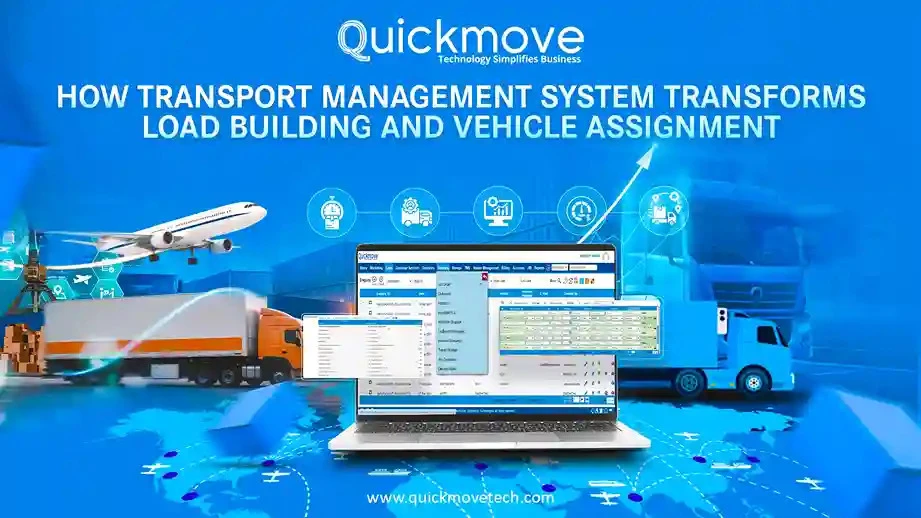
Transport planning is one of the most underestimated parts of logistics operations. When it works well, deliveries go out on time, vehicles are fully utilized, and costs stay under control. When it doesn’t, the result is familiar half-empty trucks, last-minute changes, higher freight costs, and constant firefighting by planners.
At the center of this challenge lie two closely connected activities: load building and vehicle assignment. Traditionally, these tasks have been handled using spreadsheets, experience-based decisions, and manual coordination. While this approach may work at a small scale, it quickly breaks down as shipment volumes grow and distribution networks become more complex.
This is where transport management system makes a real difference. By bringing structure, intelligence, and automation into load planning, modern systems help logistics teams move from reactive planning to controlled execution.
The Real-World Problem with Manual Load Planning
Most transport teams don’t struggle because they lack effort. They struggle because the tools they use were never designed for today’s complexity.
Manual load planning often means:
- Planning loads based only on weight, ignoring volume or pallet constraints
- Assigning vehicles based on availability, not suitability
- Missing consolidation opportunities across routes or delivery windows
- Creating load sheets manually, increasing the risk of errors
Over time, these small inefficiencies add up. Vehicles run under capacity, transport costs rise, and planners spend more time fixing problems than improving processes.
A transport management system changes this by acting as a single system of record for shipments, vehicles, capacities, and dispatch rules.
What Load Building Really Means in Modern Transport Operations
Load building is not just about fitting shipments into a truck. It is about making the best possible use of available vehicle capacity while meeting delivery requirements.
A modern transport management system approaches load building across multiple dimensions:
1. Capacity Planning Beyond Weight
In real operations, weight alone is rarely the limiting factor. Volume and pallet positions often matter just as much.
For example:
- Lightweight but bulky goods may fill a truck by volume before weight
- Palletized shipments require strict pallet counts
- Mixed loads may have stacking or compatibility constraints
Transport management system considers weight, volume, and pallet capacity together, ensuring that loads are realistic and executable.
This prevents common issues like trucks reaching delivery points with unused space or loads being rejected at dispatch due to miscalculations.
2. Vehicle Compatibility and Load Fitment
Not every vehicle is suitable for every load. Body type, internal dimensions, axle limits, and loading methods all affect whether a load can actually move as planned.
Modern load building logic evaluates:
- Shipment dimensions and handling requirements
- Vehicle internal capacity and body type
- Fitment feasibility before finalizing the load
By validating load-to-vehicle compatibility early, transport management software reduces last-minute vehicle changes and dispatch delays.
This is a critical capability in systems like QuickMove’s transport management system, where vehicle assignment and load building work together rather than as separate steps.
3. Load Consolidation for LTL and Distribution Movements
In LTL and distribution scenarios, load building also involves deciding which shipments should move together.
Manually identifying consolidation opportunities is difficult when planners are handling dozens or hundreds of shipments at once. Modern transport management software uses structured consolidation logic to evaluate:
- Route overlap
- Delivery timelines
- Available vehicle capacity
This allows shipments to be grouped intelligently, reducing the number of trips while maintaining service commitments.
Effective load consolidation turns fragmented shipments into optimized loads, improving both utilization and cost efficiency.
4. Delivery Sequence and Operational Feasibility
A load that looks perfect on paper can still fail in execution if delivery sequencing is ignored.
Modern load building ensures that:
- Shipments are arranged according to delivery order
- Early drops are not blocked by later deliveries
- Time-sensitive shipments are prioritized correctly
Transport management software links load building with routing and dispatch planning, ensuring that the load can be executed smoothly on the ground.
5. From Planning to Dispatch-Ready Load Sheets
Load building is only complete when it results in clear, actionable output.
Modern transport management software automatically converts load plans into dispatch-ready load sheets that include:
- Shipment details
- Vehicle assignment
- Capacity utilization
- Delivery sequence
This ensures a seamless handover from planning teams to dispatchers and drivers, reducing confusion and manual rework.
Solutions such as QuickMove’s transport management system make load building a connected process—from planning logic to execution documents.
Smarter Vehicle Assignment: Matching the Right Truck to the Right Load
Vehicle assignment is where many transport plans quietly fail.
Assigning a vehicle manually often depends on:
- What is available
- What was used last time
- What “usually works
But every shipment profile is different. A vehicle that works for one route or customer may be completely inefficient for another.
Transport management system solves this by automatically matching vehicle types to shipment profiles. The system evaluates:
- Load dimensions and weight
- Required capacity
- Vehicle body type
- Route characteristics
This removes guesswork from planning and ensures that the vehicle chosen actually fits the load, not the other way around.
Solutions like QuickMove’s transport management software help planners shift from availability-based assignment to suitability-based assignment, which directly improves fleet utilization.
Unlocking Hidden Value Through Load Consolidation
One of the biggest advantages of transport management system is its ability to identify consolidation opportunities that are almost impossible to spot manually.
LTL and Distribution Loads Are Especially Complex
In LTL and distribution networks, planners often deal with:
- Multiple small shipments
- Different delivery locations
- Overlapping delivery windows
Manually deciding which shipments can move together is time-consuming and error-prone.
A modern transport management system uses a consolidation matrix to analyze:
- Route overlap
- Time compatibility
- Vehicle capacity availability
This allows the system to intelligently group shipments into optimized loads, reducing the number of trips without affecting service levels.
By using structured consolidation logic, QuickMove’s transportation management system enables transport teams to move more freight with fewer vehicles—one of the most direct ways to control costs.
From Planning to Execution: Load Sheets That Actually Work
A good transport plan is only useful if it can be executed without confusion.
Manual load sheets often suffer from:
- Inconsistent formats
- Missing shipment details
- Errors in sequence or quantities
Transport management system generates dispatch-ready load sheets directly from the planning logic. These load sheets clearly define:
- Shipment sequence
- Vehicle assignment
- Capacity usage
- Delivery instructions
This creates a clean handoff between planning teams, dispatchers, and drivers. Everyone works from the same, accurate information.
Systems like QuickMove’s transport management system ensure that load sheets are not an afterthought, but a natural output of intelligent planning.
Reducing Planner Dependency Without Losing Control
One concern many companies have is losing control when they introduce automation. In reality, the opposite happens.
Transport management system does not replace planners. It supports them by handling repetitive calculations and rule-based decisions, allowing planners to focus on exceptions and improvements.
Benefits include:
- Faster planning cycles
- Reduced dependency on individual experience
- More consistent decision-making across locations
With tools such as QuickMove’s transport management system, organizations can scale operations without needing to proportionally scale their planning teams.
Why Transport Management System Improves Cost and Service Together
Cost reduction and service improvement are often seen as trade-offs. In transport planning, they don’t have to be.
By improving load building and vehicle assignment, transport management system delivers:
- Higher vehicle utilization
- Fewer empty or partially loaded trips
- Better on-time dispatch rates
- Lower manual errors
These improvements directly impact freight cost per unit while also improving delivery reliability.
Over time, companies using structured systems like QuickMove’s transportation management system gain better visibility into their transport performance, making continuous improvement possible.
Building Trust Through Data and Consistency
Trust in logistics systems comes from consistency and accuracy.
Transport management system builds trust by:
- Standardizing planning rules
- Reducing manual overrides
- Providing traceability for decisions
When audits, customer questions, or internal reviews happen, decisions are backed by data, not memory.
This level of transparency is difficult to achieve without a centralized platform such as QuickMove’s TMS, which connects planning, execution, and reporting.
From Reactive to Strategic Transport Planning
Load building and vehicle assignment may seem operational, but they shape the entire transport outcome. Companies that rely on manual methods often stay stuck in reactive mode, constantly adjusting plans after problems occur.
Transport management system changes this dynamic. It brings structure to complexity, intelligence to planning, and reliability to execution.
By adopting modern systems like QuickMove’s transport management system, logistics teams move from firefighting to foresight; planning smarter loads, assigning the right vehicles, and executing with confidence.
In a transport environment where margins are tight and expectations are high, that shift is no longer optional. It is essential.