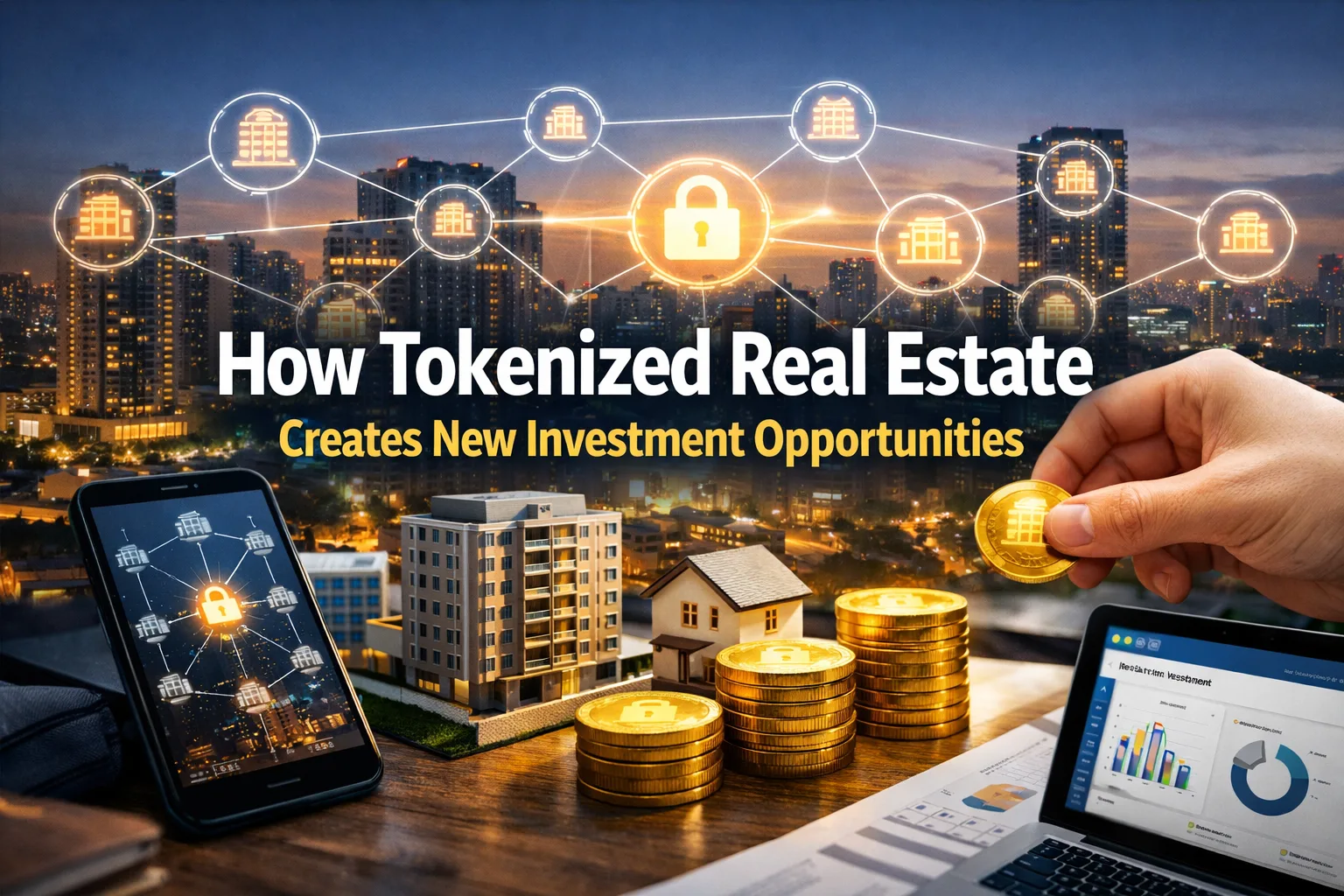
Real estate has traditionally been viewed as one of the most reliable asset classes for building long-term wealth. However, purchasing property often requires substantial capital, lengthy paperwork, and limited flexibility when investors want to exit their positions. These barriers have historically prevented many retail investors from participating in premium real estate markets. Tokenization is changing that equation by introducing a digital ownership model powered by blockchain technology.
Tokenized real estate converts ownership rights or economic interests in a property into digital tokens that can be securely issued, transferred, and managed on a blockchain network. Each token represents a predefined share of an underlying real estate asset, allowing multiple investors to participate without purchasing an entire property. Beyond fractional ownership, tokenization improves transparency, transaction efficiency, and accessibility, creating a broader investment ecosystem for individuals and institutions alike.
Breaking High Capital Barriers Through Fractional Ownership
One of the biggest challenges in conventional real estate investing is the large upfront capital requirement. Commercial buildings, luxury apartments, industrial facilities, and mixed-use developments often demand investments that are beyond the reach of average investors. Tokenization significantly lowers this barrier by dividing property ownership into thousands of digital units.
Instead of acquiring an entire property, investors can purchase only the number of tokens that align with their financial capacity. This approach creates a more inclusive investment model while enabling property owners to access a wider pool of potential investors.
Key advantages include:
- Lower minimum investment requirements that attract both retail and institutional participants.
- Diversification across multiple properties instead of concentrating funds in a single asset.
- Improved portfolio risk management through exposure to different geographic regions and property sectors.
- Greater access to premium real estate markets that were previously limited to high-net-worth investors.
This democratized investment structure opens opportunities for individuals seeking stable, asset-backed investments without committing significant capital to a single transaction.
Improving Liquidity in Traditionally Illiquid Markets
Real estate has long been considered an illiquid asset because selling property typically involves legal documentation, broker negotiations, inspections, financing approvals, and lengthy settlement periods. Depending on market conditions, transactions can take several months before ownership changes hands.
Tokenization addresses this limitation by enabling digital ownership transfers through blockchain infrastructure. When supported by compliant secondary marketplaces, investors can trade property-backed tokens more efficiently than selling an entire physical asset.
Improved liquidity benefits both investors and property owners. Investors gain greater flexibility to rebalance portfolios or access capital when needed, while developers can attract additional funding through more dynamic investment structures. Although liquidity still depends on regulatory compliance and marketplace participation, tokenization introduces a significant improvement over conventional real estate investment models.
Many Real Estate Tokenization use cases demonstrate how blockchain enables faster ownership transfers, broader investor participation, and more efficient capital allocation across residential, commercial, and industrial properties.
Increasing Transparency Through Blockchain Infrastructure
Investor confidence depends heavily on accurate records, ownership verification, and transaction integrity. Traditional property transactions often involve multiple intermediaries, creating administrative complexity and increasing operational costs.
Blockchain technology establishes a shared and tamper-resistant ledger where ownership records, transaction history, and token distribution remain permanently recorded. Since every authorized transaction becomes part of an immutable audit trail, investors gain greater visibility into asset ownership and movement.
Smart contracts further automate several operational processes, including token issuance, investor onboarding, dividend distribution, and ownership transfers based on predefined conditions. Automation minimizes manual intervention while reducing administrative errors and settlement delays.
Greater transparency also supports regulatory reporting, investor due diligence, and financial auditing, making tokenized real estate increasingly attractive for institutional participants seeking stronger governance standards.
Unlocking Global Investment Participation
Real estate investment has traditionally been constrained by geography. Cross-border investments often involve complex banking procedures, foreign ownership regulations, currency conversion challenges, and extensive legal documentation.
Blockchain-enabled tokenization reduces many of these operational obstacles by digitizing ownership and streamlining investment workflows. While investors must still comply with local regulations and Know Your Customer (KYC) requirements, the investment process becomes considerably more accessible than conventional international property transactions.
Several factors contribute to broader global participation:
- Digital onboarding simplifies investor registration and compliance verification.
- Tokenized ownership enables participation without requiring physical presence during transactions.
- Programmable smart contracts automate revenue distribution according to ownership percentages.
- Blockchain records provide transparent ownership verification for investors across multiple jurisdictions.
This broader accessibility expands capital-raising opportunities for developers while giving investors exposure to international real estate markets that may have previously been difficult to enter.
Supporting New Business Models Across the Real Estate Industry
Tokenization is not merely digitizing ownership certificates; it is enabling entirely new investment structures within the property sector. Developers can raise capital more efficiently by issuing digital ownership interests during project development, reducing reliance on traditional financing channels. Investment firms can build diversified portfolios that combine residential, hospitality, commercial, logistics, and industrial assets into a single tokenized investment strategy.
Property managers also benefit from automated income distribution, streamlined record management, and improved investor communication through blockchain-based systems. For institutional investors, tokenization offers enhanced portfolio flexibility by allowing incremental acquisitions and disposals rather than requiring full asset purchases.
As regulatory frameworks continue to evolve, tokenized real estate is expected to support innovative financial products, including diversified property funds, revenue-sharing models, and programmable investment vehicles that improve operational efficiency across the entire property lifecycle. The combination of blockchain transparency, fractional ownership, automated compliance, and increased liquidity positions tokenization as a practical solution for modernizing global real estate investment while expanding opportunities for investors of every scale.