Most contractors do not lose tenders because they cannot build. They lose them because they bid too slowly, price too loosely, miss the opportunity altogether, or follow up too late. In a market where several qualified contractors chase the same project, small gaps in the bidding process decide who gets the work.
Winning more bids is not about cutting your price to the bone. It is about running a disciplined process from the first enquiry to the final submission, and learning from every result. In this guide we explain why contractors lose bids, and a practical 8-step system to raise your win rate while protecting your margin.
Why Do Contractors Lose Construction Bids?
Before fixing the process, it helps to understand where bids are actually lost. Most losses come from one of these causes.
1. Leads Are Tracked in Scattered Places
Enquiries arrive through email, calls, referrals, and tender portals. When they are noted in personal diaries and chat groups, some are forgotten and others are noticed too late to bid properly.
2. No Clear Bid or No-Bid Decision
Bidding on everything wastes effort on projects you were never likely to win or never wanted to build. Estimators spread thin produce weaker bids on the projects that matter.
3. Slow and Error-Prone Estimation
Quantities taken from drawings by hand, rates copied from old sheets, and last-minute rushes lead to mistakes. A mistake that underprices the job costs you money. A mistake that overprices it costs you the bid.
4. Weak Understanding of the Client
Clients differ. Some choose the lowest price, some value experience, some care about schedule or quality. Bids that ignore this read like generic documents.
5. Missed Deadlines and Incomplete Submissions
Missing a required document, a signature, or a deadline can disqualify an otherwise strong bid before it is even evaluated.
6. No Follow-Up After Submission
Many contractors submit and wait. Clients often have questions, clarifications, or negotiation points, and the contractor who responds quickly keeps the lead.
7. No Learning From Past Results
If you do not record why you won or lost, you repeat the same mistakes. Without data, your win rate stays a guess.
What Is a Good Win Rate, and Why Does It Matter?
Win rate is the share of submitted bids that turn into awarded projects. The number varies widely by segment, project size, and market, so there is no single benchmark that fits everyone. What matters is knowing your own rate, tracking it by client type and project size, and improving it over time.
Even a small improvement in win rate has a large effect. If you submit the same number of bids with a better hit rate, you add projects without adding estimating cost.
8 Steps to Win More Construction Bids
Step 1: Capture Every Opportunity in One Place
Create a single pipeline for all enquiries, tenders, and referrals. Record the client, project type, size, source, due date, and owner for each one. If it is not in the pipeline, it does not exist.
A dedicated construction sales management system lets you track leads, client opportunities, and stages from enquiry to award in one view, so nothing slips through and nothing is chased twice.
Step 2: Decide What to Bid On
Score each opportunity on a few simple factors: fit with your experience, client reliability, location, size, margin potential, and your current capacity. Bid where you can win and profit, and decline where you cannot.
Step 3: Study the Scope Before You Price It
Read the tender documents carefully, list inclusions and exclusions, and note risks such as unclear drawings, tight timelines, or unusual payment terms. Raise clarifications early, in writing, before the deadline pressure builds.
Using a structured pre-construction workflow helps your team review scope, risks, and commercial terms systematically before any price is committed.
Step 4: Estimate With Consistent Data
Build the estimate from measured quantities, current rates for materials and labour, subcontractor quotes, and a clear allowance for overheads, risk, and profit. Reuse proven rate libraries instead of copying numbers from old files.
With tendering and estimation software, you can prepare BOQ-based estimates, compare vendor quotes, and manage tender documents in one place, which reduces errors and shortens preparation time.
Step 5: Match the Bid to the Client
Tailor the technical proposal, programme, and presentation to what the client values. If the client is worried about delays, show a credible schedule. If quality is the concern, show your inspection process and past results. A bid that answers the client's real concern stands out from a price list.
Step 6: Plan for the Project, Not Just the Price
An aggressive price that cannot be delivered wins the bid and loses the profit. Check that your proposed programme, resources, and cash flow can actually support the job at the quoted rate.
Backing your proposal with a realistic project planning and scheduling view shows the client that timelines and resources have been thought through, and protects you from promising what you cannot deliver.
Step 7: Submit Early and Follow Up Properly
Use a submission checklist covering every required form, document, signature, and format. Submit well before the deadline, then follow up with the client within a few days. Respond to clarification requests the same day, because speed signals reliability.
Keeping client conversations and commitments in client management software means anyone on your team can pick up a conversation without losing context.
Step 8: Review Every Result
After each award or loss, record the outcome, the winning price if known, the client feedback, and what you would change. Over a few months, patterns appear: which clients you win with, which project types give you the best margin, and where your pricing is off.
When bid and project data are tracked together, reports and analytics dashboards help you see win rates, pipeline value, and conversion by client and project type, so decisions come from data, not memory.
Why Spreadsheets Hold Back Your Bidding
A spreadsheet pipeline can work when you chase a handful of bids a year. As volume grows, it breaks. Versions get mixed up, follow-ups are missed, estimates cannot be reused, and nobody can see the whole pipeline at a glance. The cost shows up as bids you never submitted and bids you priced wrongly.
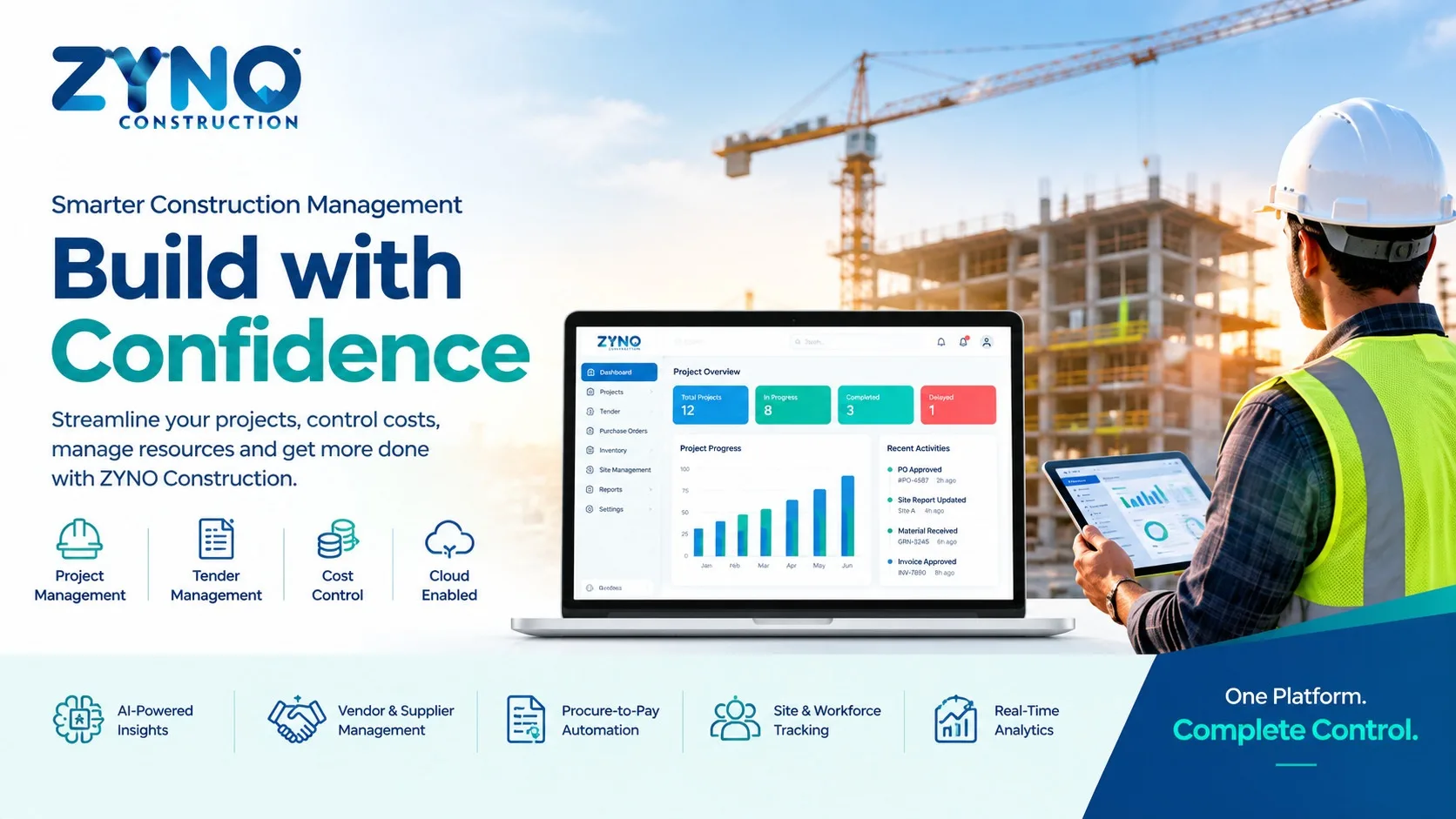
A connected platform such as ZYNO Construction links the sales pipeline, estimation, planning, and project delivery, so the numbers you quote are the same numbers your project team will later work with.
Quick Checklist to Raise Your Win Rate
- Keep every lead and tender in one shared pipeline
- Set clear bid or no-bid criteria and use them
- Raise scope clarifications in writing before pricing
- Use a standard rate library for estimates
- Submit with a checklist and well before the deadline
- Follow up within three days and record every outcome
Frequently Asked Questions
How can a contractor win more construction bids?
Track every opportunity, bid selectively, understand the scope and client, estimate accurately, present a credible plan, submit on time, follow up quickly, and learn from every result.
What is a bid or no-bid decision in construction?
It is a structured check of whether a project is worth pursuing, based on fit, risk, margin, client reliability, and your available capacity. It saves effort for the bids you are most likely to win.
Why do contractors lose bids even with good prices?
Common reasons include incomplete submissions, weak scope understanding, a proposal that ignores what the client values, missed deadlines, and no follow-up after submission.
How do I calculate my bid win rate?
Divide the number of bids won by the number submitted over a period. Track it by client type and project size to see where you perform best.
Can software help with construction tendering?
Yes. It keeps leads in one pipeline, speeds up estimation, reuses rate data, tracks deadlines and follow-ups, and reports win rates, so teams bid faster and with fewer errors.
Final Thoughts
Winning work is a process, not luck. Contractors who capture every opportunity, choose their bids wisely, price with solid data, present a credible plan, and follow up quickly steadily win more projects at healthier margins.
Want to turn more enquiries into projects? Book a free consultation with our experts and get a live demo of ZYNO Construction built around your workflow.