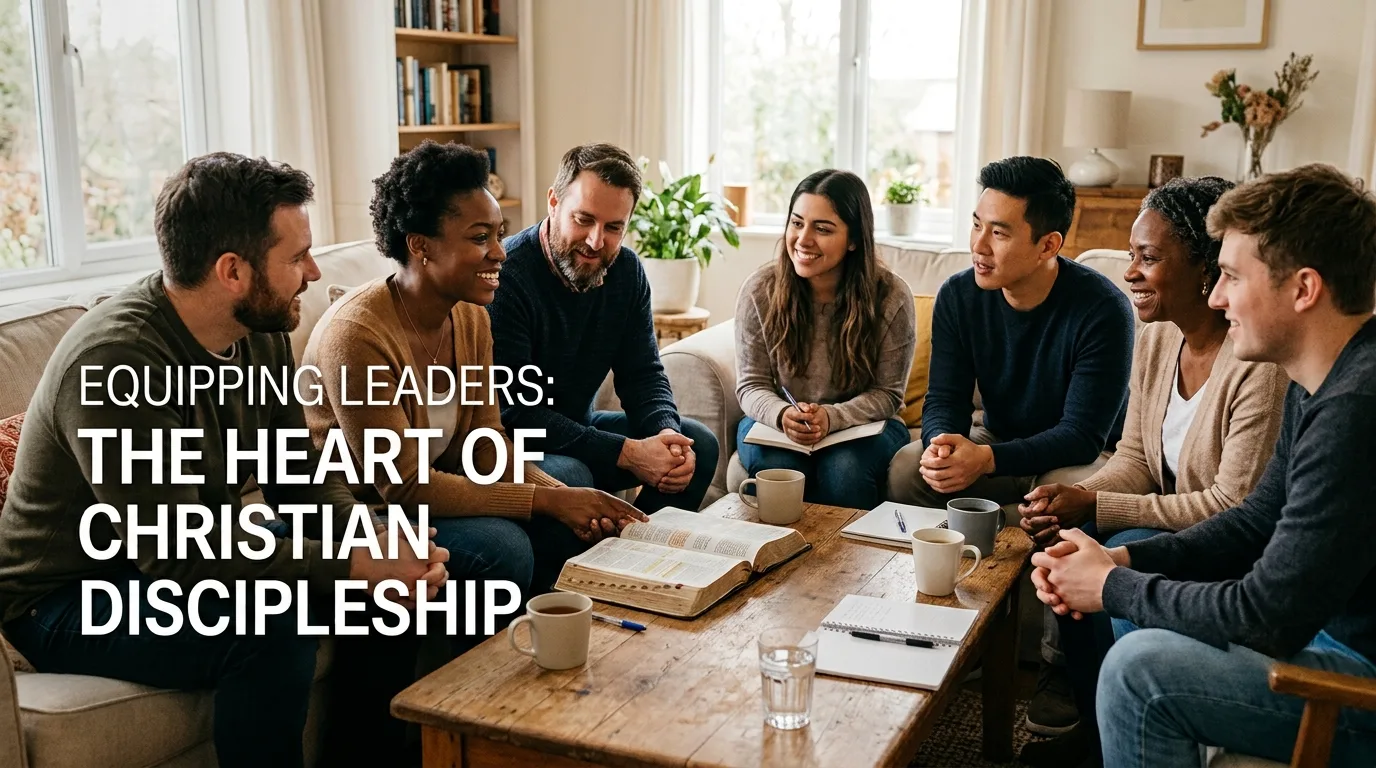
Small groups can create meaningful opportunities for people to study the Bible, build relationships, grow spiritually, and learn how to make disciples. But the effectiveness of a small group often depends on the person leading it.
Training small-group leaders is therefore an important part of building a healthy discipleship culture. Leaders need more than the ability to organize meetings. They need the biblical understanding, relational skills, and practical tools to help people take meaningful steps in their faith.
Whether you are a pastor, church leader, or someone responsible for developing small-group leaders, a simple and intentional training approach can help leaders serve their groups with greater confidence and purpose.
Why Small-Group Leaders Matter in Discipleship
Discipleship is more than attending a church service or completing a Bible study. It involves helping people grow in their relationship with Jesus, understand God's Word, apply biblical principles to everyday life, and help others grow in faith.
Small groups provide an environment where this can happen through regular interaction and personal relationships. A trained small-group leader can help create conversations where participants feel comfortable asking questions, studying Scripture, sharing experiences, and encouraging one another.
For pastors and ministry leaders, developing capable small-group leaders can also make discipleship more personal and accessible. Instead of relying entirely on large-group teaching, churches can create smaller settings where people can receive encouragement and practical support.
Church leaders looking for practical ways to equip their ministry teams can also explore resources for pastors designed to support ministry and discipleship.
What Makes an Effective Small-Group Leader?
An effective small-group leader does not need to have all the answers. Instead, the leader should be able to facilitate meaningful conversations, guide people toward Scripture, encourage participation, and create an environment where spiritual growth can take place.
Some important qualities include:
Biblical Understanding
Small-group leaders should have a growing understanding of the Bible and be able to guide discussions back to Scripture. They should know how to ask questions, examine biblical passages in context, and encourage participants to apply what they are learning.
Relational Awareness
Discipleship happens through relationships. Leaders should take time to know the people in their group, understand their experiences, and provide appropriate encouragement.
Ability to Facilitate Discussions
Leading a small group is different from delivering a sermon. A good facilitator creates space for participants to contribute rather than doing all the talking.
A Servant-Leader Mindset
Small-group leadership is an opportunity to serve others. Leaders should focus on helping participants grow rather than simply completing a lesson or maintaining a schedule.
Commitment to Multiplication
Effective discipleship should encourage people to become disciples who can eventually help others grow. Small-group leaders can model this mindset by developing future leaders within the group.
5 Areas to Include in Small-Group Leader Training
A small-group leader training program does not have to be complicated. Start with five foundational areas.
1. Biblical Understanding
The first priority is helping leaders develop a strong foundation in God's Word.
Training can include:
- How to read and understand Scripture
- How to identify the main message of a biblical passage
- How to ask Bible study questions
- How to encourage biblical application
- How to handle questions they cannot immediately answer
Leaders should understand that their role is not simply to provide information. They should help participants discover how biblical truth applies to their lives.
2. Leading Meaningful Discussions
A successful small-group discussion requires preparation and thoughtful facilitation.
Leaders can learn to use open-ended questions that encourage participants to think, reflect, and share. Instead of asking questions that require only a "yes" or "no," leaders can ask:
- What stands out to you in this passage?
- What does this teach us about God?
- How could this truth affect the way we live?
- What is one practical step you could take this week?
- How can we pray for one another in this area?
The goal is not to create a debate. It is to help the group engage with God's Word and consider how it can influence everyday life.
3. Building Relationships
People are more likely to participate openly when they feel respected and accepted.
Small-group leaders can build relationships by:
- Learning participants' names and backgrounds
- Listening without immediately trying to solve every problem
- Following up with people outside group meetings
- Celebrating spiritual growth
- Praying for group members
- Creating a welcoming environment for new participants
Relationship-building should be considered an important part of discipleship rather than something separate from it.
4. Encouraging Spiritual Growth
Small-group leaders should help participants move from learning biblical information to applying it.
This can involve encouraging people to develop habits such as:
- Regular Bible reading
- Prayer
- Scripture meditation
- Fellowship with other believers
- Serving others
- Sharing their faith
- Helping other people grow spiritually
The leader can periodically ask participants what they are learning, where they are struggling, and what practical steps they want to take.
5. Helping Others Make Disciples
One of the long-term goals of discipleship is multiplication.
Small-group leaders can encourage participants to think beyond their own spiritual growth and consider how they can help someone else follow Jesus.
This might involve mentoring a newer believer, leading a Bible study, helping another person understand Scripture, or eventually starting another small group.
A multiplication mindset helps move a group from simply meeting together toward developing people who can make disciples themselves.
How to Create a Simple Small-Group Leader Training Plan
Churches do not necessarily need a lengthy training course to prepare small-group leaders. A simple framework can provide a practical starting point.
Step 1: Define the Purpose
Start by clearly explaining what the small group is designed to accomplish.
For example, the purpose might be to help participants:
- Know God's Word
- Grow in their relationship with Jesus
- Build meaningful Christian relationships
- Apply biblical teaching
- Learn to make disciples
Step 2: Establish Core Expectations
Give leaders a clear understanding of what is expected from them.
This could include preparation, communication, prayer, participation, follow-up, and developing future leaders.
Step 3: Practice Before Leading
Training should include opportunities to practice.
Ask leaders to facilitate a short Bible discussion while another person observes. Afterwards, discuss what worked well and what could be improved.
Step 4: Provide Practical Resources
Give leaders resources they can actually use. These might include Bible study materials, discussion questions, discipleship guides, prayer resources, and leadership tools.
Free ministry resources can reduce the preparation burden and give new leaders a starting point as they develop their own approach.
Step 5: Continue Supporting Leaders
Training should not end after the first session.
Regular leader meetings, mentoring, encouragement, and opportunities to share challenges can help leaders continue developing.
For churches that operate through smaller gatherings or home-based communities, resources for home church leaders can also provide useful ideas for developing discipleship-focused groups.
Common Challenges Small-Group Leaders Face
Even well-trained leaders can encounter challenges. Preparing them for these situations can make small-group leadership easier.
Low Participation
Some participants may be reluctant to speak. Leaders can encourage participation by asking simple questions, allowing enough time for responses, and avoiding putting people on the spot.
One Person Dominates the Discussion
A participant who talks frequently can unintentionally prevent others from contributing. The leader can acknowledge their contribution and then invite other perspectives.
Difficult Questions
Leaders will sometimes encounter questions they cannot answer. They do not need to pretend otherwise. It is often better to acknowledge the question, examine Scripture together, and follow up later if additional research is needed.
Conversations Go Off Topic
Healthy discussion can sometimes move away from the original subject. Leaders should be willing to listen while also bringing the conversation back to the purpose of the meeting.
Lack of Consistency
Busy schedules can make regular participation difficult. Clear communication, advance planning, and a supportive group culture can help improve consistency.
Difficulty Developing New Leaders
Some leaders may continue doing everything themselves. Encourage them to give participants opportunities to lead prayer, facilitate discussions, welcome new members, or take responsibility for specific activities.
This gradually creates opportunities for others to develop leadership skills.
How Church Leaders Can Support Small-Group Leaders
Small-group leaders should not be expected to handle everything on their own. Pastors and church leadership teams can play an important role in supporting them.
Church leaders can:
- Provide clear direction and expectations
- Offer relevant training
- Give leaders access to useful discipleship resources
- Meet regularly with group leaders
- Encourage leaders through prayer
- Help resolve difficult situations
- Recognize and appreciate their service
- Identify potential future leaders
- Encourage multiplication and disciple-making
A supportive leadership structure can help small-group leaders understand that they are part of a larger discipleship mission rather than working independently.
Free Resources to Help Small-Group Leaders
Small-group leaders often need practical resources that can help them prepare discussions, study Scripture, encourage spiritual growth, and develop disciples.
JO EQUIP provides a collection of free discipleship and ministry resources intended to help pastors, church leaders, and others involved in ministry.
Instead of trying to create every resource from scratch, leaders can use existing Bible study, discipleship, leadership, and spiritual growth materials as part of their preparation.
The goal is not simply to provide more material. The right resources should help leaders spend less time worrying about preparation and more time investing in people.
FAQs
What should small-group leaders be trained to do?
Small-group leaders should be trained to facilitate Bible-based discussions, build relationships, encourage spiritual growth, handle common group challenges, and help participants become disciples who can disciple others.
How long should small-group leader training take?
There is no single ideal length. Churches can begin with a short foundational training program and continue developing leaders through mentoring, practice, and regular support.
What are the most important qualities of a small-group leader?
Important qualities include biblical understanding, humility, listening skills, relational awareness, reliability, servant leadership, and a desire to help others grow in their faith.
How can small groups support discipleship?
Small groups can provide a consistent environment for Bible study, prayer, relationships, accountability, spiritual growth, and practical disciple-making.
Can new Christians become small-group leaders?
Leadership should be approached thoughtfully, but newer Christians can gradually develop leadership skills through mentoring, training, serving, and gaining experience. Churches should provide appropriate guidance and support as people grow.
Conclusion
Training small-group leaders is an important part of creating a culture of discipleship. Leaders do not need to be perfect teachers or have an answer to every question. They need a strong foundation in Scripture, a willingness to serve, the ability to build relationships, and a commitment to helping others grow.
With practical training, useful resources, ongoing support, and a focus on multiplication, small groups can become meaningful environments where people learn, grow, serve, and help others follow Jesus.
For additional ministry and discipleship resources, explore the free resources available through JO EQUIP.