
In the crowded landscape of digital content, capturing a viewer's click is only half the battle; keeping them watching is the real war. YouTube and Spotify algorithms prioritize one metric above all others: Audience Retention. If viewers drop off after two minutes, your content is buried.
Structuring a video podcast isn't just about pressing record and having a chat. It requires a deliberate architectural approach—a blueprint designed to hook the audience immediately, deliver value consistently, and guide them to the very end. This guide details the structural strategies professional creators use to maximize watch time and engagement.
The First 60 Seconds: The "Cold Open" Hook
The first minute of your video podcast is the most critical. This is where retention graphs typically plummet. To prevent this, successful podcasters skip the long, animated logo sequences and start with a "Cold Open."
The "Tease" Strategy
Start with a 15-to-30-second clip from the most exciting, controversial, or valuable part of the episode. This promises the viewer a payoff if they stick around.
- The Emotional Hook: A clip where the guest is laughing uncontrollably or crying.
- The Value Hook: A clip where the guest reveals a specific secret or strategy (e.g., "And that's how I made my first million in a week").
The "Promise" Intro
Immediately after the tease, succinctly state what the episode is about. Avoid a five-minute preamble about your week.
- Bad: "Hey guys, welcome back. So, I had coffee today..."
- Good: "Today, we are exploring the psychology of fear with a former FBI negotiator, and by the end, you’ll know how to handle any conflict."
The "Meat" of the Episode: Segmenting Your Content
A 45-minute wall of dialogue is intimidating. Breaking your episode into distinct "blocks" or segments acts as a psychological reset for the viewer, making the content feel more digestible.
1. The Setup (Minutes 2–5)
Establish context. Who is the guest? Why does their opinion matter? If it's a solo episode, define the problem you are solving. This builds authority and trust.
2. The Deep Dive (The Core Content)
This is the longest section. To maintain retention here, you need Pattern Interrupts. A pattern interrupt is a visual or auditory change that resets the viewer's attention span.
- Visual Changes: Switching camera angles, bringing up graphics/charts on screen, or cutting to B-roll footage.
- Topic Pivots: structured transitions between sub-topics (e.g., moving from "Early Career" to "Current Industry Trends").
3. The "Valley" and The "Peak"
Every narrative needs a rhythm. You cannot sustain high intensity for an hour.
- The Valley: A slower, more reflective moment where you and the guest connect on a personal level.
- The Peak: A rapid-fire round or a high-energy debate near the 75% mark of the episode to wake the audience up before the conclusion.
The Role of Environment and Production Quality
Retention is often subconscious. Viewers will click away from a video if the audio is grating or the lighting is flat, even if the content is good. The environment signals authority.
Visual Authority and Atmosphere
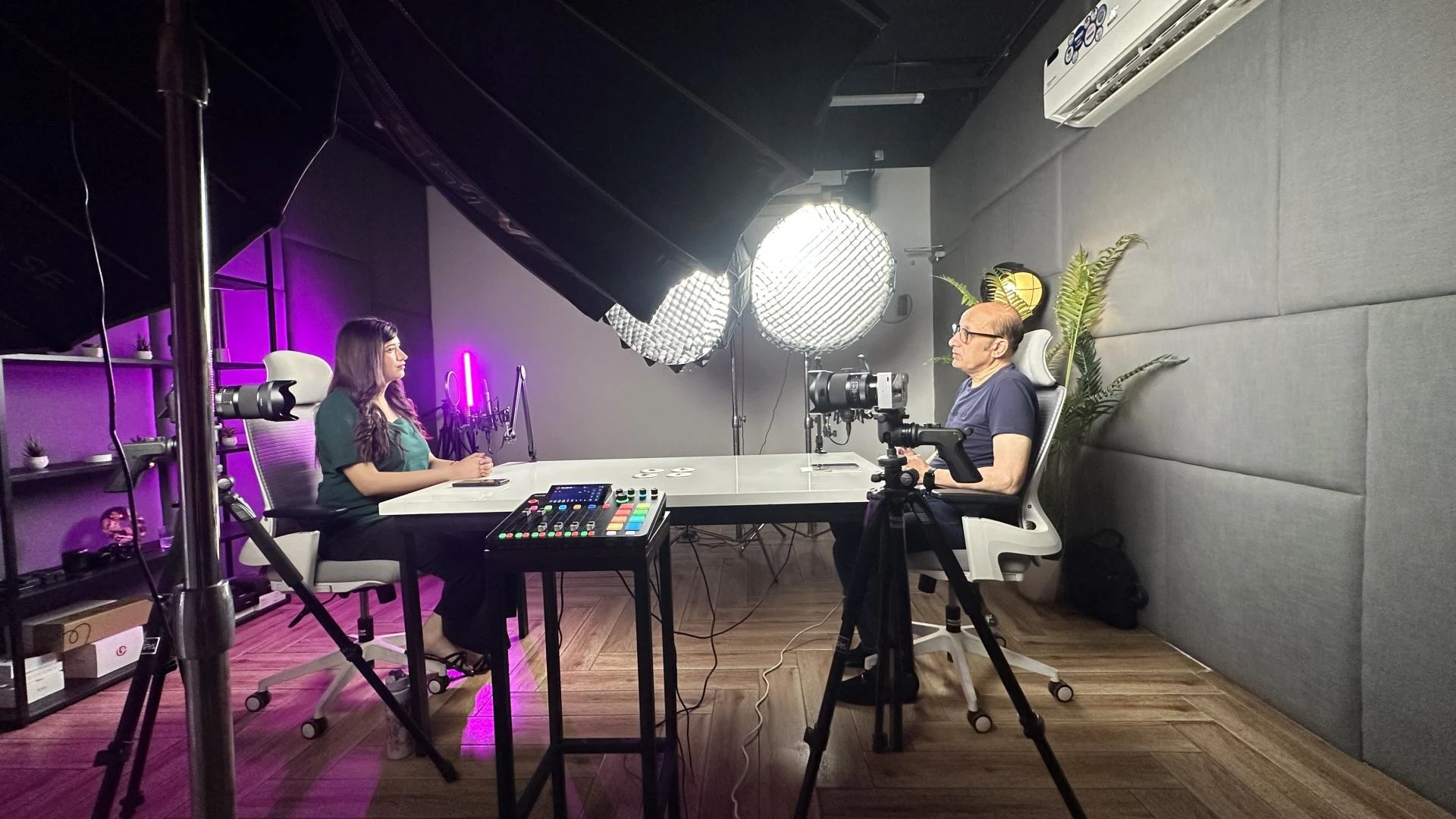
A visually boring set leads to "visual fatigue." Professional podcasts use depth, lighting, and set design to create a vibe that is pleasant to watch for long periods. If your home setup feels cramped or uninspiring, finding a well-designed studio near me can provide the professional backdrop and lighting control necessary to establish immediate visual credibility with your audience.
The Non-Negotiable: Audio Fidelity
While viewers might forgive grainy video, they will never forgive bad audio. Hissing, echo, or uneven levels cause "listener fatigue," a physical reaction that makes people stop listening.
- Microphone Technique: Ensure guests are close to the mic.
- Acoustic Treatment: Echo is the enemy of retention.
- Professional Standards: For serious productions, booking a dedicated recording studio ensures that the dialogue is captured with broadcast-quality crispness, removing the distractions of background noise that often plague home recordings.
The "Bridge" Strategy for Ad Breaks
If you monetize with mid-roll ads, you risk losing viewers. The "Bridge" strategy mitigates this.
- The Cliffhanger: Never cut to an ad after a thought is finished. Cut to an ad right before the answer to a question.
- Example: "That is a huge claim. But exactly how did you survive that fall? We will find out right after this quick break."
The Outro: Ending on a High Note
The last 5% of your video is where you convert viewers into subscribers. Do not let the energy fizzle out.
The "Summary" Exit
Briefly recap the 3 biggest takeaways. This reinforces the value the viewer just received.
The "Loop" CTA
Instead of a generic "please subscribe," use a "Loop" Call to Action (CTA). Direct them to a specific video that answers a question raised in this episode.
- Example: "Now that you know how to structure your podcast, you need to know what equipment to buy. Watch this video next for a full gear breakdown."
Checklist for High-Retention Episodes
To consistently hit high retention numbers, ensure every episode checks these boxes:
- Strong Hook: A 30-second teaser at the very start.
- Clear Roadmap: Tell the audience exactly what they will learn.
- Pattern Interrupts: Change the visual or audio stimulus every 3–5 minutes.
- Dynamic Angles: Use at least two camera angles to cut between.
- Crisp Audio: Zero tolerance for echo or background hum.
- Strategic Brevity: Cut out the fluff; if a sentence doesn't add value, delete it.
Conclusion
Structuring a video podcast for retention is an exercise in empathy. You must anticipate when your viewer is getting bored and proactively re-engage them. By combining a "cold open" hook with segmented content, professional audio-visual standards, and a decisive outro, you transform passive viewers into loyal fans. Remember, the goal isn't just to be watched; it is to be remembered.