Introduction
Many students want to build a career in the digital industry but hesitate because they do not have a technical background. They often believe that working in digital marketing requires coding, programming, or an IT degree. However, this is not true.
Digital marketing is a field where people from different educational backgrounds can develop professional skills and explore career opportunities. Whether you have completed your 12th class, graduation, or are looking for a career change, you can learn digital marketing step by step.
Today, businesses use websites, search engines, social media platforms, and online advertisements to reach customers. This has created demand for people who understand how to promote products and services online.
If you are searching for a Digital Marketing Course in Nangloi, understanding the basics of this field can help you decide which skills to learn and how to begin your journey.
1. Do You Need a Technical Background to Learn Digital Marketing?
No. You do not need an engineering degree, computer science qualification, or programming experience to start learning digital marketing.
Most digital marketing activities involve using online platforms and tools. For example:
- SEO involves improving website visibility on search engines.
- Social media marketing involves managing and promoting social media accounts.
- Content marketing involves creating useful articles, posts, and videos.
- Google Ads involves creating and managing online advertising campaigns.
- Email marketing involves communicating with customers through email.
You can learn these activities through practical training and regular practice.
Basic computer knowledge, internet usage, communication skills, and a willingness to learn are useful starting points.
2. Learn the Basic Concepts of Digital Marketing
Before learning advanced tools, understand how online marketing works.
Digital marketing is the process of promoting products, services, or brands through digital platforms. It helps businesses connect with potential customers through search engines, websites, social media, email, and online advertisements.
Start by understanding these important concepts:
Search Engines: Learn how people search for information, products, and services online.
Websites: Understand how business websites work and how visitors interact with them.
Social Media: Learn how businesses use platforms such as Instagram, Facebook, and LinkedIn.
Online Advertising: Understand how paid advertisements reach specific audiences.
Content Marketing: Learn why useful content helps businesses attract and engage customers.
These fundamentals will make it easier to understand the practical modules of digital marketing.
3. Choose the Right Digital Marketing Skills
Digital marketing includes several specializations. You do not need to master everything on your first day. Start with the major areas and gradually develop your interests.
Search Engine Optimization (SEO)
SEO helps websites improve their visibility in organic search results. It includes keyword research, on-page SEO, technical SEO, content optimization, and link-building strategies.
For example, a computer institute in Nangloi may want its website to appear when people search for computer courses in the area. SEO helps businesses work towards that goal.
Social Media Marketing
Social media marketing focuses on promoting brands through platforms such as Instagram, Facebook, and LinkedIn.
You learn how to create posts, plan content calendars, understand audiences, improve engagement, and analyze performance.
Google Ads and Paid Advertising
Google Ads allows businesses to display advertisements to people searching for relevant products or services.
Learning paid advertising includes understanding campaign objectives, keyword selection, audience targeting, budgets, ad creation, and performance tracking.
Content Marketing
Content marketing involves creating valuable information to attract and educate an audience.
Common content formats include:
- Blog articles
- Social media posts
- Reels and short videos
- Infographics
- Website content
- Email newsletters
Good content helps businesses build trust and communicate their message effectively.
Website and WordPress Basics
Understanding website development is useful for digital marketers. You can learn how websites are structured, how WordPress works, how to publish blog posts, and how to make basic website updates.
You do not need to become a professional developer to use WordPress for many digital marketing tasks.
4. Learn the Tools Used by Digital Marketers
Practical knowledge of digital marketing tools can help you understand how campaigns are planned, managed, and measured.
Some useful tools include:
| Tool | Purpose |
|---|---|
| Google Analytics 4 | Understand website traffic and user behaviour |
| Google Search Console | Monitor website search performance |
| Google Keyword Planner | Research advertising keywords |
| Canva | Create social media graphics |
| WordPress | Manage website content |
| Google Ads | Run paid advertising campaigns |
| Meta Business Suite | Manage Facebook and Instagram activities |
| ChatGPT | Assist with research, ideas, and content planning |
You should not simply memorize tool names. Try using them in practical exercises so you understand how they work.
5. Practice With Real Projects
One of the most important steps in learning digital marketing is practical experience.
Watching tutorials and reading articles can help you understand concepts, but applying those concepts helps you develop actual skills.
You can begin with simple projects:
- Create a basic WordPress website.
- Research keywords for a particular business.
- Write an SEO-friendly blog article.
- Prepare a social media content calendar.
- Design promotional posts using Canva.
- Explore Google Analytics and Search Console.
- Create a sample Google Ads campaign plan.
You can also work on a personal website or a small project for a local business, with permission.
Keep screenshots, reports, content samples, and project details. These can become useful examples when building your portfolio.
6. Can You Get a Digital Marketing Job After 12th?
Yes, students can begin learning digital marketing after completing their 12th class. A degree is not the only way to develop skills in this field.
However, job requirements vary between companies. Some employers prefer graduates, while others focus more on practical skills, communication, experience, and the ability to handle marketing tasks.
Students should focus on developing a strong foundation in:
- SEO and keyword research
- Social media management
- Content creation
- Basic website management
- Online advertising
- Analytics and reporting
- Communication and presentation
A good portfolio with practical projects can help demonstrate what you know.
7. Career Opportunities in Digital Marketing
After learning the necessary skills and gaining practical experience, you can explore different career paths.
Some common job roles include:
SEO Executive: Works on improving website visibility through search engine optimization.
Social Media Executive: Plans and manages social media content and activities.
Digital Marketing Executive: Handles different online marketing activities for a business.
Google Ads Specialist: Works on paid search advertising campaigns.
Content Writer: Creates blogs, website content, and other marketing materials.
Email Marketing Executive: Plans and manages email campaigns.
Freelance Digital Marketer: Provides digital marketing services to different clients.
Career growth depends on your skills, practical experience, communication, and ability to deliver results. Completing a course alone does not guarantee employment.
8. Why Practical Training Matters
Digital marketing platforms and tools continue to change. Learning only theoretical definitions may not prepare you for the actual work involved.
A practical training programme should give students opportunities to work with different tools, understand campaign planning, perform keyword research, create content, and analyze results.
Before joining any institute, check:
- Whether practical assignments are included
- Which digital marketing tools are covered
- Whether SEO and paid advertising are taught
- Whether website and WordPress training is included
- Whether students get opportunities to work on projects
- Whether doubts and questions are properly addressed
Comparing these points can help you select a suitable training institute.
9. Join a Digital Marketing Course in Nangloi
If you are looking to develop digital marketing skills locally, choosing a training institute that focuses on practical learning can be a useful starting point.
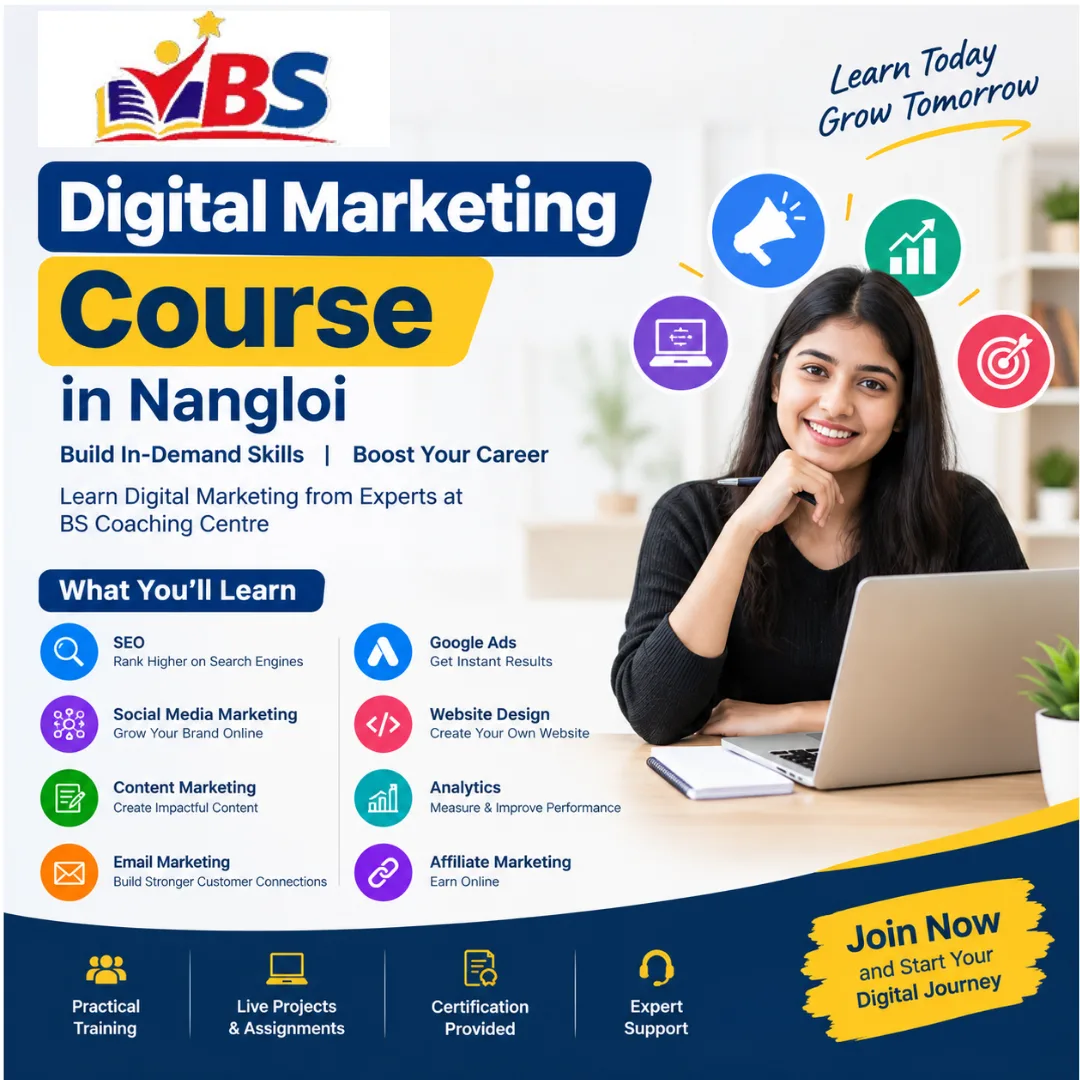
BS Coaching Centre offers digital marketing training in Nangloi for students who want to understand online marketing and develop job-oriented skills.
The course covers important areas of digital marketing, including:
- Search Engine Optimization (SEO)
- Social Media Marketing
- Google Ads
- Content Marketing
- Keyword Research
- Website and WordPress Training
- E-Commerce Marketing
- Digital Marketing Tools
- AI-Powered Digital Marketing Concepts
Students interested in building computer skills can also explore other courses offered at BS Coaching Centre, including ADCA, DCA, DFA, DCTT, Basic Computer, Advanced Excel, Tally Prime with GST, E-Accounting, Graphic Designing, and Web Designing.
If you are searching for a Digital Marketing Institute in Nangloi, you can explore the course at BS Coaching Centre and understand the modules and practical training approach before enrolling.
Conclusion
Starting a career in digital marketing does not require a technical background. Students from different educational streams can enter this field by learning the fundamentals, developing practical skills, and gaining experience with digital marketing tools.
Begin with SEO, social media marketing, content creation, and website basics. Gradually explore paid advertising, analytics, and AI-powered marketing tools. Most importantly, practice what you learn and build a portfolio of your work.
With consistent learning and practical experience, digital marketing can become a valuable career skill for students, freshers, and professionals looking to explore opportunities in the online business world.