Small cracks, faded markings, and standing water can signal bigger pavement problems ahead. Regular inspections and timely commercial parking lot repair in Troy can help property owners address minor issues before they affect safety, drainage, traffic flow, and maintenance costs. Knowing what to look for makes it easier to plan repairs and protect the parking lot.
Why Early Parking Lot Inspection Matters
Parking lots face constant pressure from vehicles, weather, water, and daily traffic. Small surface problems can grow when they remain unnoticed. Cracks may allow water to reach deeper pavement layers, while poor drainage can weaken the surface over time.
A routine inspection helps identify damage while repairs remain manageable. Property owners, facility managers, and business operators should check the parking lot regularly and pay attention to changes in the pavement.
Early inspections can help you:
- Identify cracks before they spread.
- Spot drainage problems quickly.
- Reduce trip and vehicle hazards.
- Protect pavement from water damage.
- Plan maintenance before major deterioration occurs.
- Keep parking areas cleaner and easier to use.
1. Look for Cracks in the Pavement
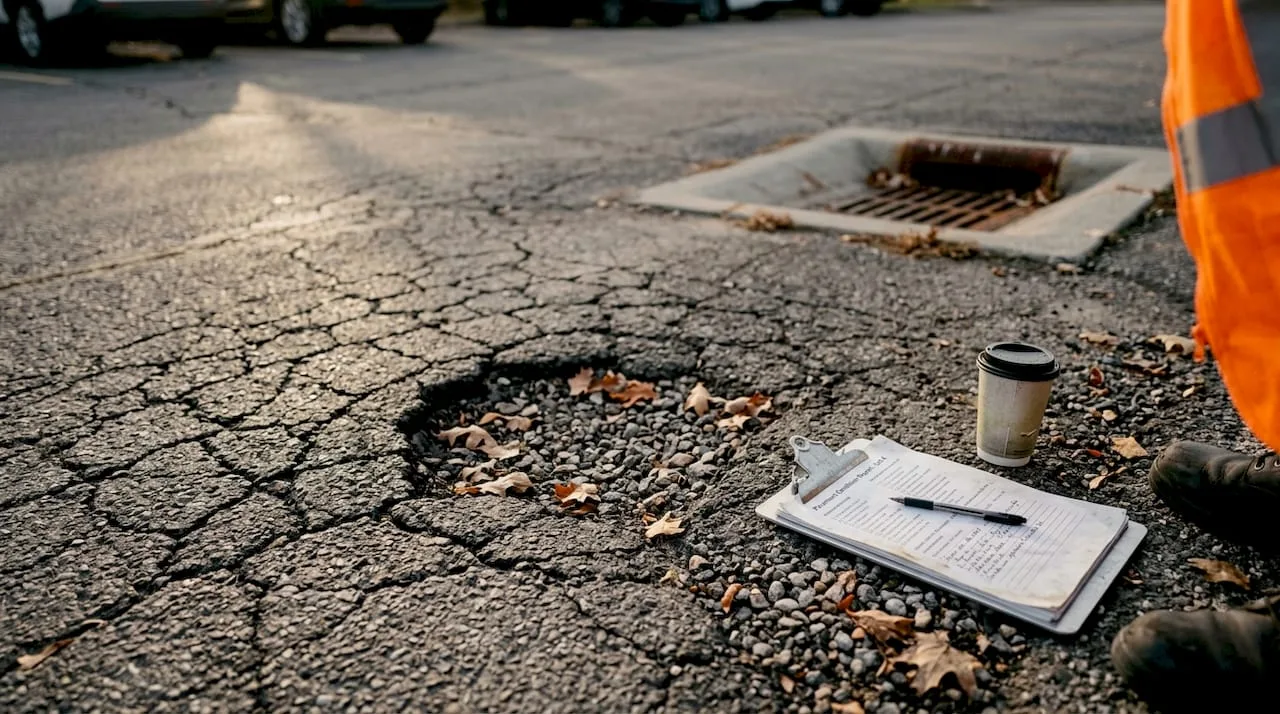
Cracks often provide one of the first visible signs of pavement damage. Small surface cracks may seem harmless, but their size, pattern, and location can reveal developing problems.
Watch for:
- Fine cracks across the pavement.
- Long cracks near parking spaces.
- Connected cracks that form blocks.
- Cracks that widen over time.
- Cracks around drainage areas.
- Cracks near pavement edges.
Water can enter open cracks and weaken the layers beneath the surface. Freeze-thaw cycles, heavy vehicles, soil movement, and age can also contribute to pavement deterioration.
Do not judge a crack only by its width. A professional inspection can help determine whether the pavement needs simple maintenance or more extensive work.
2. Check for Potholes and Depressions
Potholes can develop when water enters damaged pavement and weakens the supporting layers. Repeated vehicle traffic can then break down the surface.
Small potholes may grow quickly, especially in areas that receive frequent traffic. Depressions also deserve attention because they can collect water after rainfall.
Look for:
- Bowl-shaped holes.
- Low areas that hold water.
- Uneven pavement around potholes.
- Broken edges.
- Areas that continue to sink.
Early attention can prevent isolated damage from spreading across a larger section of the parking lot.
3. Watch for Standing Water
Standing water provides an important clue about drainage problems. After rainfall, inspect areas where water remains long after nearby pavement becomes dry.
Persistent water may point to:
- Poor surface grading.
- Blocked drains.
- Uneven pavement.
- Sunken sections.
- Damaged drainage channels.
Water can create serious pavement problems when it repeatedly reaches cracks and weak areas. Keep drainage systems clear and investigate recurring puddles instead of treating them as a normal part of the parking lot.
4. Notice Uneven or Sunken Areas
Uneven pavement can affect pedestrians, vehicles, and drainage. A parking lot may develop sunken areas because of soil movement, drainage issues, heavy loads, or problems beneath the pavement.
Walk through the parking area and look for sections that appear lower than surrounding pavement. Pay close attention to areas near loading zones, entrances, drainage structures, and spaces that regularly receive heavy vehicles.
Sudden changes in pavement height deserve prompt attention. They can create trip hazards and allow water to collect in the affected area.
5. Inspect Pavement Edges
Parking lot edges often experience extra wear. Vehicles may drive over unsupported edges, while water can wash away soil near the perimeter.
Check for:
- Crumbling pavement edges.
- Missing shoulder support.
- Soil erosion.
- Edge cracks.
- Broken sections near curbs.
Strong pavement edges help maintain the overall structure of the parking area. Addressing edge damage early can help prevent larger sections from breaking apart.
6. Check Faded or Damaged Markings
Parking lot markings do more than improve appearance. Clear lines help drivers understand parking spaces, traffic directions, accessible areas, loading zones, and pedestrian paths.
Faded markings may indicate general surface wear or the need for maintenance. Look for missing lines, unclear arrows, damaged symbols, and worn accessible parking markings.
Clear markings can improve traffic organization and help create a safer environment for drivers and pedestrians.
7. Pay Attention to Surface Changes
Color and texture changes can also reveal developing pavement problems. Areas with loose aggregate, rough surfaces, or unusual wear may require closer inspection.
Oil and chemical spills can also affect pavement surfaces. Clean spills promptly and monitor the affected area for changes.
When several warning signs appear together, consider scheduling commercial parking lot repair before the damage becomes more extensive.
When Should You Repair Parking Lot Damage?
The right repair timing depends on the type, size, location, and cause of the damage. Small cracks may require maintenance, while widespread cracking, deep potholes, drainage failures, or major settlement may require more extensive repairs.
Consider professional evaluation when:
- Cracks continue to expand.
- Potholes appear repeatedly.
- Water collects in the same locations.
- Pavement sections sink or shift.
- Edges continue to crumble.
- Heavy traffic accelerates surface deterioration.
- Previous repairs fail repeatedly.
A timely inspection can help identify the cause instead of treating only the visible symptom.
How Regular Maintenance Helps
Parking lot maintenance works best when it follows a planned schedule. Inspect the surface regularly, clean drainage areas, monitor cracks, and address minor problems before they spread.
Keep records of recurring issues and note where repairs occur. These records can help identify patterns and support better maintenance planning.
Regular maintenance may also reduce disruption because property owners can schedule work before severe damage affects larger sections of the parking area.
Final Thoughts
Parking lot damage rarely appears overnight. Cracks, potholes, standing water, uneven surfaces, damaged edges, and faded markings can provide early warnings. Regular inspections help property owners recognize these signs and respond before minor issues develop into larger problems.
When damage continues to grow, professional evaluation can help determine the right repair approach. Scheduling commercial parking lot repair at the right time can support safer traffic flow, better drainage, and longer pavement life.
FAQs
1. What are the first signs of parking lot damage?
The first signs often include small cracks, standing water, surface wear, potholes, uneven areas, and crumbling pavement edges. Regular inspections can help identify these problems before they become more extensive.
2. How often should a commercial parking lot be inspected?
Inspect a commercial parking lot regularly throughout the year and after severe weather or unusual traffic. Frequent inspections can help identify cracks, drainage issues, potholes, and surface changes at an early stage.
3. Why does standing water damage a parking lot?
Standing water can enter pavement cracks and reach underlying layers. Repeated water exposure can weaken pavement support and contribute to cracking, potholes, settlement, and surface deterioration.
4. When does a parking lot need professional repair?
A parking lot may need professional repair when cracks expand, potholes return, pavement sinks, drainage problems persist, or several damaged areas appear together. A professional assessment can identify the cause and suitable repair method.
5. Can early parking lot repairs reduce future damage?
Yes. Early repairs can address minor cracks, drainage problems, and surface deterioration before they spread. Regular maintenance also helps property owners monitor recurring issues and plan larger repairs when necessary.