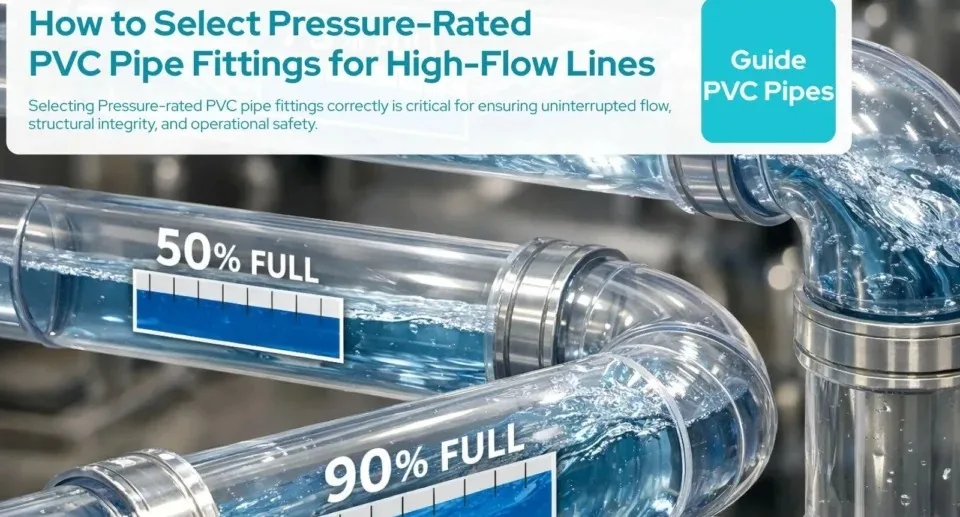
This blog provides a detailed guide on selecting pressure-rated PVC pipe fittings for high-flow pipeline systems in 2026. It explains why choosing the correct fittings is essential for maintaining system safety, smooth flow, and long-term durability. Unlike standard piping components, fittings such as elbows, tees, reducers, and joints experience higher stress because of pressure fluctuations, turbulence, and directional flow changes. The blog highlights that improper fitting selection can lead to leakage, cracking, pressure loss, and costly system failures.
The article begins by explaining the importance of pressure ratings and how they determine the maximum internal pressure a fitting can safely handle. It also discusses how temperature affects PVC strength and why pressure ratings must be adjusted for high-temperature conditions. The guide further explains how pump startups, shutdowns, and sudden valve closures create surge pressure that fittings must withstand to ensure reliable operation.
A major focus of the blog is understanding high-flow line requirements. It outlines important factors such as flow rate, operating pressure, surge pressure, fluid type, flow velocity, pipeline layout, and environmental exposure. Each factor directly impacts the performance and lifespan of PVC fittings. The blog also compares different types of pressure-certified PVC fittings, including Schedule 40, Schedule 80, injection-molded fittings, fabricated fittings, long-radius elbows, and flanged fittings. Their pressure capacities, flow performance, and industrial applications are clearly explained.
The blog emphasizes the importance of using high-quality materials and certified products that comply with ASTM, ISO, or BIS standards. It explains that certified fittings undergo rigorous testing for pressure resistance, dimensional accuracy, and impact strength, ensuring dependable performance in demanding conditions. The article also highlights the benefits of purchasing from a trusted local supplier or PVC pipes manufacturer in Odisha for better technical support and faster delivery.
Correct sizing and proper installation practices are another important part of the discussion. The blog explains how undersized fittings increase turbulence and pressure loss, while oversized fittings create unnecessary costs. It also shares practical installation tips, including proper solvent cement application, correct tightening methods, and accurate alignment to avoid stress-related failures.
Overall, the blog serves as a practical and experience-based resource for engineers, contractors, industries, and infrastructure professionals looking to select reliable pressure-rated PVC pipe fittings for high-flow applications while ensuring efficiency, safety, and long-term system performance. The blog further discusses common applications, including industrial water systems, irrigation networks, chemical processing, and wastewater treatment. It also touches on maintenance practices, advising regular inspections to detect early signs of wear.