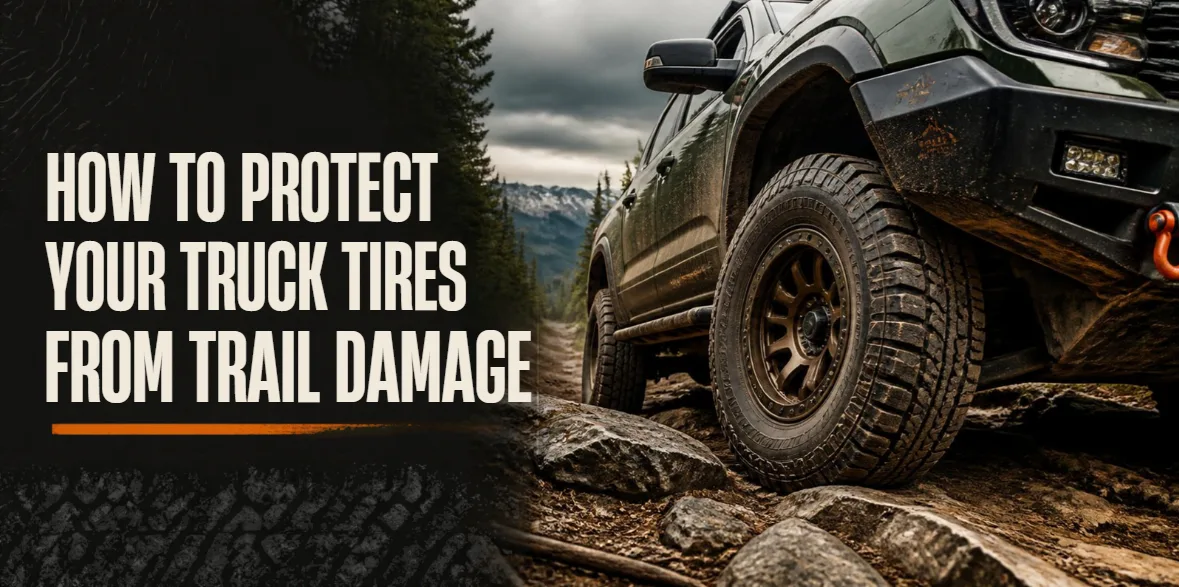
Trail driving puts your tires through conditions they rarely see on pavement. Sharp rocks, exposed roots, deep ruts, and loose debris can cause cuts, punctures, and sidewall damage. Even a tough tire can take a beating when the trail gets rough. Protecting your tires is an ongoing process that starts before you hit the trail, continues while you're driving, and doesn't end until you get back home and inspect them. Choosing the right tires, checking their condition, using the right pressure, and paying attention to how you drive can all help reduce the risk of damage. A little preparation can also make it much easier to deal with a problem if something goes wrong on the trail.
Start With the Right Tire for the Trail
The type of trail you drive should factor into your truck tire choice. A truck that mostly travels on dirt roads has different needs from one that regularly tackles rocky trails, sharp ledges, or heavily rutted terrain.
Look for truck tires designed to handle the conditions you expect to encounter. Tire construction, tread design, and sidewall strength can all affect how well a tire handles rough ground. Off-road tires may have features designed to better handle the cuts, impacts, and rough contact that can happen away from pavement.
That said, even a capable tire can be damaged by the wrong approach. Hitting a sharp rock at speed or catching a sidewall on an exposed obstacle can cause trouble, no matter how tough the tire is. The right tire gives you a good starting point, but your driving habits still play a big part in protecting it.
Check Your Tires Before Hitting the Trail
A quick tire inspection before heading out can help you catch problems while you're still close to home. Look over the tread and sidewalls for cuts, cracks, punctures, bulges, or unusual wear. Also check for rocks and other debris stuck between the tread blocks.
This is especially important if you're using off-road tires that have already seen plenty of trail use. A small cut or puncture might not seem like a big deal in the driveway, but rough terrain can make an existing problem worse. Pay close attention to the sidewalls, since damage there can be more serious and harder to repair.
Take a look at the valve stems, too, and make sure the tires are holding the appropriate pressure. If you've recently been driving on the highway or carrying a heavy load, give the tires time to cool before checking and adjusting their pressure. A few minutes of inspection can save you from finding a problem several miles down the trail.
Use the Right Tire Pressure for the Terrain
Tire pressure can make a noticeable difference when you're driving over uneven ground. In some off-road conditions, lowering the pressure appropriately allows the tire to spread out and conform better to the surface. This can improve traction and make it easier for the truck to move over certain terrain.
But there is a point where lower pressure becomes a problem. Running too low a pressure can increase the risk of tire and wheel damage, especially on rocky trails. The tire may flex too much, and the wheel can become more exposed to hard impacts.
No single pressure setting works for every trail. The right pressure depends on the tire, truck, load, terrain, and conditions. Follow the tire manufacturer's recommendations and adjust carefully instead of dropping the pressure as low as possible. Once you're heading back onto regular roads, remember to bring the tires back up to the appropriate road pressure.
Slow Down Around Rocks and Sharp Obstacles
Speed can quickly turn a manageable obstacle into a tire problem. A rock that might be harmless when you crawl over it can cause a puncture, tread damage, or sidewall impact when you hit it too quickly.
Slow down when approaching rocky sections, exposed roots, ledges, and other obstacles. Taking your time gives the tires and suspension more opportunity to work with the terrain. It also gives you more time to adjust your line if something doesn't look right.
Try not to carry unnecessary speed into areas where you can't clearly see what's ahead. When the trail gets particularly rough, crawling through an obstacle is usually a better approach than trying to power over it.
Choose Your Line Carefully
Choosing a good line can help prevent unnecessary tire damage, especially on rocky or uneven trails. Look ahead for sharp rocks, deep ruts, roots, and other obstacles, and take a smoother path when possible. Keep in mind that the rear tires follow a different path from the front, so a line that clears the front tires may still put the rear tires against an obstacle.
Not every hazard is easy to spot. Mud, standing water, leaves, sand, and loose dirt can hide rocks, holes, branches, and other debris. If you can't tell what's underneath a questionable section, slow down and take a closer look. On a difficult or narrow trail, getting out to inspect the path may take a few minutes, but it's better than finding out the hard way that a hidden obstacle damaged a tire.
Pay particular attention to the sidewalls, which can be vulnerable to cuts, scrapes, and pinching when rocks are close to the tire. Avoid putting the sidewall against sharp edges when you have another option, and slow down through tight or rocky sections. Strong sidewall construction can add protection, but no tire is completely damage-proof.
Avoid Spinning the Tires
Wheelspin can make a difficult trail even tougher on your tires. When a tire spins aggressively on loose dirt, gravel, or rocks, it can kick debris into the surrounding area while digging deeper into the surface.
It can also expose the tire to sharp objects buried beneath the loose material. Once the tire suddenly regains traction, it may also take a hard hit against an obstacle.
Use smooth throttle inputs instead of trying to overpower a section of trail. If the truck starts losing traction, ease off the accelerator and reassess the situation. A slower, more controlled approach is usually easier on the tires and gives you more control over the truck.
Carry Basic Tire Repair Equipment
Even careful driving can't eliminate every risk. A sharp object can still puncture a tire, or an unexpected impact can cause damage. Having some basic tire equipment with you can make a big difference if something happens far from pavement.
A tire repair kit, pressure gauge, and portable air compressor are useful items to carry. A properly inflated spare tire is also important, particularly when you're traveling on remote trails where help may not be close by.
Don't wait until you're dealing with a flat to figure out how your equipment works. Take some time to become familiar with your repair kit, compressor, and other tire-related gear before the trip.
Keep in mind that not every tire problem can be handled with a temporary repair. Serious damage, especially to the sidewall, may require professional inspection or a replacement tire.
Inspect the Tires After the Trail
Your tire inspection shouldn't stop when you leave the trail. Give the tires another look after a difficult drive, especially if you've spent the day on sharp rocks, deep ruts, or other challenging terrain.
Look for fresh cuts, punctures, cracks, bulges, missing pieces of tread, and objects stuck in the tire. Check the sidewalls carefully since damage isn't always obvious at first. Also check tire pressure to make sure all four tires are holding air normally.
If you find a nail, rock, or other sharp object stuck in the tread, don't pull it out immediately without checking whether the tire is punctured. Removing it could allow air to escape quickly.
Take any major sidewall damage, bulge, or other sign of structural damage seriously. If you're not sure whether a damaged tire is safe to keep driving on, have it checked by a qualified tire professional.
Keep Your Tires Ready for the Next Trail
Trail driving will always come with some risk of tire damage, but taking care of your tires doesn't have to be complicated. A little attention before, during, and after each trip can help catch problems early and keep your truck ready for the next adventure.
Tires can take a lot of abuse on the trail, but they still need proper care. If you're unsure about a tire's condition after a rough outing, have a qualified tire professional inspect it before getting back on the road.