
The CISSP (Certified Information Systems Security Professional) credential has consistently been one of the most respected certifications in cybersecurity. In 2025, as organisations struggle to find highly qualified professionals to protect their systems and data, the demand for CISSP-certified individuals has only increased. However, preparing for this exam is no small task—it requires dedication, smart planning, and access to quality resources.
This blog outlines practical strategies to help candidates prepare effectively and confidently for the CISSP exam in 2025.
Why the CISSP Is So Valuable
Unlike many certifications that focus only on a specific tool or platform, the CISSP demonstrates a broad and deep understanding of cybersecurity. It covers eight domains, including security architecture, asset management, communication, and software development security.
Employers value the certification because it indicates that candidates not only know how to configure systems but also how to design secure policies, manage risks, and lead teams. In a market full of specialised credentials, the CISSP remains unique in combining technical depth with managerial expertise.
The Challenges Candidates Face
Despite its value, the CISSP is known for being a difficult certification to achieve. The exam is long, with complex multiple-choice and scenario-based questions. Many candidates report that the difficulty is not just the breadth of content, but also the way the exam tests real-world decision-making under pressure.
Some of the biggest challenges include:
- Time pressure during the exam.
- Scenario-style questions that require critical thinking rather than memorisation.
- Covering all eight domains in sufficient detail.
Without a structured preparation plan, even experienced professionals can struggle.
Building a Smarter Study Plan
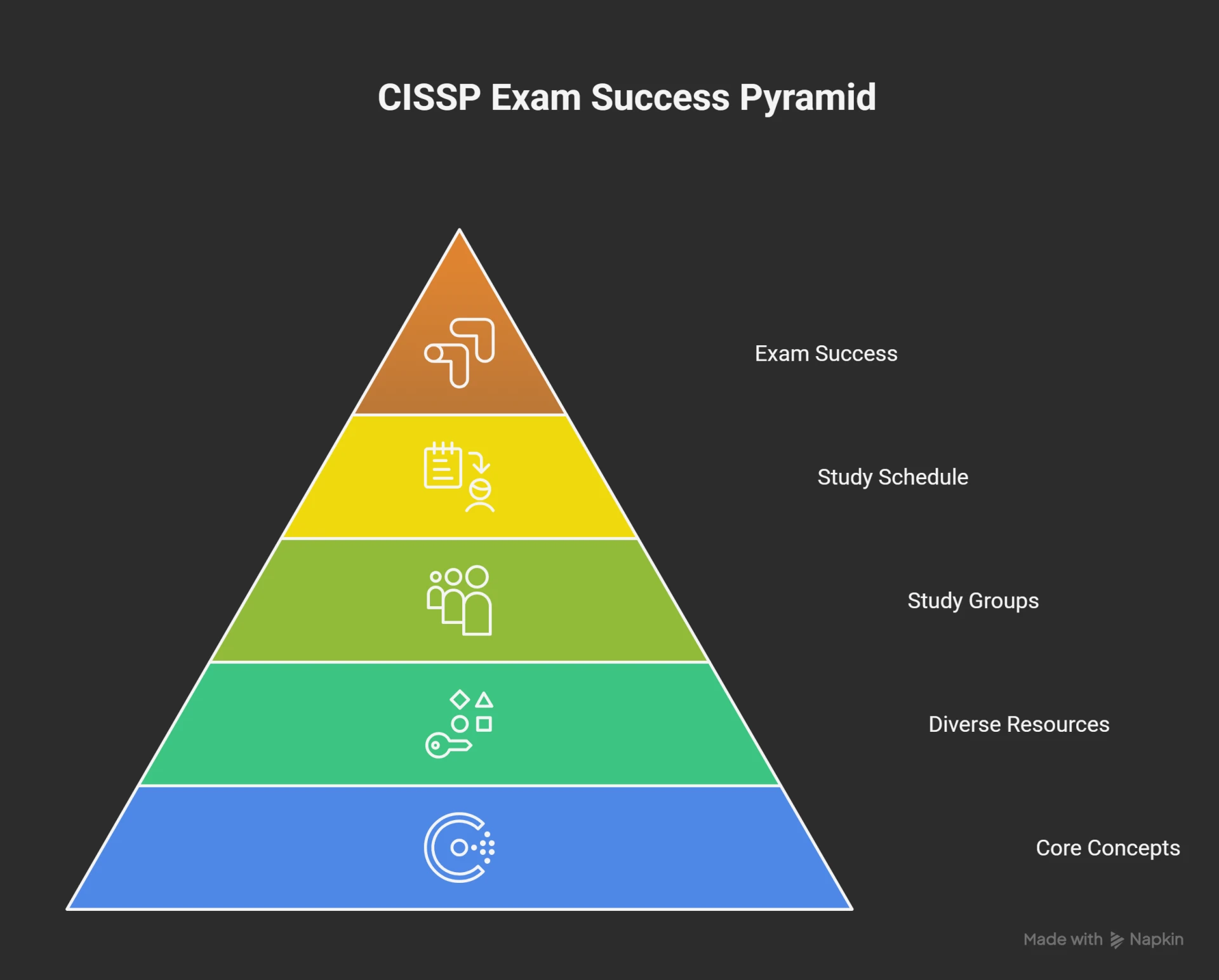
Passing the CISSP requires more than just reading a book. The most successful candidates use a balanced approach that combines different learning techniques. Here are the key steps:
1. Start With the Official Exam Outline
ISC2 publishes a detailed exam outline for the CISSP. Begin here so you know what to expect. This outline ensures you do not waste time studying topics that are not tested.
2. Learn in Layers
Instead of attempting to master every detail at once, start with a broad overview of each domain. Then, progressively dive deeper into areas that require more focus.
3. Mix Study Materials
No single book or course covers everything perfectly. Many candidates combine official ISC2 guides with video courses, peer discussions, and practice tests.
4. Use Practice Exams Wisely
Taking mock exams is one of the most effective ways to prepare. They reveal knowledge gaps, help build speed, and give you a sense of the question style.
The Role of Verified Preparation Resources
Not all materials are equally reliable. Outdated or unverified dumps can hurt more than help. Using verified, regularly updated resources makes a significant difference, especially when exams are frequently updated to reflect current industry practices.
If you’re searching for additional study support, you can click here to explore useful materials that are designed to align closely with current exam objectives.
Avoiding Common Mistakes
Many candidates fall into traps that hinder their success. Here are some mistakes to avoid:
- Cramming at the last minute – The CISSP requires long-term understanding, not memorisation.
- Ignoring weaker domains – Some candidates over-focus on areas they enjoy and neglect others.
- Relying only on dumps – While practice questions help, they must be combined with conceptual study.
A balanced strategy always outperforms shortcuts.
Staying Motivated
Studying for months can feel overwhelming, especially if you’re working full-time. Break your preparation into small milestones. For example:
- Week 1–2: Domain overview.
- Week 3–6: Deep dive into three domains.
- Week 7–10: Deep dive into the remaining five domains.
- Week 11–12: Practice exams and review.
Reward yourself when you hit milestones. A clear plan makes the journey feel achievable.
What Success Looks Like
For many professionals, passing the CISSP transforms their career. Beyond the financial benefits, it provides:
- Increased credibility with employers and clients.
- Access to leadership roles such as Security Manager or Security Architect.
- Global mobility since the CISSP is recognised across industries and countries.
In 2025, when cyber threats are more complex than ever, certified professionals stand out as trusted experts.
Closing Summary
The CISSP is more than an exam; it is a career-defining achievement. Preparing smarter, not harder, is the key to success. By using a structured study plan, mixing multiple resources, and practising with updated materials, candidates can build both knowledge and confidence.
If you’re on the certification path, remember that consistent preparation is what separates successful candidates from those who fall short. And when you’re ready for additional support, you can always check Cert Empire to explore useful materials to strengthen your preparation.
Explore here:
https://querykaro.com/why-cissp-certification-matters-for-cybersecurity-careers-in-2025/