Why Planning Matters Before Replacing a Commercial Flat Roof
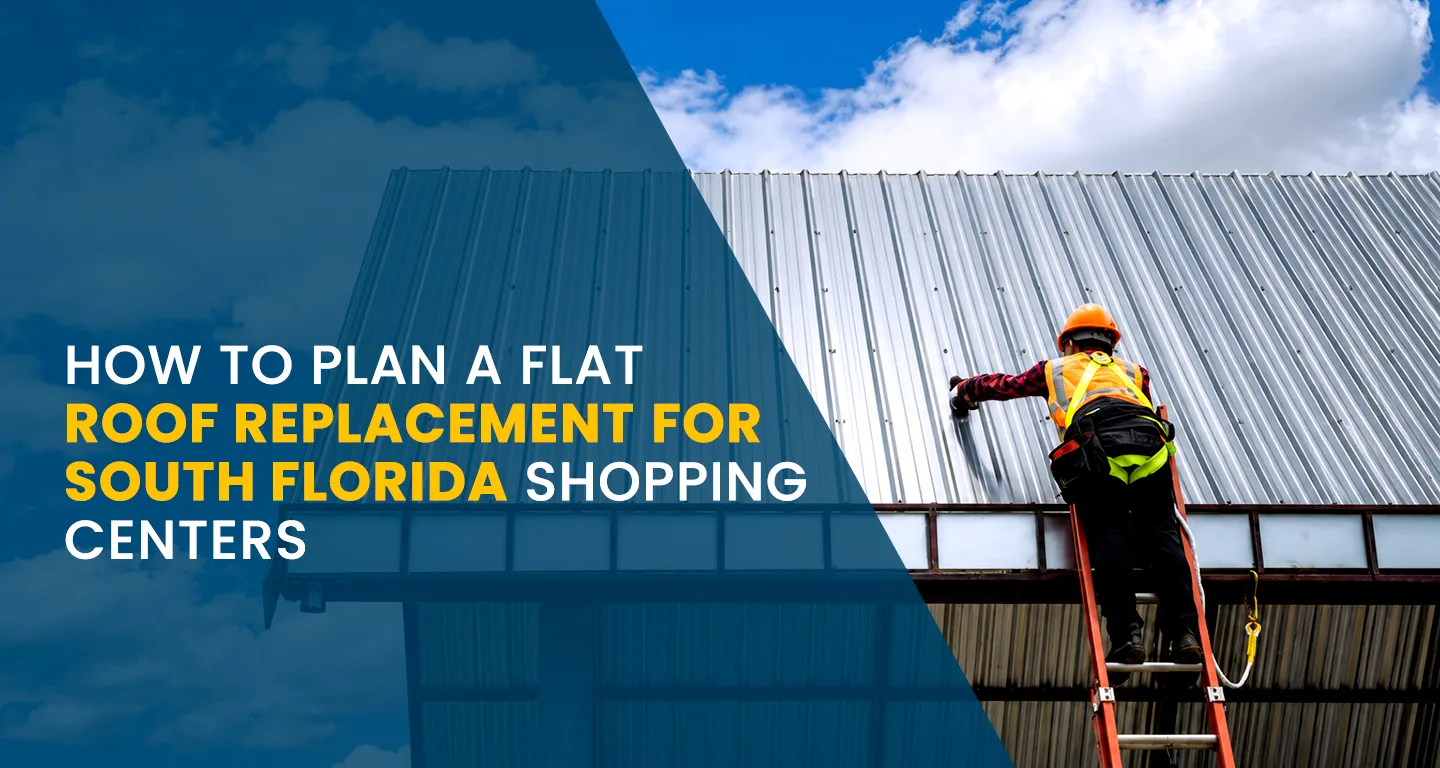
Planning is the most important stage of any commercial roof replacement project. Shopping centers experience constant foot traffic, deliveries and business operations, making roof work more complex than replacing a residential roof. South Florida's climate adds another layer of consideration.
High temperatures, intense UV exposure, heavy rainfall, humidity and seasonal storms gradually affect roofing materials. Replacing a roof without evaluating these environmental factors can lead to premature deterioration and unnecessary repair costs. A well-planned replacement ensures the new roofing system matches the building's structural needs while supporting long-term performance.
Start with a Professional Roof Assessment
Every successful roof replacement begins with a complete evaluation of the existing roof. Age alone does not determine whether replacement is necessary. Roofing professionals examine membrane condition, insulation performance, drainage systems, flashing details, ponding water and signs of moisture intrusion before recommending the most appropriate solution.
A detailed assessment also helps determine whether localized repairs remain practical or if the roof has reached the point where full replacement offers better long-term value. Scheduling professional roof inspection services before making major decisions allows property owners to identify hidden issues that may not be visible during routine visual inspections.
Consider Tenant Operations During Project Planning
Shopping centers cannot simply pause business during roofing work. Retail stores, restaurants, medical offices and service businesses often operate throughout construction. Planning the replacement schedule around business hours, customer access and delivery routes minimizes disruptions.
Coordinating with tenants early also allows property managers to communicate project timelines and temporary adjustments before work begins. Experienced contractors often divide large roofing projects into phases, allowing businesses to continue operating safely while replacement progresses section by section.
Choose the Right Roofing System for South Florida
Not every roofing material performs equally in coastal environments. The ideal solution should withstand prolonged UV exposure, wind uplift, heavy rain and fluctuating temperatures while remaining energy efficient. Modern commercial flat roofing systems commonly include high-performance single-ply membranes, modified bitumen, or other durable materials designed specifically for commercial buildings.
The best choice depends on the shopping center's size, roof configuration, insulation requirements, drainage design and long-term maintenance goals. Selecting quality materials from the beginning often reduces repair frequency and extends overall roof life.
Evaluate Drainage and Waterproofing Performance
Water management is one of the most critical considerations during a flat roof replacement. Although flat roofs are designed with slight slopes, inadequate drainage can allow standing water to remain after heavy rainfall. During replacement, contractors should inspect drains, scuppers, gutters, expansion joints, flashing and roof penetrations to ensure proper water flow.
Installing reliable waterproof roofing systems further strengthens the roof's ability to resist moisture intrusion. When combined with proper drainage design, these systems help protect insulation, structural components and interior spaces from water-related damage while improving long-term durability.
Plan Beyond Installation
A new roof performs best when it becomes part of an ongoing maintenance strategy rather than a one-time investment. Routine inspections, debris removal, sealant evaluations, drainage cleaning and early repair of minor defects help preserve roofing performance throughout its service life. Small maintenance tasks often prevent larger structural issues and reduce emergency repair expenses.
Establishing a proactive commercial roof maintenance program after replacement allows shopping center owners to identify developing problems before they affect tenants or interrupt business operations.
Budget for Long-Term Value Instead of Initial Cost
The lowest proposal does not always deliver the best return on investment. Property managers should evaluate contractor experience, workmanship quality, warranty coverage, roofing materials, project scheduling and future maintenance support.
A properly installed roofing system typically provides greater long-term savings by reducing repair frequency, improving energy performance and minimizing operational disruptions over its lifespan. Focusing on total lifecycle value rather than installation cost alone often leads to better financial outcomes for commercial property owners.
Final Thoughts
Replacing a shopping center's flat roof is a significant investment that deserves careful planning from start to finish. Beginning with a thorough inspection, selecting materials suited to South Florida's climate, improving drainage and planning for future maintenance all contribute to a roofing system that delivers dependable performance for years to come.
If you're preparing for a commercial roofing project or want expert guidance before making a decision, Connect with us to discuss your property and explore roofing solutions designed for long-term protection and reliability.