Every parent knows the morning rush. You get your toddler dressed, turn around for two seconds, and their trousers are already halfway down their legs. Sound familiar? If your little boy is in the 3T stage, finding a belt that actually works can feel like solving a puzzle.
This guide is for parents who want simple, honest advice on choosing toddler boy belts that fit well, stay on all day, and are easy enough for little hands to manage. No fluff, just what you need to know.
The 3T Stage: Why Belts Become Relevant
Children wearing size 3T are typically between ages 2 and 3. At this stage, trousers in the right length often have a waist that is too wide for slimmer toddlers. The standard elastic waistband helps, but it does not always keep things in place during active play.
This is where a well-chosen toddler belt makes a real difference. Beyond the practical purpose of keeping trousers up, the right belt can also be part of teaching your child to dress themselves independently. Something as small as a belt can become a real confidence builder when kids manage it on their own.
The key is choosing a belt designed specifically for this age group, not a scaled-down version of an adult belt.
What Actually Makes a Good Toddler Boy Belt
Not all belts marketed as toddler belts are worth buying. Here is what separates a good one from a frustrating one:
Simple Closure System
Traditional prong-and-hole buckles are designed for adults. For a 3-year-old, threading a belt through a buckle and pushing a prong into a tiny hole is genuinely difficult. Look for belts with snap closures, velcro, or magnetic fastenings. The simpler the closure, the more likely your child will manage it themselves.
Lightweight and Flexible Material
Stiff leather belts look great but are not ideal for all-day toddler wear. A belt that digs in during car rides, meal times, or nap time quickly becomes something your child refuses to wear. Soft, flexible materials like faux leather or canvas work better for everyday use.
The Right Width
Toddler belt loops are narrow. A belt that is too wide simply will not fit through the loops. Aim for belts between half an inch and one inch wide. Anything wider than that usually causes problems with standard toddler trouser loops.
Adjustability
Children grow fast. A belt with multiple adjustment points gives you more use before you need to replace it. Some belts designed for toddler boy belts 3T include enough extra length to work through the 4T stage as well.
Toddler Belt Sizing: 2T, 3T, and 4T Explained
One of the most common questions parents ask is how belt sizes translate to actual measurements. Here is a quick guide:
SizeTypical AgeWaist (approx)Notes2T1 to 2 years17 to 19 inchesSmallest toddler fit3T2 to 3 years19 to 21 inchesMost common toddler size4T3 to 4 years21 to 23 inchesTransitional sizeBoys S4 to 5 years23 to 25 inchesMoving into boys sizing
Always measure your child's waist directly rather than relying on clothing size alone. Waist measurements can vary between brands and between slim and standard fits within the same size.
Everyday Belts vs Dress Belts for Toddler Boys
It is worth having two different belts for two different purposes.
Everyday Comfortable Toddler Belts
For nursery, park trips, and general wear, prioritise comfort. Soft fabric or faux leather belts with snap or velcro closures are ideal. They are easy to put on, easy to take off, and comfortable enough for all-day wear. These are your comfortable toddler belts for daily use.
Dress Belts for Special Occasions
For weddings, christenings, family photos, or church, a slim boys leather belt adds a polished look that pulls an outfit together. For occasions like these, the belt does not need to be easy for the child to manage independently since parents will be helping with dressing anyway.
Western Style Belts
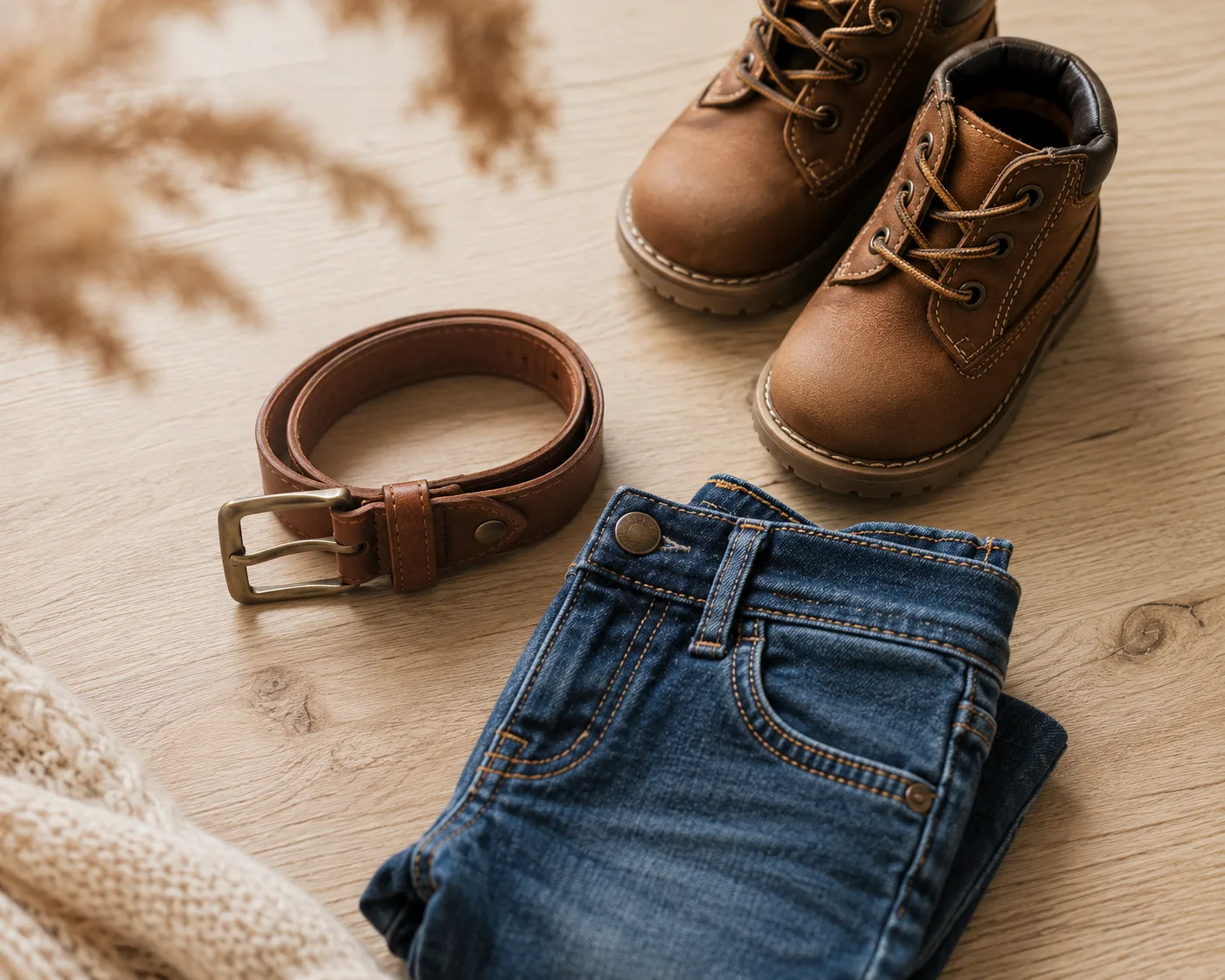
If your son is into cowboy themes or you are dressing for a themed event, a toddler brown belt with subtle western stitching looks fantastic with jeans and boots. These also work well as everyday belts since the styling is versatile enough for casual wear.
Using Belts to Teach Toddler Dressing Independence
One of the underrated benefits of choosing the right toddler belt is what it does for your child's confidence. Toddlers between 2 and 4 are at a stage where they want to do things themselves. Giving them tools they can actually manage turns a frustrating dressing routine into a proud moment.
Here are a few practical tips that parents have found helpful:
- Start with the easiest closure style first and only introduce more complex ones when your child is ready
- Let your toddler practise putting the belt on while sitting down. It is easier for small hands to work with the belt when they are not also trying to balance
- Praise the attempt, not just the result. If they get it halfway done, that is worth celebrating
- Keep the belt threaded through the trouser loops between wears so there is one less step to manage in the morning
- Choose a belt your child likes the look of. If they picked it or love the colour, they are far more likely to want to wear it
A well-designed easy-buckle belt is one of the simplest ways to give your toddler a small but meaningful win during the morning routine.
What About Baby Boy Belts?
For younger children not yet in the toddler stage, baby boy belts serve more of a decorative purpose than a functional one. Most babies and young toddlers do not need a belt to keep their trousers up, but a slim fabric belt can complete an outfit for photos or special occasions.
If you are shopping for a baby boy belt, look for something with a soft velcro closure or a simple snap. Avoid anything with rigid buckles or hardware that could be uncomfortable against a baby's skin.
Common Mistakes Parents Make When Buying Toddler Belts
A few things to avoid when shopping:
- Buying a boys belt instead of a toddler belt. Boys belts are sized for older children and will be too long and too stiff for a 3T child
- Choosing style over comfort for everyday use. A beautiful leather belt that your child refuses to wear because it digs in is not worth the money
- Ignoring the belt loop width. Always check that the belt width matches the trouser loops before buying
- Not accounting for growth. A belt with no adjustability may only last a few months before your child outgrows it
- Using adult buckle styles too early. Traditional prong buckles are genuinely difficult for toddlers and can create a negative association with wearing belts at all
Where to Find the Best Toddler Boy Belts
Most high street clothing stores carry basic toddler belts, but the selection is usually limited and the designs tend toward adult-style buckles scaled down. For belts that are actually designed with toddlers in mind, specialist children's accessory brands do it better.
Myself Belts is one brand that was specifically built around this problem. The story behind the brand started with a parent who wanted their child to be able to buckle their own belt. The result is a range of belts with a patented one-handed closure that toddlers can genuinely manage on their own.
For a detailed breakdown of sizes, styles, and what to look for when buying toddler boy belts 3T, read the complete buying guide at Myself Belts.
Final Thoughts
Choosing the right toddler boy belt is not complicated once you know what to look for. Focus on fit, easy closures, and materials that are comfortable for all-day wear. Skip the stiff adult-style designs and choose something your child can actually use.
The right belt at this stage is more than just a practical accessory. It is one of the small tools that helps your toddler feel capable and independent, one morning routine at a time.