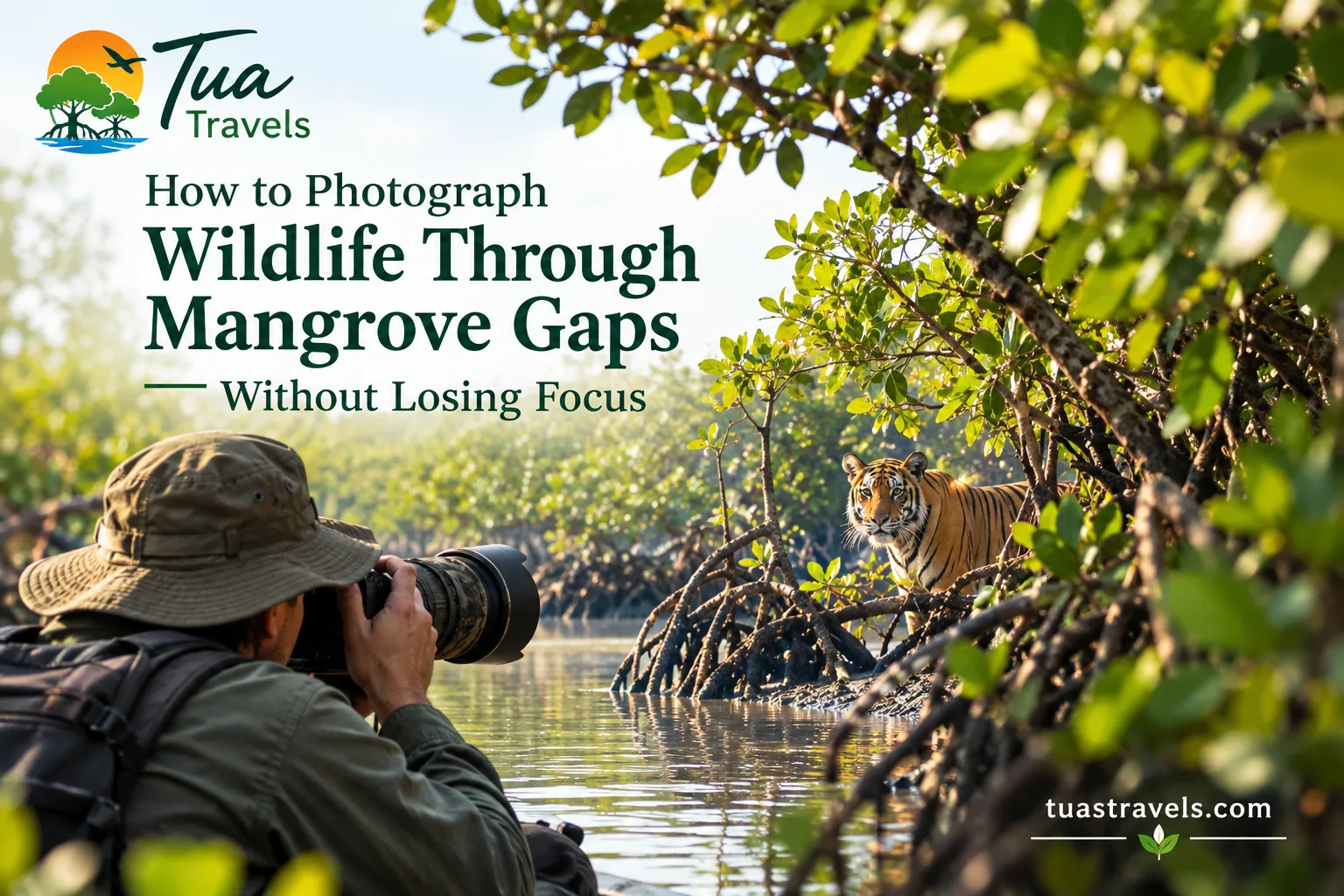
Wildlife photography in the Sundarbans is an immensely interesting yet difficult experience as you have to shoot through the small openings of the mangroves to get a clear shot. Camera auto-focus is sometimes hampered by dense branches, root structure, leaves and varying light. The camera might also focus on a plant in the foreground if the bird or animal seems to be in focus for a brief instant.
If you are a photographer, and opting to go on a Sundarban Wildlife Photography Tour, learning about how to deal with focus in this kind of environment is a definitely huge benefit in creating quality pictures.
Know how the autofocus works in Mangrove Forests
The backgrounds of mangrove forests are complex visual background. Aerial roots, overlapping leaves and thin branches can cause issues with auto focus systems, particularly if the subject is partially obscured.
Use a small-zone or single-point autofocus setting rather than letting the camera pick a focus point. This will give you more control over what the camera will focus on.
If you are taking a shot of a bird perched between branches, focus on the eye or head of the bird as much as possible. This keeps the key component of the topic alive.
Choose the Right Autofocus Mode
The AF setting should follow the motion of the subject.
AF-S or One-Shot AF: For stationary birds, resting deer or animals that don't move.
AF-C or AI Servo: These work well with moving birds or wildlife when it is in transition from one position to another.
Eye Detection AF: If the camera has good wildlife detection, it can assist with keeping the focus on the eyes of an animal.
In cases where wildlife is moving behind the foliage, continuous AF and a small focus area can help you keep control.
Use a Wide Aperture Carefully
Opening your aperture a bit wider (f/4 or f/5.6) will help to isolate any foreground plants from the subject if there are distracting plants.
If the depth of field is very shallow, however, portions of the animal might be out of focus, especially if the animal is off-axis.
Select an appropriate aperture to create a separation between subjects and also ensure there is a proper depth of field. The sharpness of the eye and its other key features should be the primary concern for birds.
When the auto-focus doesn't work, use manual focus
Sometimes autofocus jams on the nearby leaves or branches. Manual focus may be helpful in such situations.
Find an opening between the mangrove branches. Then take the lens off the zoom and slowly zoom until the animal's eye or body is clear.
For still photography, use focus peaking, magnified live view or other camera assist functions.
Keep Boat Safaris stable
The next level of difficulty is photography from a moving boat. The focus point can drop away from the subject with the smallest of movements.
Elbows close to the body, comfortable shooting position and a fast enough shutter speed. Camera shake can be minimized with image stabilisation but cannot stop movement of the animals.
Don't press the boat towards wildlife just to get a better view. Give guide and boat operator sufficient distance.
Look for Natural Openings Before Shooting
Some professional wildlife photographers look around them before picking up their cameras. A small opening in the roots or branches could be a better composition than a larger opening with distracting foliage around it.
Be patient and wait for the animal to come into a better position. A good photograph can be captured in just a few seconds rather than a number of individual shots.
Conclusion
Taking photos of wildlife in mangroves involves patience, autofocus control, appropriate camera settings and observing closely. The challenges posed by dense vegetation in the Sundarbans can be overcome in order to take more meaningful photos.
With the proper guidance, timing, and understanding of animal behavior, every photographic opportunity can be even more rewarding, especially during a Sundarban Wildlife Photography Tour.