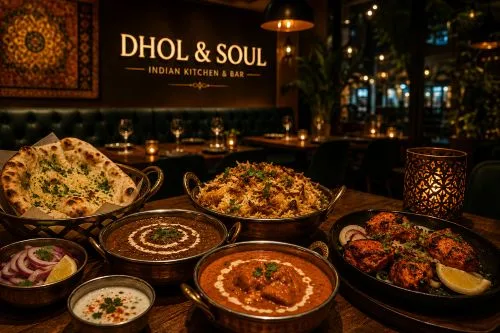
Here's a quiet frustration plenty of people share. You adore a restaurant, order the same food as takeaway, and somehow it turns up flat. The dish that dazzled at the table is merely okay in the box. That gap is real, and most indian takeaway eindhoven orders tumble straight into it, for reasons that are completely fixable once you see them.
The Problem: Not Every Dish Travels the Same
The root issue isn't the kitchen. It's physics. Some dishes are meant to be eaten the instant they leave the pan, and a fifteen-minute ride in a sealed tub changes them.
A crisp starter surrenders its crunch. A delicate grilled fish carries on cooking in its own trapped heat. A bread that was soft at the table stiffens in a stack. None of this means the food failed. It means the wrong dishes were picked for the journey.
The Solution: Choose Dishes Built to Hold
The fix is easy once you know it. Some dishes travel beautifully, and they're often the ones with deep, slow-cooked gravies.
- Rich curries like a slow-cooked mutton or a dal keep their heat and even settle nicely in transit
- A proper dum biryani, sealed and steamed, survives the trip far better than a light stir-fried rice
- Gravy-based vegetable dishes such as a Kolhapuri or a dal makhani arrive exactly as intended
- Anything meant to sit in sauce beats anything meant to stay crisp
Order along those lines and the takeaway version lands much nearer the dine-in one.
The Problem: The Same Safe Order, Every Time
The second snag is habit. Most takeaway orders are butter chicken and naan on loop, partly because people trust them to survive the trip. Fair enough, but it means the true range of the menu never reaches the box.
That's a pity, because some of the best-travelling dishes are precisely the ones people never think to order for delivery.
The Solution: Read the Takeaway Menu as a Map Too
The same regional variety that makes a restaurant interesting is right there for delivery. Champaran Mutton from Bihar is a slow-cooked, gravy-heavy dish that travels well. A Chettinad chicken keeps its spice blend intact inside a sealed tub.
You don't have to shrink your order down to the safe classics just because it's heading into a bag. The map still applies. You simply lean toward the regions and techniques that hold up on the road.
The Problem: Timing Gets Overlooked
Here's one almost nobody considers. When you order matters. A kitchen swamped at peak Friday has less room to time your dishes to land together, and food waits longer before it's collected.
That waiting stretch is exactly when travel-sensitive dishes suffer most.
The Solution: Order Clever, Not Just Early
A few small timing habits make a genuine difference:
- Ordering slightly off-peak often means fresher-to-door food
- Checking delivery range upfront avoids long journeys that dent quality
- Ordering through the restaurant's own system, rather than an extra layer, usually means better timing and handling
Minor tweaks, noticeably better outcomes.
The Honest Limitation
To be straight, takeaway will never be a flawless copy of dining in. A few dishes genuinely belong at the table and lose something in any box, no matter how cleverly you order. If your heart's set on something crisp or freshly grilled, eating in is the honest advice.
That's not a flaw in the takeaway. It's just the nature of certain dishes, and worth accepting rather than being let down by.
The Problem: Reheating Wrecks a Good Order
One last gap deserves naming, and it strikes after the food arrives. Even a well-chosen takeaway can be ruined by clumsy reheating, or by leaving it to sit on the counter while you dig out plates and pour drinks.
Slow-cooked gravies forgive plenty, but nothing survives ten minutes of cooling followed by a microwave blast that scorches the edges and leaves the centre cold.
The Solution: Mind the Final Five Minutes
The fix costs nothing. Have plates and sides ready before the food lands so it goes straight from box to table. If something does need warming, gentle heat on a hob for a gravy dish beats a harsh microwave every time.
A biryani gains from resting a moment with the lid on rather than being stirred straight away. Tiny habits, but they protect the effort the kitchen already poured in, and they close the final stretch of the gap that has nothing to do with the restaurant at all.
Putting It All Together
The gap between a great restaurant and a disappointing takeaway usually isn't the food. It's the choices around it. Pick dishes built to travel, use the regional range instead of defaulting to the same two items, watch the timing, and order through the restaurant's own system.
Do that, and the box on your table can come genuinely close to the plate in the restaurant.
Where to Try It
Dhol & Soul, at Willemstraat 61 in Eindhoven, runs its own ordering system built for exactly this. You can place an order for indian takeaway directly through the restaurant's platform, choosing from the same regional menu served in-house rather than a stripped-back delivery version.
And if you're unsure whether you're even in range, checking indian restaurants near me through the same ordering page shows delivery coverage before you build your order, so you know upfront instead of at checkout. Solve the gap once, and takeaway stops being the lesser option.