Many women experience gynaecological conditions such as uterine fibroids, ovarian cysts, endometriosis and other reproductive health problems. While some conditions can be managed with medication, others may require surgical treatment. Laparoscopic surgery is a minimally invasive surgical technique that may be suitable for treating several gynaecological conditions.
If you are searching for the best laparoscopic surgeon in Indore, it is important to understand the procedure, available treatment options and the surgeon's qualifications and experience before making a decision.
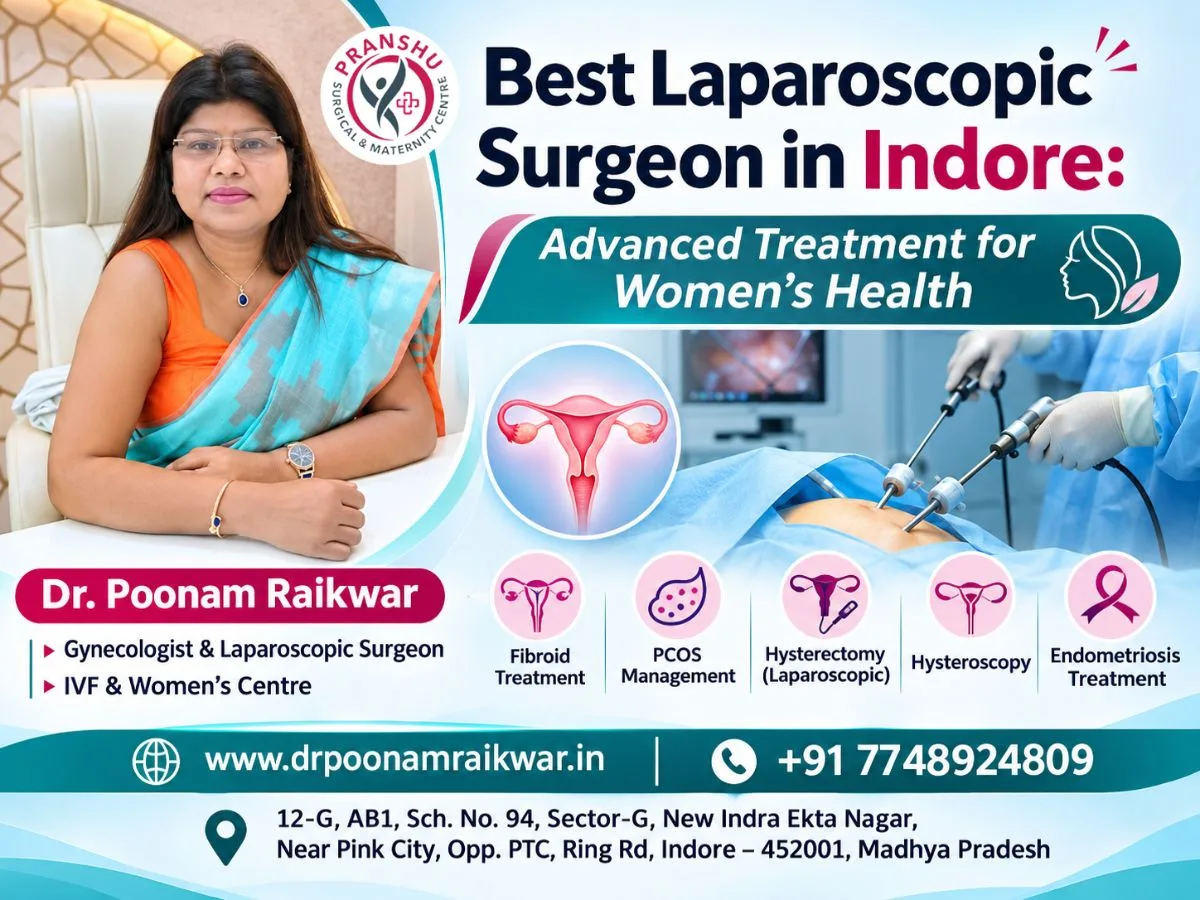
Dr. Poonam Raikwar is a gynecologist and laparoscopic surgeon in Indore with clinical experience in minimally invasive gynaecological procedures. Her approach focuses on evaluating each patient's condition and discussing appropriate treatment options.
What Is Laparoscopic Surgery?
Laparoscopic surgery is a minimally invasive surgical technique performed through small incisions. A thin instrument called a laparoscope, fitted with a camera, allows the surgeon to view the internal organs on a monitor.
Specialised surgical instruments are used to perform the required procedure.
Compared with traditional open surgery, laparoscopic surgery may offer several benefits for suitable patients:
- Smaller surgical incisions
- Less postoperative discomfort in many cases
- Reduced wound-related complications
- Shorter hospital stay in selected procedures
- Faster return to routine activities for some patients
However, laparoscopic surgery is not suitable for every condition. The surgeon determines the safest approach after examining the patient and reviewing medical investigations.
Conditions Treated Through Gynaecological Laparoscopic Surgery
Laparoscopy can be used to diagnose and treat different conditions affecting the female reproductive system.
1. Uterine Fibroids
Fibroids are non-cancerous growths that develop in or around the uterus. They may cause heavy menstrual bleeding, pelvic pressure, abdominal discomfort and sometimes fertility-related concerns.
Depending on the size, number and location of fibroids, a surgeon may recommend laparoscopic myomectomy or another suitable treatment.
Learn more about uterine fibroid treatment in Indore.
2. Ovarian Cysts
Ovarian cysts are fluid-filled sacs that develop in or on the ovaries. Many cysts resolve without surgery, but some may require further investigation or surgical removal.
Laparoscopic ovarian cystectomy may be considered when surgery is medically necessary and appropriate.
3. Endometriosis
Endometriosis occurs when tissue similar to the uterine lining grows outside the uterus. It can cause painful periods, chronic pelvic pain and fertility difficulties.
Laparoscopy may help diagnose endometriosis and remove or treat affected tissue in selected patients.
4. Ectopic Pregnancy
An ectopic pregnancy occurs when a fertilised egg implants outside the uterus, most commonly in a fallopian tube. It can become a medical emergency.
Laparoscopic surgery may be required in certain cases, depending on the patient's condition and clinical findings.
5. Conditions Requiring Hysterectomy
Some women may require removal of the uterus because of severe fibroids, persistent bleeding, uterine prolapse or other medical conditions.
For suitable patients, laparoscopic hysterectomy may be an option.
Why Choose an Experienced Laparoscopic Surgeon?
Choosing a surgeon is an important decision because the procedure, recovery and possible risks depend on the patient's diagnosis and overall health.
Before selecting a laparoscopic surgeon, consider:
Qualifications and training: Check the surgeon's medical qualifications and specialised training in gynaecological surgery.
Surgical experience: Ask about experience with the specific procedure recommended for your condition.
Treatment explanation: The surgeon should explain the benefits, risks and alternatives, including whether open surgery or non-surgical treatment may be more appropriate.
Hospital facilities: Confirm where the operation will take place and whether appropriate anaesthesia, operation theatre and postoperative support are available.
Follow-up care: Proper postoperative monitoring and clear recovery instructions are important parts of surgical treatment.
Dr. Poonam Raikwar – Laparoscopic Surgeon in Indore
Dr. Poonam Raikwar is a gynecologist and laparoscopic surgeon based in Indore. She completed her MBBS from KGMU, Lucknow, and postgraduate training in Obstetrics and Gynaecology from Queen Mary's Hospital, Lucknow. She also pursued a Fellowship in Endoscopy.
Her clinical interests include infertility, obstetrics, gynaecology, laparoscopic procedures and high-risk pregnancy management.
She provides consultation for women experiencing conditions that may require minimally invasive gynaecological treatment. The appropriate procedure is determined after reviewing symptoms, medical history and diagnostic findings.
For more information, visit the dedicated laparoscopic surgeon in Indore service page.
What Happens Before and After Laparoscopic Surgery?
Before surgery, the doctor evaluates the patient's condition and may recommend ultrasound examinations, blood tests or other investigations.
The patient also receives instructions regarding food, medicines and preparation for anaesthesia.
After surgery, recovery depends on the type of procedure and individual health. General guidance may include:
- Take prescribed medicines as directed.
- Keep surgical wounds clean and follow care instructions.
- Avoid heavy lifting until medically cleared.
- Gradually resume normal activities.
- Attend scheduled follow-up appointments.
- Contact the medical team if fever, worsening pain, heavy bleeding or wound discharge occurs.
Although recovery may be quicker than after open surgery in suitable cases, every patient has a different recovery timeline.
Frequently Asked Questions
1. Is laparoscopic surgery better than open surgery?
Laparoscopic surgery may offer smaller incisions and faster recovery for suitable patients. However, open surgery may be safer or necessary in certain complex cases. The surgeon decides based on individual medical findings.
2. Which gynaecological conditions can be treated with laparoscopy?
Depending on the diagnosis, laparoscopy may be used for fibroids, ovarian cysts, endometriosis, ectopic pregnancy and hysterectomy. Not every condition requires surgery.
3. How long does recovery take after laparoscopic surgery?
Recovery depends on the procedure, general health and any complications. Many patients return to routine activities sooner than after open surgery, but the surgeon should provide an individual recovery plan.
4. How do I choose the best laparoscopic surgeon in Indore?
Check the surgeon's qualifications, relevant surgical experience, hospital facilities, treatment approach and postoperative care. Discuss the specific procedure and its risks before making a decision.
Conclusion
Choosing the best laparoscopic surgeon in Indore involves understanding your medical condition and selecting a qualified specialist who can explain suitable treatment options. Laparoscopic surgery may offer benefits for women who require minimally invasive treatment for certain gynaecological conditions.
Dr. Poonam Raikwar provides gynaecological consultation and laparoscopic surgical care in Indore. Women experiencing fibroids, ovarian cysts, endometriosis or other reproductive health concerns can seek an individual medical evaluation to understand their treatment options.