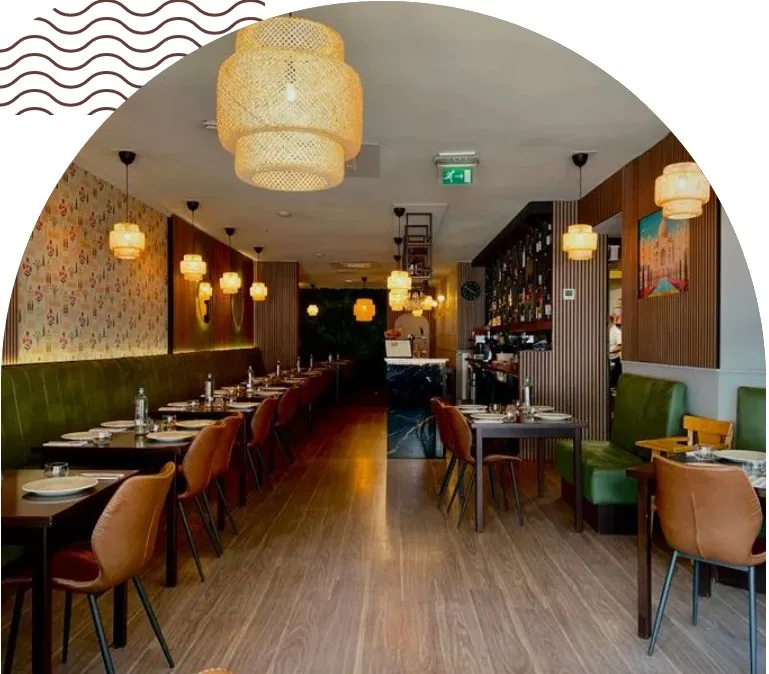
The trickiest table to order for is the mixed one, where a couple of people want a chicken curry and the rest are eating vegetarian. Done badly, you end up with two separate meals sharing a table and not much in common. Done well, it reads as one spread that everyone dips into. Indian Curry Club on Thomsonlaan makes this easier than most, partly because its indian vegetarian restaurant den haag options are a proper section rather than an afterthought, and partly because of how the menu is laid out.
How do you order when some want chicken and others are vegetarian? Order by cooking style rather than by person. Several styles come in both a chicken and a vegetarian version, so the table shares one theme. Add shared starters, rice and bread, and the meal holds together.
Start by splitting the table, not the menu
Before anyone opens the menu, work out the split: how many are eating chicken, how many vegetarian, and whether any of the vegetarians are strictly vegan. That last point matters, because the plant-based dishes and the dairy-based vegetarian dishes live in slightly different places on the menu.
Strict vegans are best served from the dedicated plant-based list, which is built without animal products. Vegetarians who eat dairy have that list plus the paneer dishes on the wider menu. Knowing the split first means you order the right version of each dish rather than correcting it later.
Match styles across proteins so it feels like one meal
This is the part that turns two orders into one meal, and it is the most useful thing to know. Several of the curries are offered in both a chicken and a vegetarian form, so you can order the same style twice and keep the table coherent. Chicken Korma has a Veg Korma counterpart, Butter Chicken sits alongside Butter Paneer, Chicken Tikka Masala pairs with Paneer Tikka Masala, and Chicken Saag Wala mirrors Saag Paneer.
If you look down the chicken curry indian restaurant menu, those pairs line up by name once you know to spot them. Ordering a creamy korma for the meat-eaters and a veg korma for the vegetarians means everyone is eating the same flavour, just a different protein. It is a small trick that makes a mixed table feel planned rather than patched together.
Cover starters both sides can share
Starters are the easiest place to bring the table together, because most of the vegetarian ones work for everyone. Onion Bhajiya, Samosa and Pani Puri are all plant-based and made for sharing, so they sit in the middle of the table without anyone needing their own plate.
If the meat-eaters want something of their own to open with, the tandoor starters like Chicken Tikka and Tandoori Chicken cover that. A couple of shared vegetarian plates plus one chicken starter usually keeps both sides happy before the mains arrive.
Sort rice, bread and heat levels
Rice and breads are shared by default, so order them for the table rather than per person. A mix of plain and butter naan with a couple of rice portions covers most groups, and the saucier curries are the ones you will want the bread for.
On heat, aim for a spread rather than one setting. Keep one or two of the mains mild, a korma or a butter dish, and let the hotter choices like a madras or vindaloo sit alongside for those who want them. That way nobody is stuck with a dish that is too hot or too plain.
The quick checklist before you order
Run through these and the order tends to fall into place:
- Count the split: chicken, vegetarian, and any strict vegans.
- Pick a shared style and order both versions, such as korma or butter, chicken and paneer.
- Add a plant-based starter or two for the table, plus a chicken starter if wanted.
- Order rice and breads for the group, not per head.
- Spread the heat, keeping at least one mild main.
One practical note: paneer dishes contain dairy, so they suit vegetarians but not vegans, and if anyone has allergies, confirm the specifics with the kitchen, since preparation can vary between dishes.
Pulling it together
Most of the friction at a mixed table comes from treating it as two meals that happen to be in the same place. The menu here is set up to avoid that, with matched styles across chicken and vegetarian, shared starters and breads that belong to everyone. You can note your numbers and any dietary needs when you reserve on the restaurant's own site, which makes the ordering quicker on the night. Order by style, not by person, and a mixed table stops being two meals and becomes one.