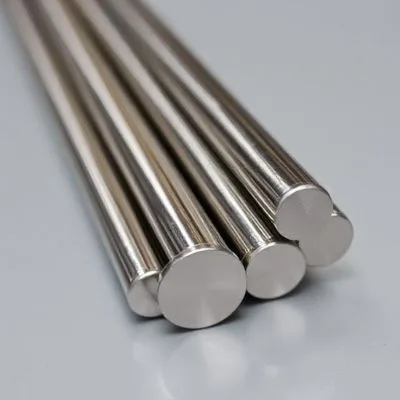
In today's industrial sector, round bars are essential metal products used in manufacturing, engineering, construction, automotive, marine and heavy machinery applications. Rajkrupa Metal Industries focuses on supplying quality metal products designed to meet different industrial requirements. As a trusted Round Bars Manufacturer in India, the company offers round bars in various materials, grades, dimensions and specifications. Choosing a reliable Round Bars Supplier in India is important for businesses that require consistent material quality, dimensional accuracy and dependable performance in their production processes.
Understanding Different Types of Industrial Round Bars
Round bars are cylindrical metal products manufactured using different metals and alloys. Their mechanical properties, corrosion resistance, strength and machinability depend on the material composition and manufacturing process. For applications requiring excellent wear resistance and machinability, Lead Tin Bronze Round Bars are widely used in bushes, bearings, gears and industrial components. Similarly, Aluminium Bronze Round Bars are preferred in marine equipment, pumps, valves and heavy-duty machinery because of their strength, corrosion resistance and suitability for demanding operating environments.
Speciality Alloys for Demanding Industrial Conditions
Industries operating under challenging conditions often require materials that can withstand high temperatures, aggressive chemicals, pressure and continuous mechanical stress. Speciality alloys are developed to provide specific performance characteristics for these applications. SMO 254 Round Bars are known for their excellent resistance to pitting, crevice corrosion and chloride-containing environments, making them suitable for chemical processing and marine applications. On the other hand, Phosphor Bronze Round Bars offer good fatigue resistance, wear properties and elasticity, making them useful for electrical connectors, springs, bearings and precision engineering components.
Nickel-Based Alloys for High-Performance Applications
Nickel-based alloys are widely recognised for their ability to maintain strength and resist corrosion in demanding industrial environments. They are commonly selected for chemical processing plants, oil and gas facilities, power generation systems and aerospace-related applications. Inconel 625 Round Bars provide excellent resistance to oxidation, corrosion and high-temperature conditions. These properties make them suitable for heat exchangers, marine equipment and chemical processing components. Another important alloy is Inconel 718 Round Bars, which offers high tensile strength, fatigue resistance and excellent mechanical stability at elevated temperatures. It is frequently used in gas turbines, aerospace components and high-performance engineering applications.
Important Factors to Consider When Selecting Round Bars
Selecting the right round bar involves more than comparing material prices. Buyers should understand the technical requirements of their applications before finalising a material. The following factors help ensure better product selection:
- Material Grade: Select a suitable grade according to the required mechanical properties, chemical composition and operating environment.
- Diameter and Length: Check the required dimensions to ensure compatibility with machining and fabrication processes.
- Corrosion Resistance: Consider exposure to moisture, chemicals, saltwater and other corrosive substances.
- Mechanical Strength: Evaluate tensile strength, hardness, fatigue resistance and load-bearing requirements.
- Machinability: Choose materials that can be efficiently processed into the required industrial components.
- Industry Standards: Verify applicable material specifications, testing requirements and quality documentation before purchasing.
Industrial Applications of Metal Round Bars
Round bars are used across numerous industries because of their versatility and availability in different metal grades. Their applications depend on their physical and mechanical properties.
- Automotive Industry: Used in shafts, axles, fasteners, transmission parts and precision-machined components.
- Marine Industry: Suitable for propeller shafts, marine fittings, pumps and corrosion-resistant equipment.
- Chemical Processing: Used in valves, pressure equipment, pipelines and components exposed to aggressive chemicals.
- Electrical Industry: Applied in connectors, conductive components, springs and specialised electrical fittings.
- Oil and Gas Industry: Used in industrial machinery, equipment components and applications requiring strength and corrosion resistance.
- Aerospace Industry: Speciality nickel alloys are utilised in high-temperature components and critical engineering applications.
Frequently Asked Questions
1. What are industrial round bars used for?
Industrial round bars are used to manufacture shafts, bearings, fasteners, gears, valves, machine components and various precision-engineered products. Their applications depend on the selected material and grade.
2. Which materials are commonly available in round bar form?
Common materials include stainless steel, carbon steel, alloy steel, aluminium bronze, phosphor bronze, lead tin bronze, duplex steel and nickel-based alloys.
3. How can buyers select the correct round bar grade?
Buyers should consider operating temperature, corrosion exposure, mechanical loading, machining requirements and applicable industry standards before selecting a grade.
4. Why are speciality alloy round bars important?
Speciality alloys provide specific properties such as high-temperature strength, wear resistance, corrosion resistance and improved mechanical performance. They are particularly useful in demanding industrial environments.
5. What details should be checked before purchasing round bars?
Important details include material grade, diameter, length, surface finish, manufacturing specifications, dimensional tolerances and relevant quality certificates.
Conclusion
Round bars play an important role in modern industrial manufacturing, offering strength, versatility and material options for a wide range of applications. From bronze alloys used in bearings and marine equipment to nickel-based alloys designed for high-temperature and corrosive environments, selecting the correct material is essential for achieving reliable performance. Understanding material grades, dimensions, mechanical properties and industry requirements helps buyers make informed purchasing decisions. A focus on material quality and suitable specifications also supports long-term operational efficiency, product durability and consistent results across different engineering and manufacturing applications.