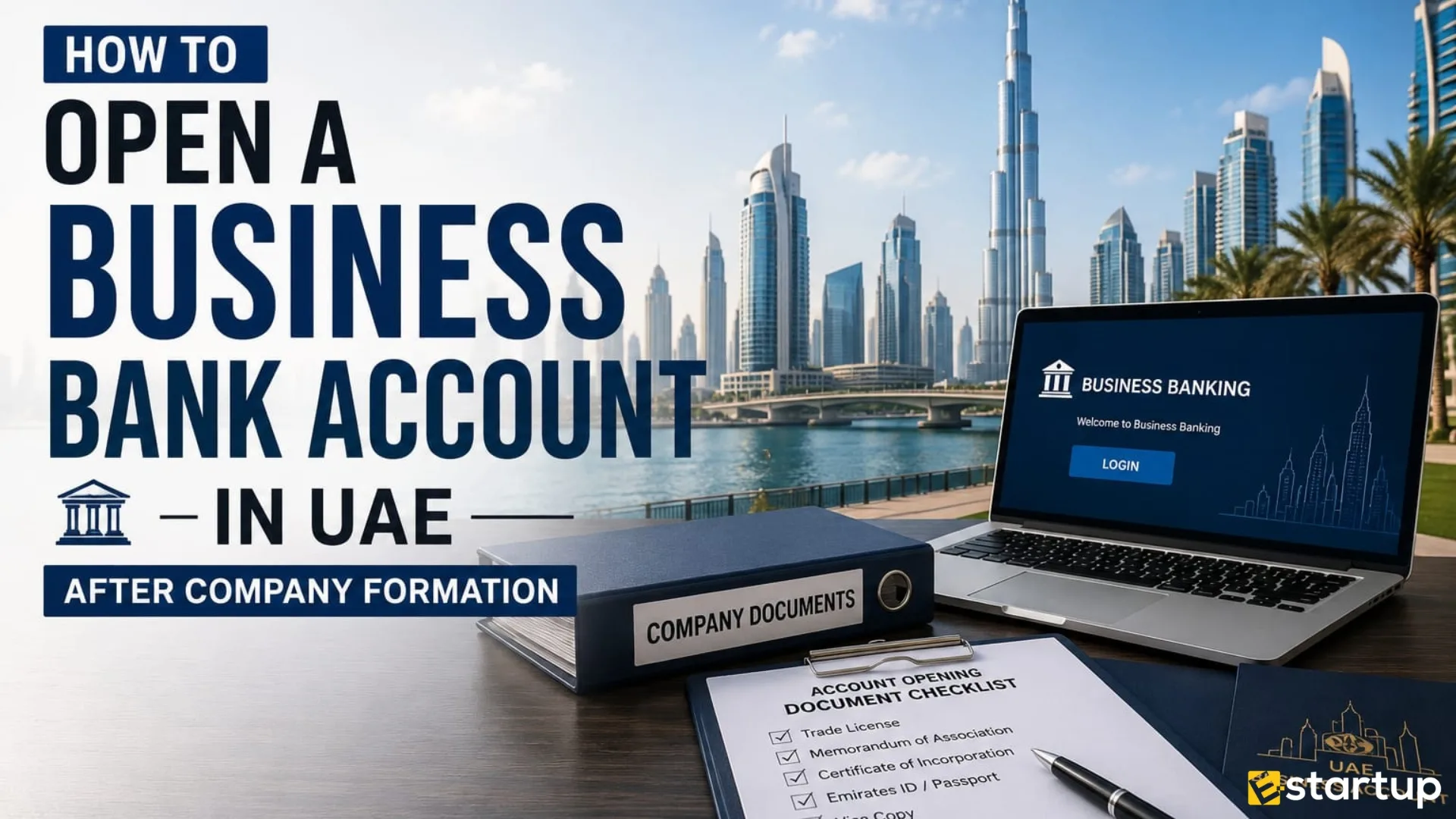
Creating a business bank account in UAE is among the most critical things to do after setting up your company. In the absence of a corporate bank account, you will not be able to receive funds from customers, pay suppliers, manage payroll, or keep proper financial records.
While many entrepreneurs have no issues for business setup in UAE, they usually struggle at the banking end because they do not know what documents and compliance checks are needed. The banks in UAE follow strict rules about AML and KYC checks.
This article will take you through the entire process of setting up a business bank account in UAE after company formation.
Step-by-Step Process
Step 1: Set up Your Business
Before approaching the bank, make sure that you have set up your business in UAE completely and successfully.
Your business needs to have:
- Legal business activity
- Trade license
- Physical address
- Functional business or website
Banks generally favor businesses that seem to be in business rather than just created for future use.
Step 2: Choose the Right Bank
The UAE banks have different criteria for startups, free zone firms, and foreign investors.
They are usually
- Emirates NBD
- Mashreq Bank
- Abu Dhabi Commercial Bank (ADCB)
- Commercial Bank of Dubai (CBD)
- RAKBANK
- WIO Bank (digital banking option)
Compare banks according to
- Minimum balance
- Monthly service fees
- Cost of international transactions
- Internet banking capabilities
- Availability of multi-currency accounts
- Startup-friendly policy
Banks that offer startup and SME banking will be easy for new businesses.
Step 3: Prepare the Required Documents
Although requirements vary slightly by bank, most institutions ask for the following:
Company documents
- Trade License
- Certificate of Incorporation
- Memorandum and Articles of Association
- Share Certificate
- Office lease / flexi-desk agreement
Shareholder documents
- Passport copies
- UAE visa copy (if available)
- Emirates ID copy (if available)
- Proof of residential address
- Personal bank statements (sometimes requested)
Business supporting documents
- Company profile
- Business plan
- Website or online store
- Expected annual turnover
- Details of suppliers and customers
Having all documents in clear PDF format can speed up the application process.
Create a Professional Business Presence First
The chances of approval from banks are higher if your business demonstrates real business operations.
To ensure the success of your application, you need:
- Professional website
- Business email with your domain
- Active social media accounts
- Description of the products/services offered
- Basic branding including the logo and business profile
E-Startup.ae not only facilitates the process of setting up businesses in UAE but also provides corporate bank account setup services.
Step 4: Submit the Application
You may generally apply:
- Online
- Through a Relationship Manager
- Through a Business Setup Consultant
- Through visiting a bank branch
The bank will then make a KYC file for the firm and its shareholders.
This step needs accuracy to an extreme level. Any inconsistency between trade license, passport, and application form may delay the process.
Step 5: Attend the KYC Interview
Most UAE banks ask for an interview in relation to the shareholders and/or signatories.
Questions that can be asked are as follows:
- What products or services do you offer?
- Who are your target customers?
- Which countries would you be dealing with?
- How much transactions do you expect per month?
- Would you be receiving international payments?
- Do you have contracts/invoices/website?
Step 6: Compliance Review
After the interview, the bank carries out its internal compliance checks.
These checks could include:
- Verification of the shareholders
- Assessment of the business risks involved
- Sources of funds check
- International sanctions check
- Website/social media check
Typical approval timeline
Company TypeEstimated TimeFree Zone Startup5–15 working daysMainland SME5–20 working daysInternational Shareholders10–30 working daysComplex ownership structures may take longer.
Step 7: Activate the Account
After the approval process, the bank will provide you with:
- Account Number (IBAN)
- Internet Banking
- Bank Card/Corporate Card
- Cheque Book (if needed)
- International Transfer Services
It might be necessary for you to maintain a minimum opening balance before activation.
Common Reasons for Rejection
Many startups get rejected due to preventable reasons.
1. Lack of website
The absence of any online presence suggests the business does not operate.
2. High-risk activity
High-risk activities like cryptocurrency, forex, gambling, or other kinds of financial transactions will be more scrutinized.
3. Incomplete documentation
There should be a signed lease agreement and a clear copy of the passport.
4. Inconsistent business information
The description of business activity on the trade license must match the description provided by the company during the KYC interview.
5. Lack of UAE affiliation
At least one shareholder should have a UAE visa or Emirates ID.
Tips for Faster Approval
Use a UAE business address
Even a flexi-desk or virtual office included in your license package is usually better than having no UAE address.
Build a simple website
Include:
- About us
- Services or products
- Contact details
- UAE business address
- Privacy policy
Prepare sample invoices
If you are a new business, draft sample invoices, quotations, or service agreements to demonstrate how you will operate.
Maintain transparency
Clearly explain:
- Source of investment funds
- Expected business model
- Countries you will work with
- Estimated transaction amounts
Conclusion
It is important to open a business bank account in UAE after completing the registration of your company as a way of making your newly registered company a fully functional business. The process is easy if you provide the correct documentation, set up a professional business presence, and know how to comply with the requirements of the bank.
Here are the steps:- Register your company
- Select an appropriate bank in UAE
- Provide all the required documentation
- Set up a professional website for your company
- Fill in the application correctly
- Attend KYC interview
- Compliance review
- Activate the account
With the above-mentioned preparation and transparency, the entrepreneur will be able to open the corporate bank account in UAE and start operations with ease.
If you have recently done the business setup in UAE, it is important to adopt the right method while opening the bank account.