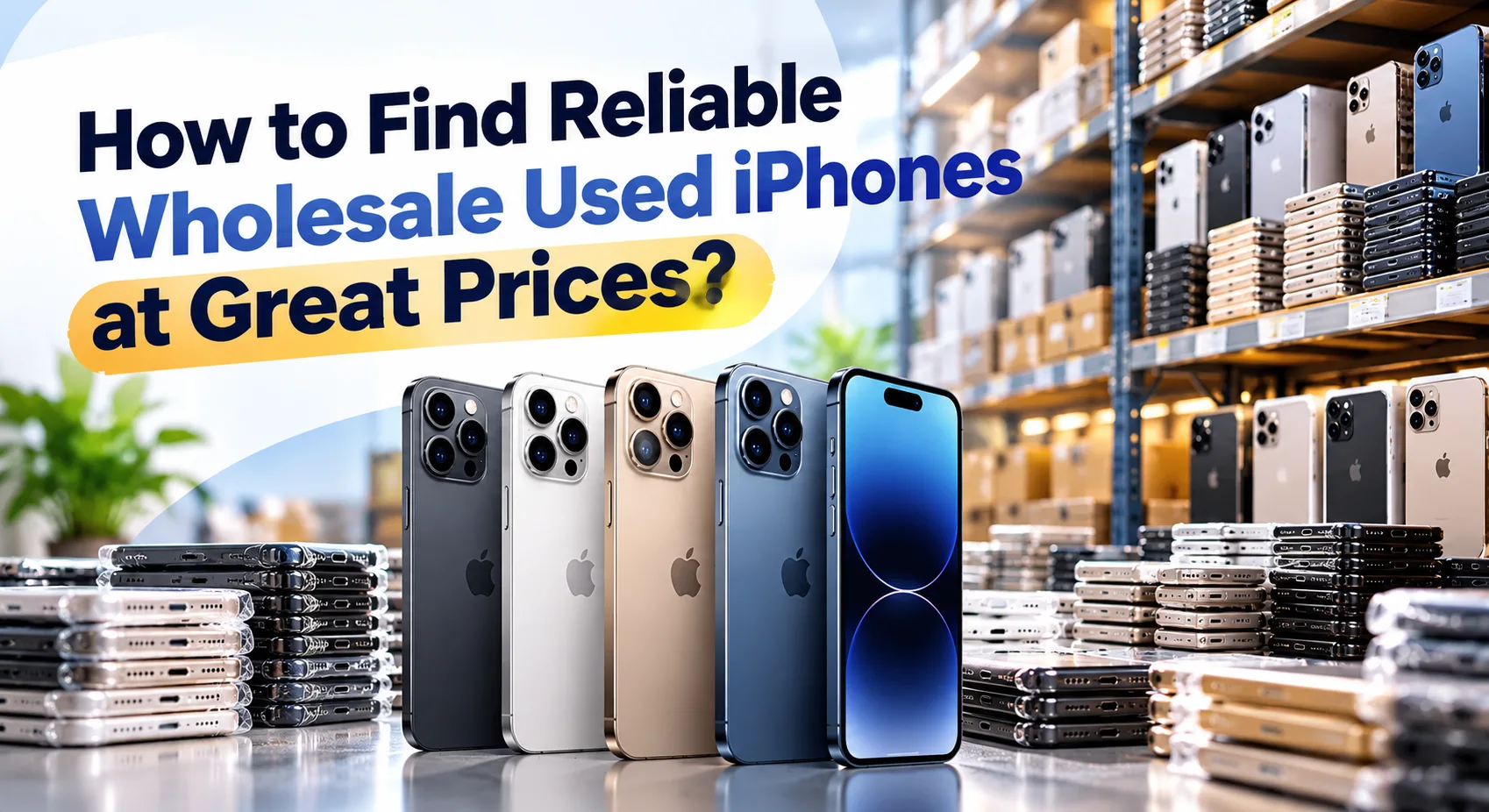
Buying used iPhones in bulk can be a practical way for retailers, resellers, and online businesses to expand their product range while managing costs. However, wholesale purchasing requires careful attention to device quality, pricing, documentation, and supplier reliability. A well-planned sourcing process can help businesses reduce unnecessary risks and maintain customer satisfaction.
When searching for wholesale used mobile iphone in italy, buyers should look beyond the advertised price. The condition, model, storage capacity, battery health, warranty terms, and grading system can significantly affect the actual value of each device. Understanding these factors before placing a bulk order makes it easier to compare suppliers and select suitable inventory.
Understand Used iPhone Grading
Wholesale suppliers commonly classify used devices according to their physical and functional condition. Grades may differ between suppliers, so buyers should understand exactly what each grade represents before making a purchase.
Higher-grade devices generally have fewer visible marks and may be suitable for customers looking for phones in excellent condition. Lower grades can have more cosmetic wear but may offer better purchasing prices. A clear grading system helps retailers decide which products match their target customers and expected selling prices.
Check Device Specifications Carefully
Before purchasing a large quantity, verify important specifications for every model included in the order. These can include storage capacity, colour, model number, network compatibility, and operating condition.
It is also important to check whether devices are carrier-locked or unlocked. Unlocked phones generally provide greater flexibility for resale because customers can use compatible SIM cards and networks according to their requirements.
Examine Battery Health
Battery condition is an important consideration when purchasing pre-owned iPhones. A phone may look excellent externally but still require a battery replacement if its battery health is significantly reduced.
Ask the supplier whether battery health information is available for each device or batch. If exact battery percentages cannot be provided, request a clearly defined minimum battery-health standard. This can help prevent unexpected refurbishment expenses after the shipment arrives.
Verify IMEI and Device Status
IMEI verification should be part of every professional wholesale purchasing process. The IMEI can help identify a device and check relevant information before resale.
Buyers should confirm that devices are not reported lost or stolen and that they are not affected by activation locks. Checking these details before payment can reduce the possibility of receiving unusable inventory.
Compare Supplier Pricing
Price comparison is essential, but the cheapest supplier is not necessarily the most suitable option. Two suppliers may offer apparently similar iPhones at different prices because their grading standards, testing procedures, warranties, or included services are different.
Instead of comparing only the unit price, calculate the overall cost. Consider shipping, inspection, refurbishment, accessories, taxes where applicable, and potential replacement costs. This gives a more realistic understanding of the investment required.
Ask About Testing and Quality Control
Reliable wholesale suppliers should have a defined process for testing used devices. This may include checking the screen, cameras, speakers, microphones, charging ports, buttons, Face ID, connectivity, battery performance, and overall functionality.
Ask whether devices are tested before dispatch and whether a test report can be provided. A documented quality-control process can provide greater transparency and make it easier to handle quality-related issues.
Review Warranty and Return Policies
Even when devices are carefully tested, problems can occasionally occur. Therefore, buyers should understand the supplier's warranty and return conditions before completing an order.
Check the warranty duration, covered faults, return window, replacement procedure, and responsibility for shipping costs. Clear terms can make bulk purchasing more predictable and provide protection when defective devices are discovered after delivery.
Start With a Sample Order
For a new supplier, placing a small sample order before committing to a large purchase can be a useful approach. It allows the buyer to evaluate the actual product quality, packaging, grading accuracy, battery condition, and delivery process.
After inspecting the sample, the buyer can decide whether the supplier's products and service standards are suitable for larger orders. This approach can reduce financial exposure and provide practical evidence instead of relying only on supplier descriptions.
Maintain Proper Inventory Records
Once devices are purchased, maintain accurate records for each batch. Record model numbers, storage capacities, IMEI details, purchase prices, grades, battery information, and selling prices where appropriate.
Good inventory management helps businesses track profitability and identify which models have stronger customer demand. It also makes warranty handling and customer support more organized.
Also Read :- Apple iPhone Wholesale: Tips for Profitable Business Purchasing
Conclusion
Finding reliable wholesale used iPhones requires more than searching for low prices. Buyers should evaluate grading standards, battery health, device status, testing procedures, supplier policies, and overall costs before making a bulk purchase. Starting with samples and maintaining detailed inventory records can further improve purchasing decisions. Working with an established supplier such as GLP Wireless can also help businesses build a more structured approach to sourcing pre-owned devices.