By Roberto and The Sourdough Science
There is a moment every sourdough baker remembers.
You mix flour and water together, place the jar on the kitchen bench, and wait. You check it a few hours later. Nothing. You check the next day again. Maybe a few bubbles appear. Then suddenly, a week later, your starter looks weak, smells strange, or simply refuses to grow.
Most beginners assume they have done something wrong.
The truth is that sourdough success often comes down to one simple principle: consistency.
And consistency begins with accurate measurements.
At The Sourdough Science, we have taught thousands of students through workshops, online education, and hands-on sourdough experiences. One of the most common mistakes we see is measuring ingredients by cups and estimating feeding amounts instead of weighing them accurately.
That is why learning how to feed a Sourdough Starter Using a Digital Kitchen Scale is one of the most valuable skills any baker can develop.
A simple Digital Kitchen Scale may look like a small tool, but it plays a critical role in helping bakers create strong starters, maintain proper feeding ratios, and produce more consistent bread.
In this guide, we will explore why accurate measurements matter, how to feed your starter correctly, and the practical steps you can use to build a healthy and reliable sourdough culture.
Understanding the Living Nature of a Sourdough Starter
Many people think a starter is simply flour and water sitting in a jar.
In reality, a sourdough starter is a living ecosystem.
Inside every active starter are naturally occurring wild yeasts and beneficial bacteria working together through fermentation. These microorganisms consume sugars from the flour and produce gases, acids, and flavours that make sourdough unique.
When treated correctly, a starter becomes stronger over time.
When feeding is inconsistent, the balance of this ecosystem can become unstable.
This is why feeding ratios matter so much.
Too much flour can slow activity.
Too little flour can leave microorganisms without enough food.
Too much water can alter hydration.
Too little water can create unnecessary stress within the culture.
Accurate feeding helps maintain balance.
And balance is where great sourdough begins.
Why a Digital Kitchen Scale Matters
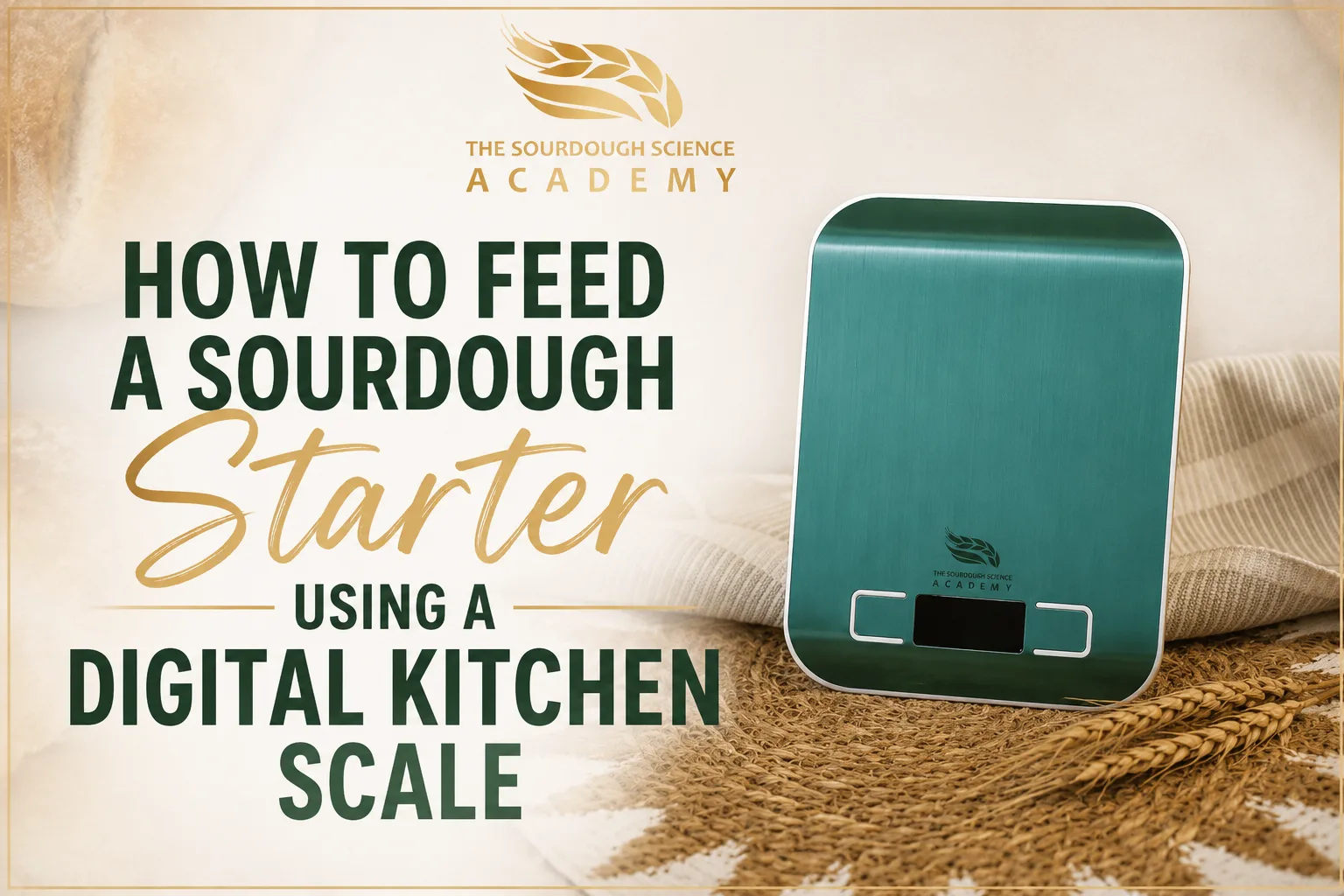
If there is one tool that makes the biggest difference when starting sourdough, it is a Digital Kitchen Scale.
Sourdough baking relies on precision and balance. Measuring ingredients by weight instead of volume helps maintain the correct ratios of flour and water, which are essential for developing a healthy and active starter.
Using a scale removes the guesswork.
Instead of wondering whether your cup measurement was packed too tightly or too loosely, you know exactly how much flour and water you are adding.
Benefits include:
- Precise gram measurements
- Consistent starter feeding ratios
- Reliable hydration levels
- Improved fermentation performance
- Better dough structure
- Easier recipe repetition
- More predictable baking results
A digital scale may seem like a small tool, but it creates a foundation for long-term success.
For many bakers, it is the difference between frustration and confidence.
You can learn more about the Digital Kitchen Scale available through The Sourdough Science Academy.
The Story of a Beginner Baker
One of our students attended a workshop feeling completely discouraged.
She had spent months trying to maintain a starter.
Some days it doubled in size.
Other days it barely moved.
Her recipes produced different results every week.
When we asked how she measured ingredients, her answer was simple.
"I use cups."
This is extremely common.
The challenge with cups is that flour can vary dramatically depending on how it is scooped, packed, or settled.
One cup today may not weigh the same as one cup tomorrow.
After switching to a Digital Kitchen Scale and feeding her starter using precise gram measurements, everything changed.
Within days, her starter became more predictable.
Within weeks, her loaves became lighter and more consistent.
The difference was not a secret ingredient.
The difference was accuracy.
How to Feed a Sourdough Starter Using a Digital Kitchen Scale
Let us walk through a practical feeding process.
Step 1: Place Your Jar on the Scale
Turn on your Digital Kitchen Scale.
Place your starter jar on top.
Use the tare function to reset the display to zero.
This allows you to measure ingredients directly in the container.
Step 2: Weigh Your Existing Starter
Determine how much starter you want to keep.
Many bakers maintain a small amount to reduce waste.
For example:
- 50 grams starter
This becomes your base amount.
Step 3: Add Flour
Add flour according to your feeding ratio.
A common feeding ratio is:
1:1:1
This means:
- 50 grams starter
- 50 grams flour
- 50 grams water
Using the scale ensures exact measurements.
Step 4: Add Water
Next, add water until the scale reaches the desired amount.
For example:
- 50 grams water
Because the scale measures precisely, hydration remains consistent.
Step 5: Mix Thoroughly
Mix until all ingredients are fully combined.
No dry flour should remain visible.
A well-mixed starter promotes even fermentation.
Step 6: Mark the Starting Level
Use a rubber band or marker to identify the starter's starting position.
This allows you to monitor growth.
Step 7: Let Fermentation Begin
Place the jar in a suitable environment.
The microorganisms will begin consuming available nutrients and producing gases that cause the starter to rise.
Over time, you will learn to recognise its rhythm and activity patterns.
Common Feeding Ratios Explained
Different bakers use different feeding approaches.
1:1:1 Ratio
Example:
- 50g starter
- 50g flour
- 50g water
Benefits:
- Simple for beginners
- Easy to maintain
- Encourages regular activity
1:2:2 Ratio
Example:
- 25g starter
- 50g flour
- 50g water
Benefits:
- Provides additional food
- May support longer feeding intervals
1:3:3 Ratio
Example:
- 20g starter
- 60g flour
- 60g water
Benefits:
- Useful in warmer conditions
- Provides extended fermentation time
Regardless of the ratio, consistency matters more than complexity.
And consistency starts with accurate weighing.
Problems a Digital Kitchen Scale Helps Solve
Problem 1: Starter Is Not Rising
One common cause is inconsistent feeding.
Without accurate measurements, the microorganisms may not receive the food balance they need.
Using a scale helps maintain reliable feeding ratios.
Problem 2: Starter Becomes Too Thick or Too Thin
Hydration changes affect fermentation.
Measuring water by eye can create dramatic differences.
A scale ensures consistent hydration levels.
Problem 3: Recipes Produce Different Results
Many bakers experience success one week and failure the next.
Often the issue is measurement inconsistency.
Using precise gram measurements helps eliminate variability.
Problem 4: Difficulty Understanding Dough Behaviour
Accurate measurements create repeatable conditions.
Repeatable conditions make it easier to learn from each bake.
Over time, this builds confidence and understanding.
Why Professional Bakers Measure in Grams
Professional bakers rely on weight because it provides accuracy.
A gram remains a gram every day.
A cup does not.
When baking becomes more advanced, small measurement differences can significantly impact:
- Fermentation
- Hydration
- Dough strength
- Crumb structure
- Final flavour
This is why weighing ingredients is considered a foundational skill within sourdough baking.
Building Confidence Through Consistency
Many beginners believe successful sourdough bakers possess special talent.
In reality, great sourdough often comes from repeatable habits.
The goal is not perfection.
The goal is consistency.
When you measure ingredients accurately, you remove uncertainty from the process.
That consistency allows you to:
- Track progress
- Improve results
- Understand fermentation
- Develop stronger baking skills
The Digital Kitchen Scale becomes more than a tool.
It becomes a learning partner.
Additional Tips for Maintaining a Healthy Sourdough Starter
Feed Consistently
Try to feed your starter on a predictable schedule.
Consistency helps microorganisms adapt to their environment.
Observe Activity
Watch for:
- Bubbles
- Rising
- Aroma changes
- Texture development
These indicators provide valuable information about starter health.
Use Accurate Measurements
Avoid guessing.
Use a Digital Kitchen Scale every time.
Small inaccuracies can accumulate over weeks and months.
Keep Notes
Record:
- Feeding ratios
- Flour types
- Environmental conditions
- Rise times
Tracking results helps identify patterns.
Learn Patience
Sourdough is a natural fermentation process.
The microorganisms operate according to biological rhythms, not baking schedules.
Patience often produces the best results.
The Science Behind Better Sourdough
At The Sourdough Science, education is built around understanding the "why" behind sourdough success.
Rather than relying on guesswork, students learn practical techniques supported by scientific principles.
This approach has helped thousands of bakers develop confidence in their sourdough journey.
Led by Roberto Giammellucca, The Sourdough Science Academy has educated more than 3,000 students and earned hundreds of five-star reviews through workshops, online learning programs, and practical sourdough experiences.
Whether someone is creating a starter for the first time or refining advanced techniques, the focus remains the same:
Simple methods.
Clear explanations.
Consistent results.
Learn More Through The Sourdough Science Community
Website
Visit:
Follow:
The Sourdough Science Academy on Facebook
The community shares updates, workshops, baking education, and sourdough inspiration.
Connect with:
The Sourdough Science Academy on Instagram
Discover practical sourdough tips, baking insights, and educational content.
Learn more about founder Roberto Giammellucca:
Roberto Giammellucca on LinkedIn
Recommended YouTube Resources
Understanding Your Living Sourdough Starter
If you've ever thought your sourdough starter was simply flour and water, this educational video explores how a starter functions as a living ecosystem of yeast and bacteria.
Watch here:
Your Starter Is Alive – Understanding Sourdough Fermentation
Topics include:
- Why the starter is the heart of sourdough
- How bacteria and yeast work together
- The three essentials every starter needs to thrive
Why Your Sourdough Is Dense and How to Fix It
Many bakers struggle with dense loaves.
This educational video explains the science behind gluten development and dough structure.
Watch here:
Why Your Sourdough Is Dense and How to Fix It
Topics include:
- Understanding gluten proteins
- Creating a stronger gluten network
- Improving dough strength and elasticity
- Following the dough rather than the clock
Sourdough Bread Workshop
For bakers looking to deepen their practical understanding of sourdough, this workshop provides valuable demonstrations and guidance.
Watch here:
Final Thoughts
Learning how to feed a Sourdough Starter Using a Digital Kitchen Scale is one of the simplest improvements a baker can make.
The process is not complicated.
What matters is consistency.
A reliable Digital Kitchen Scale helps maintain accurate feeding ratios, supports healthy fermentation, removes guesswork, and allows bakers to repeat successful results with confidence.
When flour and water are measured precisely, your starter receives exactly what it needs to thrive.
Over time, those small daily actions create stronger starters, better dough, and more enjoyable baking experiences.
For anyone beginning their sourdough journey-or looking to improve their results-the Digital Kitchen Scale remains one of the most important tools in the kitchen.
Sometimes the biggest improvements come from the simplest tools.
And in sourdough baking, precision is where success begins.