

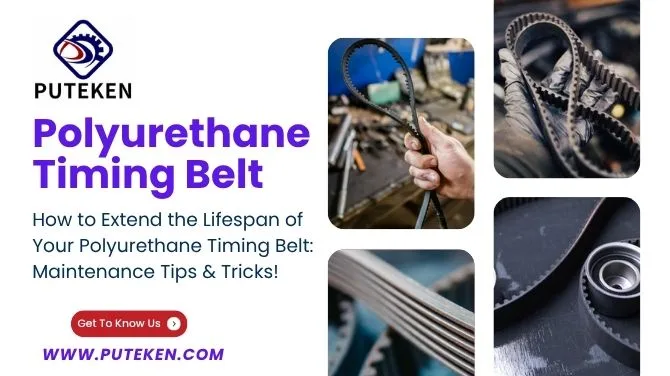
In industrial automation and machinery, the Polyurethane Timing Belt has become a vital component, trusted for its durability, precision, and efficiency. Whether applied in packaging, food processing, or automated assembly lines, this belt offers a dependable solution for power transmission and motion control. However, even the highest quality Polyurethane Timing Belt—such as those provided by Shanghai Puteken Transmission System Co., Ltd.—requires proper care to unlock its full service life and value. Neglecting maintenance can lead to unexpected downtime, costly replacements, and system failures.
Therefore, understanding how to extend the lifespan of your Polyurethane Timing Belt is essential for any business that relies on continuous, seamless production.
How to Extend the Lifespan of Your Polyurethane Timing Belt: Maintenance Tips & Tricks?
In industries where precision, reliability, and longevity are critical, the performance of your Polyurethane Timing Belt can play a pivotal role. As a leading manufacturer and supplier, Shanghai Puteken Transmission System Co., Ltd. understands that a proactive approach to belt maintenance doesn’t just drive down costs; it directly contributes to smoother operations and improved bottom lines. So, what practical steps can businesses and maintenance teams take to keep their Polyurethane Timing Belt working flawlessly, year after year?
Let’s explore this in detail:
1. Choose the Right Polyurethane Timing Belt for Your ApplicationIt’s crucial to select the correct Polyurethane Timing Belt for your operating environment. Belt failure sometimes stems from improper selection. Consider these key factors:
- Load Requirements: Ensure the belt’s tensile strength matches your application's load.
- Operating Speed: Choose a belt that can withstand your system’s speed without excessive wear.
- Environmental Conditions: Select belts resistant to chemicals, moisture, or extreme temperatures if required.
- Pulley Compatibility: Use pulleys designed specifically for Polyurethane Timing Belts, ensuring a precise fit and minimal slippage.
Shanghai Puteken Transmission System Co., Ltd. provides expert consultations to help you choose the right product.
2. Correct Installation from the StartEven the best Polyurethane Timing Belt can experience premature wear if not installed correctly. Follow these installation guidelines:
- Inspect Machinery: Clean pulleys and shafts before fitting the new belt.
- Align Components: Ensure pulleys and shafts are perfectly aligned. Misalignment is a primary cause of early belt failure.
- Proper Tensioning: Use the manufacturer-recommended tension settings. Over-tightening stretches the belt fibers, while under-tightening can lead to skipping or slippage.
- Avoid Forcing: Never force or pry belts onto pulleys. Use adjustment tools if necessary.
- Check Rotation Direction: Some Polyurethane Timing Belts are directional. Ensure you follow the correct rotation for your application.
Pro tip: Document all installations and adjustments for future reference.
3. Schedule Regular InspectionsRoutine inspection is the foundation of any effective maintenance program. By identifying wear or alignment issues early, you can prevent minor problems from escalating:
- Visual Checks: Examine the belt surface for cracks, fraying, or glazing. Look for embedded debris or signs of uneven wear.
- Listen for Unusual Noises: Squeaking, chirping, or grinding noises during operation often indicate tension or alignment problems.
- Measure Belt Tension: Use a tension gauge and check tension regularly according to the Polyurethane Timing Belt manufacturer's recommendations.
Establish a maintenance log to record each inspection, noting any anomalies and corrective actions taken.
4. Keep the System CleanOne of the simplest ways to extend the lifespan of your Polyurethane Timing Belt is by keeping the conveyor or drive system clean:
- Debris Removal: Routinely clear away dust, grease, and foreign objects from both the belt and pulleys.
- Contaminant Control: Protect belts from oil or chemical splashes, which may degrade polyurethane.
- Cover Exposed Systems: In environments prone to contamination, use guarding or enclosures to shield the belt.
Tip: In food processing or clean-room applications, cleaning protocols may be more frequent or stringent.
5. Monitor and Maintain Correct TensionOver time, all belts are prone to some elongation, which can affect performance. Incorrect tension is a frequent cause of premature belt failure:
- Check Tension Regularly: Belt tension tends to change with temperature and load cycles. Adjust as necessary.
- Avoid Over-tightening: Excessive tension can strip teeth or cause the belt to snap.
- Under-tensioning Risks: If the belt slips or jumps teeth, the timing of your machinery may be compromised.
Shanghai Puteken Transmission System Co., Ltd. supplies tensioning tools and guidelines to help with accurate adjustments.
6. Inspect and Maintain PulleysPulleys have a substantial impact on belt longevity:
- Check Pulley Wear: Worn or damaged pulleys can accelerate belt abrasion.
- Maintain Surface Cleanliness: Dirty or corroded pulleys can harm the Polyurethane Timing Belt.
- Monitor Pulley Alignment: Realign pulleys as needed to prevent belt tracking issues.
Replace worn pulleys immediately to avoid cascade failures across your drive system.
7. Lubrication: When and If RequiredWhile Polyurethane Timing Belts are generally designed to run dry, some operating environments benefit from compatible lubricants:
- Check Manufacturer Guidelines: Only use approved lubricants, if at all.
- Avoid Grease/Oil Contamination: Standard oils and greases can degrade polyurethane and compromise the belt’s lifespan.
Typically, Shanghai Puteken Transmission System Co., Ltd. Polyurethane Timing Belts do not require external lubrication. When in doubt, consult the supplier.
8. Watch for Environmental FactorsEnvironmental stressors can dramatically affect the performance and lifespan of your Polyurethane Timing Belt:
- Temperature Range: Stay within specified operating temperature limits. Extreme heat can cause softening or melting; cold can make belts brittle.
- Humidity: Excessive moisture may lead to hydrolysis, especially when combined with heat.
- Chemical Exposure: Acids, bases, or solvents can deteriorate polyurethane. Use chemical-resistant variants if needed.
Where necessary, ventilate or climate-control the operating area to protect belt integrity.
9. Replace Worn-Out Belts ProactivelyEven with the best care, every Polyurethane Timing Belt has a finite service life. Learn to recognize when replacement is due:
- Obvious Wear: Cracks, warping, or missing teeth warrant immediate replacement.
- Loss of Tension: Continual stretching can impair timing accuracy.
- Operational Issues: Delayed actuation, slipping, or vibration may signal that it’s time for a new belt.
For safety-critical applications, follow a scheduled replacement program rather than waiting for signs of failure.
10. Employee Training and Maintenance CultureMaximizing Polyurethane Timing Belt lifespan isn’t just about technology—it’s about people:
- Train Operators and Technicians: Ensure all staff understand correct handling, inspection, and adjustment methods.
- Foster Accountability: Encourage reporting and documentation of any irregularities.
- Continuous Improvement: Update maintenance procedures based on manufacturer guidance and real-world experience.
A well-informed team is your first defense against untimely belt failures.
Practical Maintenance Schedule ExampleFor a typical industry installation using a Polyurethane Timing Belt from Shanghai Puteken Transmission System Co., Ltd., here’s a sample maintenance schedule:
- Daily: Visual inspection for surface debris and obvious damage.
- Weekly: Check belt tension, listen for abnormal noises.
- Monthly: Inspect pulley alignment and cleanliness, clear system of dust and debris.
- Quarterly: Comprehensive inspection, including removal of the belt for detailed checking, pulley wear inspection.
- Yearly: Replace if significant wear is detected. Otherwise, continue monthly/quarterly checks based on application severity.
Polyurethane Timing Belt systems are designed for reliability, but their long-term performance hinges on proper selection, installation, and—crucially—ongoing maintenance. By adhering to the tips and strategies outlined above, your facility can dramatically extend belt service life, cut downtime, and enhance overall productivity.
Frequently Asked Questions:As a leader in transmission system solutions, Shanghai Puteken Transmission System Co., Ltd. receives many questions about Polyurethane Timing Belt care. Here are some of the most common queries, answered:
Q1: How often should I replace my Polyurethane Timing Belt?
Answer: Replacement intervals depend on the application, load, and usage intensity. For most industrial uses, belts last from 2-5 years. However, proactive replacement is recommended at the first sign of serious wear, loss of tension, or reduced performance. Critical applications may require scheduled annual replacements for maximum reliability.
Q2: Are Polyurethane Timing Belts resistant to chemicals and high temperatures?
Answer: Polyurethane Timing Belts offer good resistance to a range of chemicals and temperature extremes. However, exposure to aggressive solvents or acids, or operating beyond specified temperature ranges (+80°C or above), may degrade belt material over time. Specialized variants are available for demanding environments—consult Shanghai Puteken Transmission System Co., Ltd. for details.
Q3: Can a Polyurethane Timing Belt be repaired if damaged?
Answer: No, once damaged (e.g., cracked, torn, or frayed), Polyurethane Timing Belts should be replaced rather than repaired. Temporary fixes are unreliable and can compromise machine safety as well as performance. Always install a new belt to ensure safety and efficiency.
Q4: How can I tell if my Polyurethane Timing Belt is properly tensioned?
Answer: Use a tension gauge as per manufacturer guidelines. The belt should neither be too loose (causing slippage) nor too tight (risking overstretching or noise). Routine checks, especially during seasonal temperature changes, are recommended.
Q5: What are the signs of misalignment in my Polyurethane Timing Belt system?
Answer: Misalignment can manifest as uneven belt wear, edge fraying, unusual noise (squealing or chirping), or the belt tracking off-center. Visually inspect alignment and use straight edges or laser alignment tools for precise checks.
Q6: Can Polyurethane Timing Belts handle heavy loads?
Answer: Yes, high-grade Polyurethane Timing Belts are engineered for demanding load and torque requirements. It’s critical to match the belt specification (including tensile strength and tooth profile) to your application’s load parameters for optimal performance.
Q7: Are there food-safe Polyurethane Timing Belts?
Answer: Absolutely. Shanghai Puteken Transmission System Co., Ltd. offers Polyurethane Timing Belts that meet FDA and EU food safety standards, ideal for food processing and packaging sectors.
Q8: How do I clean my Polyurethane Timing Belt?
Answer: Use a mild soap solution and a soft brush or cloth. Avoid harsh chemicals unless the belt is specified as resistant. After cleaning, dry the belt thoroughly before returning to service.


