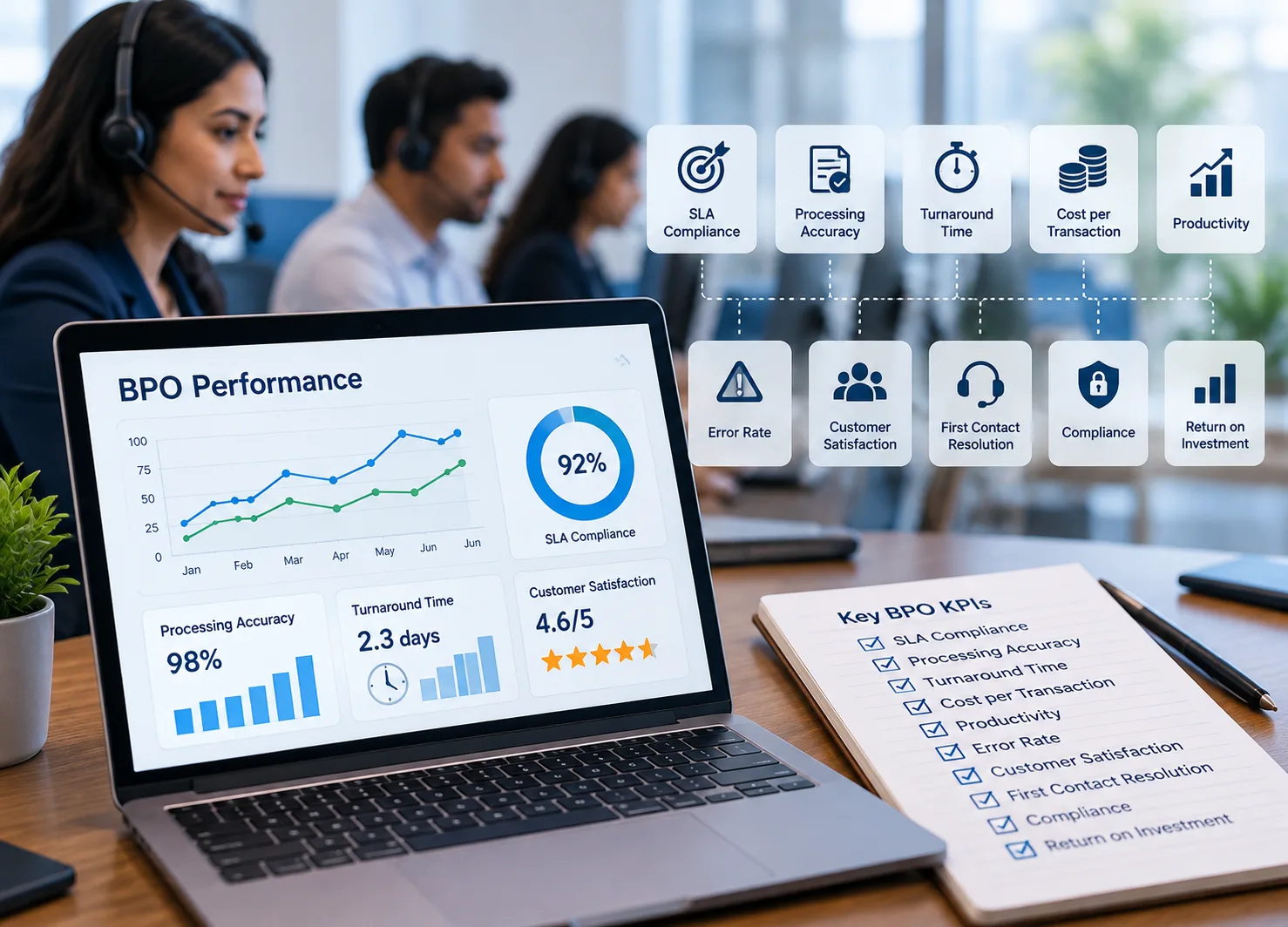
Business Process Outsourcing (BPO) helps organizations manage workloads, improve efficiency, and control costs. Companies outsource activities such as insurance administration, customer support, data processing, and financial operations.
However, outsourcing does not automatically guarantee better results. Businesses need a structured approach to evaluate whether their service providers are meeting expectations.
Understanding BPO performance metrics helps organizations measure service quality, identify inefficiencies, and make informed outsourcing decisions.
Why Measuring BPO Performance Matters
Outsourcing success should not be measured by cost savings alone. A process may become less expensive while experiencing more errors, longer processing times, or declining customer satisfaction.
For example, an outsourced insurance administration team might process more applications each month. However, if errors increase, the business may spend additional resources correcting them.
A well-defined KPI framework provides visibility into service delivery, establishes accountability, and supports continuous improvement.
10 Essential KPIs for Measuring BPO Performance
1. Service Level Agreement (SLA) Compliance
A Service Level Agreement defines the standards an outsourcing provider must meet, including response times, processing deadlines, accuracy, and service availability.
SLA compliance measures how consistently these commitments are fulfilled.
For example, if a provider agrees to complete 95% of documentation requests within two business days, performance reports should demonstrate whether this target is achieved.
2. Processing Accuracy
Accuracy is critical in outsourced activities involving financial records, insurance policies, customer information, and regulatory documentation.
Processing accuracy measures the percentage of transactions completed correctly.
Errors can cause delayed approvals, customer complaints, and additional administrative work. Monitoring accuracy helps organizations identify recurring mistakes and improve processes.
3. Turnaround Time
Turnaround Time (TAT) measures how long it takes to complete a task after receiving it.
This metric is useful for document processing, insurance claims administration, invoice management, and data verification.
Shorter turnaround times generally indicate efficient workflows, provided accuracy remains consistent.
Businesses should monitor average processing times alongside agreed completion deadlines.
4. Cost per Transaction
Cost per transaction measures the average expenditure required to complete an outsourced activity.
Cost per Transaction = Total Process Cost ÷ Number of Completed Transactions
For example, if a business spends $10,000 processing 2,500 transactions, the average cost is $4 per transaction.
This metric helps organizations compare operating periods, evaluate efficiency, and identify cost-saving opportunities without compromising service quality.
5. Productivity Rate
Productivity measures the volume of work completed within a specific period or using available resources.
Businesses may track processed applications, completed reports, resolved requests, or transactions per employee.
This KPI helps assess workforce efficiency and determine whether resources can accommodate changing workloads.
Productivity targets should account for task complexity rather than encouraging speed alone.
6. Error and Rework Rate
Error rates indicate how frequently mistakes occur, while rework rates measure how often completed tasks require correction.
Both metrics matter because rework increases costs and consumes employee time.
For example, incomplete insurance documentation may require repeated communication between processing teams and clients.
Identifying recurring errors helps organizations improve workflows, validation procedures, and training.
7. Customer Satisfaction
Customer Satisfaction (CSAT) measures how customers perceive the service they receive.
It is particularly relevant for outsourced customer support, policy servicing, and other customer-facing operations.
Organizations typically collect feedback through surveys or post-service evaluations.
A team may meet response-time targets while failing to resolve customer concerns effectively. Satisfaction scores help reveal these service gaps.
8. First Contact Resolution
First Contact Resolution (FCR) measures the percentage of customer enquiries resolved during the initial interaction without additional follow-up.
Higher FCR can indicate effective training, access to relevant information, and efficient problem-solving.
It may also reduce repeated enquiries and improve customer experience.
This metric is most relevant to customer-facing outsourcing operations.
9. Compliance and Data Security
Outsourcing providers frequently handle confidential business records, financial information, and personal data.
Organizations must monitor compliance with contractual obligations, internal policies, and applicable regulations.
Relevant indicators include audit findings, policy violations, security incidents, and corrective action completion.
Regular reviews help identify risks and maintain established compliance standards.
10. Return on Investment
Return on Investment (ROI) measures the financial value generated through outsourcing relative to its cost.
ROI (%) = [(Financial Benefits − Outsourcing Costs) ÷ Outsourcing Costs] × 100
Benefits may include reduced administrative expenses, improved productivity, and lower processing costs.
A meaningful ROI assessment should also consider transition expenses, management costs, and the financial impact of errors or delays.
How to Select the Right BPO KPIs
Not every outsourcing arrangement requires the same performance indicators.
The appropriate KPIs depend on the business process, operational objectives, and expected outcomes.
For example, insurance administration may prioritize processing accuracy, turnaround time, and regulatory compliance. Customer support operations may focus on satisfaction, response times, and first contact resolution.
Businesses should select metrics that directly reflect their outsourcing objectives, with clear targets, reporting schedules, and responsibilities.
Best Practices for Monitoring Outsourcing Performance
Effective BPO performance management requires consistent reporting and regular communication between the business and its service provider.
Organizations should establish baseline performance levels to measure improvements accurately.
Performance reviews should examine trends rather than isolated figures. Temporary processing delays, for example, may result from seasonal workload changes.
Related KPIs should also be evaluated together. Higher productivity offers limited value if accuracy declines, while lower costs may not represent genuine savings when rework increases.
When performance falls below expectations, both parties should identify the causes and agree on corrective actions.
Conclusion
Measuring outsourcing performance is essential for maintaining service quality, controlling costs, and achieving business objectives.
By tracking relevant BPO KPIs, organizations can evaluate provider performance, identify inefficiencies, and make informed operational decisions.
Working with an experienced Business Process Outsourcing (BPO) service provider can help businesses maintain performance visibility, strengthen processes, and improve operational efficiency.