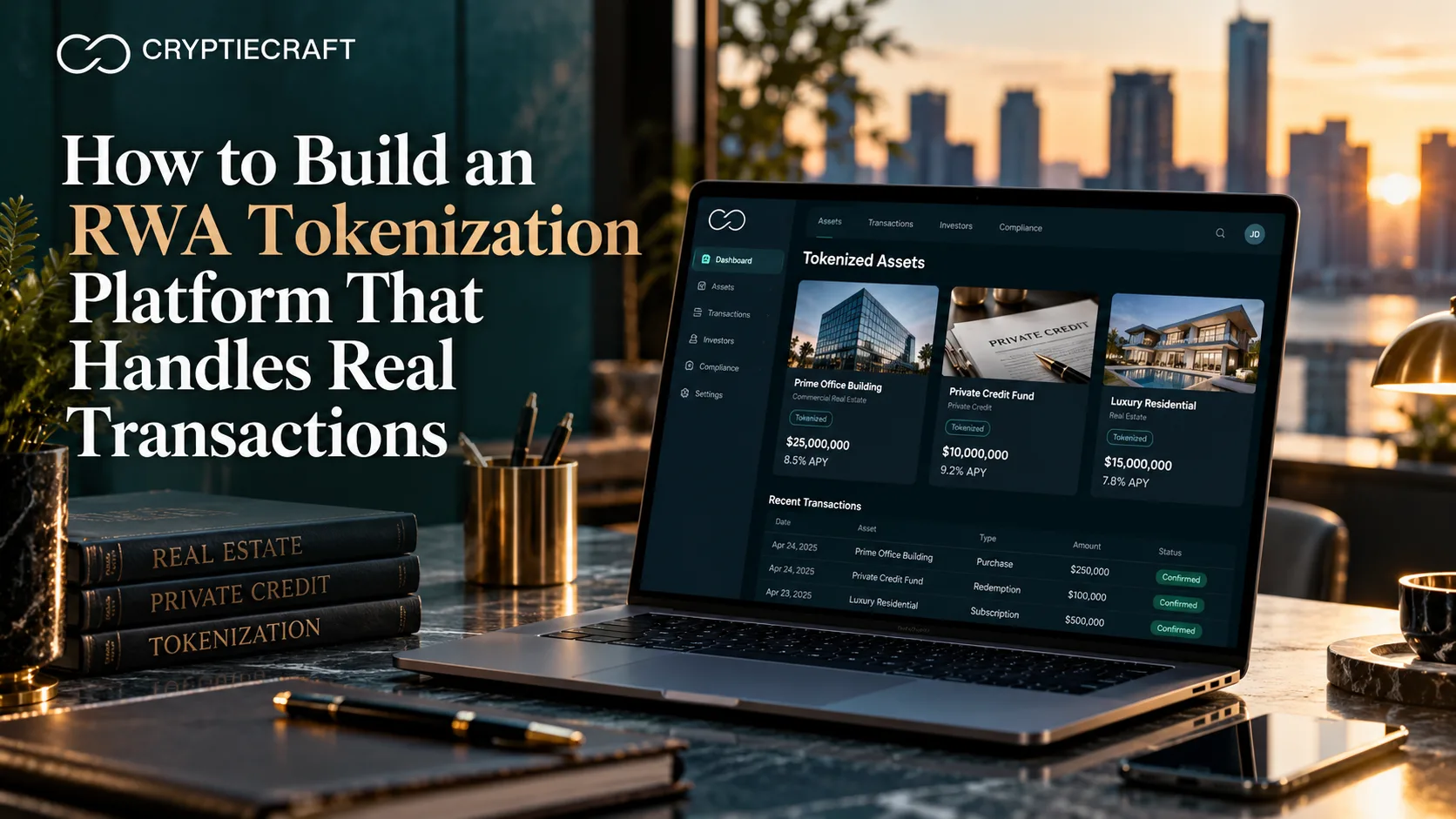

Real estate tokenization has evolved from an experimental blockchain use case into a structured investment channel that is reshaping how property assets are owned, traded, and managed. In 2026, the market is more mature, institutional participation is growing, and regulatory clarity in many jurisdictions has reduced early-stage uncertainty. However, with increased opportunity comes greater complexity. Evaluating a Real Estate Tokenization opportunity today requires more than understanding property fundamentals. It demands technical, legal, financial, and operational due diligence.
This guide provides a comprehensive framework to help investors, asset managers, and founders assess Real Estate Tokenization opportunities with confidence. It blends traditional real estate evaluation methods with modern digital asset analysis techniques so that decisions are informed, structured, and future-proof.
Understanding the Core Structure of Real Estate Tokenization
Before evaluating any opportunity, it is essential to understand how Real Estate Tokenization works in 2026.
At its core, tokenization converts ownership rights of a real estate asset into digital tokens recorded on a blockchain. These tokens represent fractional ownership, income rights, governance rights, or a combination of these.
Most Real Estate Tokenization structures involve:
- A special purpose vehicle holding the property
- Digital tokens representing shares or economic rights in that entity
- Smart contracts governing distributions and compliance
- A Real Estate Tokenization Platform that manages issuance, transfers, and reporting
Investors must assess whether the structure is equity based, debt based, revenue sharing, or hybrid. The clarity of rights attached to tokens is fundamental to evaluating risk and return.
Step 1: Evaluate the Underlying Real Estate Asset
No amount of technology can compensate for a weak property. The foundation of every Real Estate Tokenization opportunity remains the physical asset.
Location Analysis
Location continues to be the primary driver of long-term value. Evaluate:
- Economic growth trends in the region
- Infrastructure development plans
- Demand drivers such as employment and population growth
- Supply constraints and zoning regulations
In 2026, data analytics tools integrated into many Real Estate Tokenization Platform interfaces provide macro insights. However, independent verification is still essential.
Property Fundamentals
Examine:
- Occupancy rates
- Tenant quality and lease terms
- Historical rental performance
- Capital expenditure requirements
- Comparable sales data
Tokenization does not eliminate traditional real estate risks such as vacancy, tenant default, or maintenance cost escalation.
Market Cycle Position
Understand whether the asset is being offered during an expansion, stabilization, or contraction phase. In overheated markets, tokenized offerings may appear attractive but carry higher downside risk.
Step 2: Assess the Legal and Regulatory Framework
Regulatory compliance is a defining factor in 2026 Real Estate Tokenization investments.
Jurisdictional Clarity
Determine:
- Which country governs the asset
- Which country governs the token issuance
- Whether tokens are classified as securities
- Licensing requirements of the Real Estate Tokenization company
A credible Real Estate Tokenization Development company ensures full compliance with securities laws, anti money laundering requirements, and investor protection standards.
Investor Rights
Examine:
- Voting rights
- Dividend or rental income distribution policies
- Exit mechanisms
- Dispute resolution processes
Clear legal documentation is non negotiable. Avoid opportunities where token holders' rights are vague or poorly defined.
Step 3: Analyze the Token Economics
Tokenomics determines how value flows to investors.
Supply Structure
Review:
- Total token supply
- Percentage allocated to founders or sponsors
- Lock up periods
- Secondary market availability
Excessive sponsor allocation may signal misaligned incentives.
Income Distribution Mechanism
Confirm:
- Frequency of distributions
- Automation via smart contracts
- Transparency in reporting
- Fee structure
Well structured Real Estate Tokenization Services typically automate income distributions while maintaining audit trails.
Liquidity Considerations
One of the major advantages of Real Estate Tokenization is improved liquidity. However, not all platforms deliver real secondary market activity.
Evaluate:
- Whether tokens are tradable
- Volume history
- Transfer restrictions
- Minimum holding periods
Liquidity claims must be verified with actual market data.
Step 4: Evaluate the Platform Infrastructure
The Real Estate Tokenization Platform plays a critical role in investor experience and asset security.
Technology Stack
Investigate:
- Blockchain network used
- Smart contract audit status
- Cybersecurity standards
- Data privacy protections
A reputable Real Estate Tokenization Development company invests heavily in security audits and scalable architecture.
Platform Stability and Scalability
Check:
- Uptime history
- User base growth
- Integration with custodians
- Reporting tools
In 2026, advanced Real Estate Tokenization Platform Development often includes AI driven risk monitoring and automated compliance modules.
Step 5: Conduct Sponsor and Team Due Diligence
The credibility of the sponsor is often more important than the technology.
Track Record
Assess:
- Previous real estate performance
- Experience in property management
- Successful tokenized offerings
- Reputation in the market
An experienced Real Estate Tokenization company with established property management expertise significantly reduces operational risk.
Alignment of Interests
Evaluate:
- Sponsor equity participation
- Performance based compensation
- Fee transparency
Strong alignment ensures that sponsors are incentivized to maximize asset value.
Step 6: Financial Modeling and Return Projections
Real Estate Tokenization should be evaluated using rigorous financial metrics.
Expected Yield
Analyze:
- Net operating income
- Distribution yield
- Fee deductions
- Debt servicing obligations
Ensure that projected yields are realistic and based on conservative assumptions.
Internal Rate of Return
Examine projected IRR under different scenarios:
- Base case
- Optimistic case
- Downside case
Stress testing assumptions helps determine resilience.
Capital Structure Risk
Understand:
- Loan to value ratio
- Interest rate exposure
- Refinancing risk
Highly leveraged tokenized assets amplify volatility.
Step 7: Risk Assessment Framework
In 2026, risk evaluation requires a hybrid approach combining traditional and digital asset analysis.
Operational Risks
Include:
- Property mismanagement
- Maintenance delays
- Tenant turnover
Technological Risks
Include:
- Smart contract vulnerabilities
- Platform downtime
- Cyber attacks
Reliable Real Estate Tokenization Development Services mitigate these through audits and redundancy systems.
Regulatory Risks
Even in mature markets, regulatory shifts can affect token trading and compliance requirements.
Market Risks
Real estate values fluctuate based on macroeconomic trends, interest rates, and geopolitical factors.
Step 8: Transparency and Reporting Standards
Transparency separates credible projects from speculative ones.
Evaluate whether the offering provides:
- Quarterly financial reports
- Real time dashboard access
- Third party audits
- Asset valuation updates
Advanced Real Estate Tokenization Platform Development often integrates investor dashboards with real time performance metrics.
Step 9: Exit Strategy Evaluation
Liquidity is not guaranteed. Therefore, exit planning is critical.
Secondary Market Liquidity
Confirm whether there is:
- Active trading
- Market maker participation
- Institutional involvement
Buyback Provisions
Some Real Estate Tokenization structures include buyback programs or structured exit windows.
Asset Sale Timeline
Determine:
- Target holding period
- Sale strategy
- Capital appreciation potential
Without a defined exit framework, token holders may face extended illiquidity.
Step 10: Compare Tokenized vs Traditional Investment
To evaluate value, compare the tokenized offering with conventional real estate funds or direct ownership.
Consider:
- Minimum investment size
- Fee structure
- Liquidity profile
- Governance participation
- Operational transparency
Real Estate Tokenization Services often reduce entry barriers, but lower minimums do not automatically mean better returns.
Evaluating Real Estate Tokenization Platform Development Quality
For founders or institutional investors partnering with a Real Estate Tokenization Development company, evaluation extends beyond asset analysis.
Key Platform Evaluation Points
- Regulatory licensing readiness
- KYC and AML integration
- Smart contract audit documentation
- Investor onboarding efficiency
- Scalability across jurisdictions
A robust Real Estate Tokenization Platform ensures compliance, security, and operational efficiency.
Institutional Participation Trends in 2026
Institutional capital increasingly participates in Real Estate Tokenization opportunities. This trend impacts evaluation methods.
Institutions focus on:
- Governance clarity
- Custody solutions
- Audit compliance
- Risk adjusted returns
- Portfolio diversification potential
Retail investors should align their evaluation standards with institutional benchmarks rather than speculative narratives.
Red Flags to Avoid
Certain warning signs should prompt caution:
- Guaranteed return claims
- Lack of legal documentation
- Unverified property ownership
- No third party audits
- Excessive platform fees
- Anonymous management teams
Even the most advanced Real Estate Tokenization Platform cannot compensate for weak governance or misaligned incentives.
Building a Personal Evaluation Checklist
In 2026, disciplined investors rely on structured checklists.
Your checklist should include:
- Property quality score
- Sponsor credibility rating
- Legal compliance confirmation
- Token structure clarity
- Financial projection validation
- Platform security verification
- Exit feasibility assessment
This systematic approach reduces emotional decision making.
The Role of Data and AI in Evaluation
Modern Real Estate Tokenization Platform Development increasingly integrates predictive analytics.
Investors now use:
- AI driven rent forecasting
- Market trend simulations
- Liquidity modeling
- Risk scoring systems
However, technology should support judgment, not replace it.
Portfolio Strategy Considerations
Tokenized real estate can enhance diversification when used strategically.
Consider:
- Geographic diversification
- Asset class variety such as residential, commercial, industrial
- Short term vs long term holds
- Yield focused vs appreciation focused strategies
Avoid concentrating capital in a single Real Estate Tokenization opportunity.
Long Term Outlook for Real Estate Tokenization
In 2026, Real Estate Tokenization is transitioning from niche innovation to financial infrastructure.
Key drivers include:
- Institutional adoption
- Regulatory clarity
- Improved interoperability between platforms
- Enhanced transparency
- Lower transaction friction
As Real Estate Tokenization Development Services mature, investor protection standards continue to improve.
Final Thoughts: A Structured Approach Wins in 2026
Evaluating a Real Estate Tokenization opportunity in 2026 requires a multi dimensional framework. Investors must combine:
- Traditional real estate due diligence
- Legal and regulatory verification
- Tokenomics analysis
- Platform security assessment
- Sponsor credibility evaluation
- Risk stress testing
The presence of advanced Real Estate Tokenization Platform Development and reputable Real Estate Tokenization company backing enhances credibility, but it does not eliminate the need for independent analysis.
Real Estate Tokenization presents powerful advantages including fractional ownership, enhanced liquidity potential, transparent reporting, and global access. However, disciplined evaluation remains the ultimate safeguard against poor decision making.
In a market where innovation and capital intersect, informed investors who apply structured methods will identify high quality opportunities while avoiding unnecessary risk. The future of property investment is digital, but the principles of sound investing remain timeless.